
Sea bass and corvina in Costa Rica
The corvinas, the true basses and the rules
In Costa Rica, the 'sea bass' on menus and at fish markets is nearly always corvina, a croaker caught in the Gulf of Nicoya and the Pacific's estuaries and river mouths all year. The prize is the corvina reina, which can top 20 kg, and each corvina has a legal minimum size of about 33 to 55 cm. The inner Gulf of Nicoya closes to all fishing from May to July so they can breed.
At a glance
- Names
- corvina; croakers or weakfish; family Sciaenidae (not true basses)
- Main species
- corvina reina (Cynoscion albus), aguada, picuda, agria and rayada
- Size
- corvina reina to about 130 cm; most adults in the gulf 60 to 90 cm
- Where
- Gulf of Nicoya, Pacific estuaries, river mouths and surf beaches
- Best months
- all year; the inner Gulf of Nicoya is closed 1 May to 31 July
- Legal sizes (INCOPESCA)
- reina 55 cm, agria 50 cm, aguada 34 cm, picuda 32.7 cm
- Record
- whitefin corvina 20.86 kg (about 46 lb), Malpaís, Costa Rica, 2022 (IGFA all-tackle)
- True sea basses here
- the groupers and cabrillas of the rocky reefs
Part of our complete guide: Costa Rica Fish Species: The Complete Guide
The short answer
If you order "sea bass" in Costa Rica, you'll almost certainly get corvina. Corvinas aren't bass at all: they're croakers, in the drum family, named for the drumming sound many of them make. They live in the warm, muddy, sheltered water of the Pacific coast, above all in the Gulf of Nicoya, and they're caught all year on bait and jigs near the bottom. They're one of the country's favourite food fish, the classic fish for ceviche, and each species has a legal minimum size.
The true sea basses here are a different fish entirely: the groupers and cabrillas of the rocky reefs, covered on our grouper page. This page is about corvina, with a short section on the confusion at the end. For every other species, see our complete guide to Costa Rica's fish species.
Two very different "sea basses"
"Sea bass" is used around the world for dozens of unrelated fish. The old version of this page described the black sea bass, a small fish of the US Atlantic coast that doesn't live in Costa Rica. Here's what the name means for anyone fishing or eating here:
On the menu and at the fish market
usually corvina, a croaker (family Sciaenidae). It's one of the most important food fish of the Pacific coast.
In the fish books
the true sea basses are the family Serranidae, which includes the groupers and cabrillas. On Costa Rica's Pacific reefs the best known are the spotted cabrilla and the broomtail grouper.
The corvinas and how to tell them apart
Corvinas are long, silvery fish with a big mouth, often a pair of sharp canine teeth at the front of the upper jaw, and a soft, slightly pointed tail. They feed on fish and shrimp over sand and mud. INCOPESCA says more than 27 kinds of corvina are caught in the Gulf of Nicoya, but these are the ones that matter to an angler:
| Corvina | Latin | Look for | Legal size |
|---|---|---|---|
| Corvina reina | Cynoscion albus | The biggest; long, silvery, pale fins; large mouth with canine teeth | 55 cm |
| Corvina agria | Micropogonias altipinnis | A croaker with a tall first dorsal fin and small barbels under the chin | 50 cm |
| Corvina aguada | Cynoscion squamipinnis | Smaller and slimmer, scaled fins; up to 64 cm (FishBase) | 34 cm |
| Corvina picuda | Cynoscion phoxocephalus | Small, with a sharply pointed snout | 32.7 cm |
| Corvina rayada | Cynoscion reticulatus | Wavy dark lines along the back | None found |
In English, the corvina reina is the whitefin weakfish, which the IGFA records as the "whitefin corvina". Your mate will just say "reina".
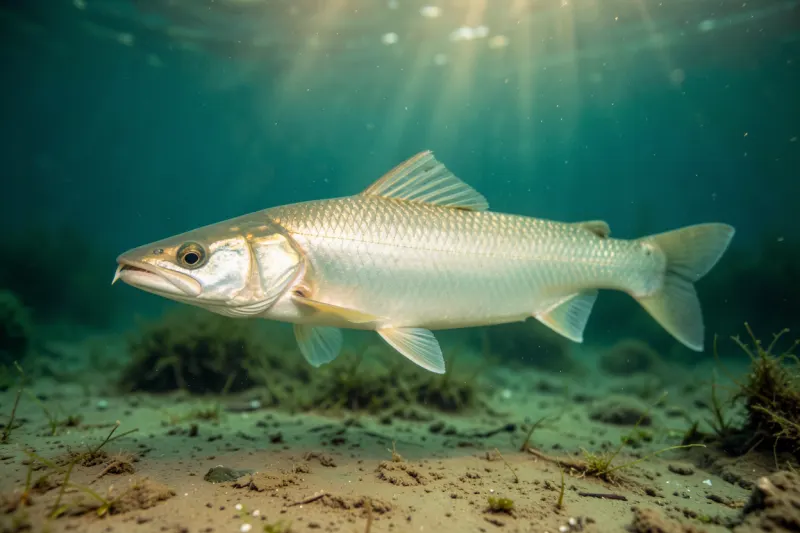
FishBase gives the corvina reina a maximum length of about 130 cm, and INCOPESCA's 2019 study of the gulf found most of the females it measured were between about 60 and 90 cm. Young reina live in estuaries and river mouths, and adults move out into the coastal water.
Where and when, zone by zone
Corvina don't run in seasons the way billfish do, so they're not on our season chart; the fishing seasons guide lists them among the fish caught in every month. What changes the fishing is the tide, the rain and, in the Gulf of Nicoya, the closed season.
| Zone | Where to look | Best months | Notes |
|---|---|---|---|
| Nicoya Peninsula and the Gulf of Nicoya | Channels, drop-offs and river mouths of the inner and middle gulf; outer gulf for agria | All year; inner gulf closed 1 May to 31 July | The heart of the fishery; trips from Puntarenas and Paquera |
| Central Pacific | River mouths and surf beaches from Tárcoles to Jacó and Quepos | All year | A former IGFA all-tackle record fish came from Jacó in 2021 |
| Guanacaste | Estuaries and river mouths | All year | A side catch here; roosterfish and snapper rule the rocks |
| Southern Pacific | River mouths and mangrove estuaries | All year | Occasional; snook and snapper are the usual targets |
| Caribbean and fresh water | None we could confirm | Not a corvina coast |
The Gulf of Nicoya
The big, sheltered gulf between Puntarenas and the Nicoya Peninsula is the centre of Costa Rica's corvina fishery. Corvina reina, aguada and picuda live in the inner and middle gulf, and agria in the clearer outer gulf. Most trips are short, calm half days from Puntarenas or the Paquera side, in center consoles or pangas. Our Gulf of Nicoya guide names the operators and the closed lines in detail, and it's an easy day from the capital (see fishing near San José).
The rest of the Pacific
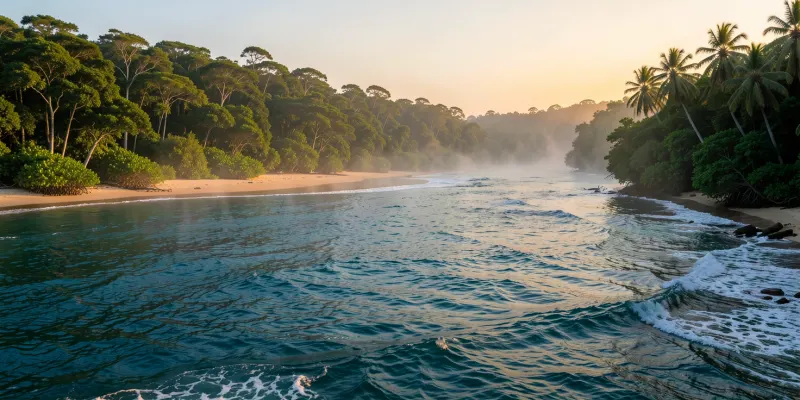
Elsewhere, corvina turn up at river mouths, mangrove estuaries and surf beaches from Guanacaste to the southern Pacific, often in the same water as snook. Jacó on the central Pacific and Malpaís at the tip of the Nicoya Peninsula have both produced all-tackle records.
The Gulf of Nicoya closed season
Every year INCOPESCA closes the inner Gulf of Nicoya to fishing for 3 months. In 2025 and 2026 it ran from 1 May to 31 July, and MarViva's 2024 handbook to the gulf's rules says plainly that the closure covers sport fishing too.
Why
to protect the breeding of corvina reina, aguada and picuda. INCOPESCA's 2019 study found their most sustained spawning from June to August, with another peak in October and important months in December and March.
Where
inside a line from Punta Torres (Peñón), south of Caldera, to the light on Isla Negritos, then to Punta Cuchillos on the peninsula, and up the gulf to the mouth of the Tempisque. That takes in Puntarenas, Chira, Venado and San Lucas.
What it means for you
between May and July, expect Puntarenas trips to fish outside the line toward the outer gulf, or not at all. The dates are set again each year, so check before you book.
Isla San Lucas National Park, off Puntarenas, is closed to fishing all year, sea area included.
How anglers fish for corvina
Corvina aren't a headline sport fish like sailfish, but they're good fun on light tackle and a welcome catch on any inshore trip. Light to medium spinning tackle is all you need.
- Bottom fishing with live bait: live shrimp or sardine on a light weighted rig along channel edges, drop-offs and river mouths. It's how most gulf corvina are caught.
- Jigs and soft plastics: bounced along the bottom on a moving tide, especially at the edges of channels.
- Surf fishing: from the beach near river mouths, where corvina feed in the wash on a falling tide.
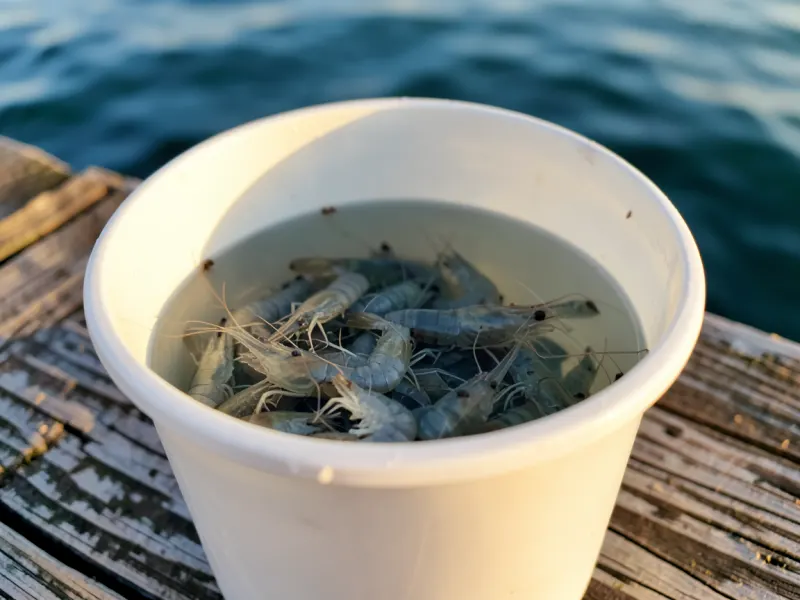
The tide is everything in the gulf. Crews time trips to fish the moving water, and many mangrove and estuary spots can only be reached at certain stages of the tide.
Keep or release, and the sizes
Corvina aren't protected, and they're one of the best fish to keep. INCOPESCA's agreement AJDIP/026-2018 ties the legal minimum to the size at which each species first breeds, and since February 2020 that full size applies: 55 cm for corvina reina, 50 cm for agria, 34 cm for aguada and 32.7 cm for picuda (the smaller sizes, such as 50 cm for reina, were a 2-year transition). They're written for the commercial catch, but they're the right line for anglers too: a fish below them hasn't had a chance to spawn.
The general rules apply as well: you can land 5 fish per trip for your own use (Decreto 36782, article 68), you can't sell a sport catch, and everyone fishing from a boat needs an INCOPESCA sport fishing licence (Ley 8436, article 75).
Records
All-tackle world record
the IGFA's record database lists a whitefin corvina (corvina reina) of 20.86 kg (about 46 lb), caught at Malpaís, Costa Rica, on 1 March 2022. It replaced an 18.00 kg (39 lb 11 oz) fish from Jacó, approved in 2021. Check the IGFA database if you're chasing one, as heavier fish are sometimes submitted.
How corvina eats
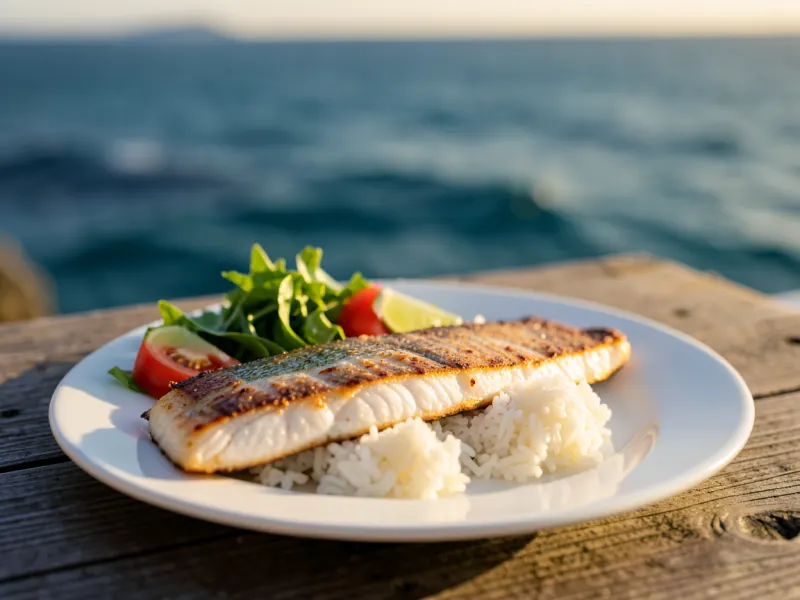
Corvina is mild, white and flaky, and it's Costa Rica's favourite fish for ceviche: cubes of raw corvina "cooked" in lime juice with onion, cilantro and sweet pepper. It's just as good fried or grilled. If you see "sea bass" on a menu here, ask if it's corvina; it usually is. The true sea basses, the groupers and cabrillas, are excellent eating too.
Frequently asked questions
Is corvina the same as sea bass?
Not in the fish books. Corvina is a croaker, from the drum family, but it's what's usually sold and served as "sea bass" in Costa Rica. The true sea basses are the groupers.
Where can I catch corvina in Costa Rica?
Mainly in the Gulf of Nicoya, plus estuaries, river mouths and surf beaches along the Pacific coast.
Can I fish the Gulf of Nicoya in June?
Not the inner gulf: it's closed to all fishing, sport included, from 1 May to 31 July. Trips can still fish the outer gulf.
What's the minimum size for corvina?
55 cm for corvina reina, 50 cm for agria, 34 cm for aguada and 32.7 cm for picuda: INCOPESCA's first-breeding sizes, which became the legal minimum in February 2020 under AJDIP/026-2018.
What's the biggest corvina caught in Costa Rica?
A 20.86 kg (about 46 lb) corvina reina caught at Malpaís in March 2022, which the IGFA lists as the all-tackle world record.
Where this comes from
- Cynoscion albus species summary (FishBase)
- Cynoscion squamipinnis species summary (FishBase)
- Cynoscion phoxocephalus species summary (FishBase)
- Micropogonias altipinnis species summary (FishBase)
- IGFA world record search, whitefin corvina (International Game Fish Association)
- IGFA world records, recently approved, June 2021: whitefin corvina all-tackle (International Game Fish Association)
- IGFA new records, July 2020: whitefin corvina, Los Buzos, Panama (International Game Fish Association)
- Acuerdo AJDIP/026-2018, legal first-capture sizes (INCOPESCA, via FAOLEX)
- El ordenamiento pesquero vigente en el Golfo de Nicoya (MarViva, 2024)
- Reglamento a la Ley de Pesca y Acuicultura, Decreto 36782 (INCOPESCA)
- Ley de Pesca y Acuicultura N.º 8436 (INCOPESCA)
- Epinephelus analogus species summary (FishBase)


