
Costa Rica Fishing Seasons, Month by Month
There's good fishing somewhere in Costa Rica every month. The central and southern Pacific peak for sailfish from about December to April, Guanacaste's offshore season runs from about May to December, and the Caribbean's best tarpon months are September and October, with a second run from about February to April.
At a glance
- Sailfish, central and southern Pacific
- best about December to April
- Sailfish and marlin, Guanacaste
- best about May to August, good to December
- Roosterfish
- all year on the Pacific, often best January to April
- Dorado
- best about July to December
- Yellowfin tuna and wahoo
- best about May to August
- Tarpon, Caribbean
- September and October, then about February to April
- Windiest
- Guanacaste, about December to March (the Papagayo winds)
- Wettest
- Pacific in September and October; Caribbean has no real dry season
The short answer
You can fish Costa Rica in any month, and something good is always running. The trick is matching the month to the coast. The central and southern Pacific have their sailfish peak in the dry season, roughly December to April. Guanacaste flips that around: its best offshore fishing comes in the green season, roughly May to December, once the strong dry-season winds die down. The Caribbean has its own calendar, with tarpon best in September and October and again from about February to April.
This guide walks through the year one month at a time, for all 6 fishing zones: Guanacaste, the Nicoya Peninsula, the Central Pacific, the Southern Pacific, the Caribbean and freshwater. Each month covers the fish, then the weather, wind and sea. The summary tables near the end put the whole year on one screen.
How to read this calendar
Our month notes follow the site's own season chart, which rates each fish as slow, good or best in each month. It's built from fisheries data in MarViva's 2023 sport-fishing guide, Todd Staley's billfish guide for Sport Fishing Magazine (republished by FECOP, the Costa Rican sport fishing federation), and published calendars from fleets in each region. Every fish here can be caught outside its best months. Water temperature, current, bait and the El Niño cycle move things around from year to year, so treat this as the odds, not a promise, and ask your captain what's been biting that week.
A few things hold all year:
- Billfish are released. Sailfish and marlin are catch and release under Costa Rican rules, with circle hooks when you fish natural bait. Roosterfish and tarpon are released too. See our fishing rules guide.
- You can keep a few fish. The fisheries regulation (Decreto 36782) allows 5 fish per trip to be landed for your own use, and selling a sport catch is banned. Dorado, tuna, wahoo and snapper are the usual dinner fish.
- Mornings are calmest. On both coasts and in most months, the sea is flattest early, so most trips leave at first light.
For what each fish looks like and how it's caught, see our Costa Rica fish species guide.
January
January is the start of the high season on the central and southern Pacific. Sailfish numbers build off Quepos, Los Sueños and Golfo Dulce, and the seas there are usually calm under dry-season skies. In Guanacaste, January is the heart of the windy season.
- Guanacaste: Roosterfish are in their best months on the rocky points. Sailfish are around offshore but it isn't the peak, and the Papagayo winds often push boats to fish in the lee of headlands.
- Nicoya Peninsula: Inshore roosterfish, snapper and jacks off Sámara, Carrillo and the southern tip. Boats out of Tambor and Montezuma can reach the start of the central Pacific sailfish run.
- Central Pacific: Sailfish move into their best months. Roosterfish are at their best inshore, and Adventure Tours Costa Rica puts yellowfin tuna in good numbers from January.
- Southern Pacific: Crocodile Bay Resort notes sailfish numbers rising in January and big yellowfin around. Roosterfish and cubera snapper inshore.
- Caribbean: Snook are in one of their best months, often fat snook (calba) in the rivers. Tarpon are good but not peak. Cold fronts can bring days of rain and big seas.
- Freshwater: The dry season starts to lower the water in the northern lowlands, which concentrates fish. Guapote (rainbow bass) on Lake Arenal, and the lagoons at Caño Negro begin to shrink.
Weather and sea: Dry on the Pacific (Liberia's long-term average is close to zero rain in January). Strong offshore winds in Guanacaste. The Caribbean is wet, with an average of over 300 mm of rain at Limón.
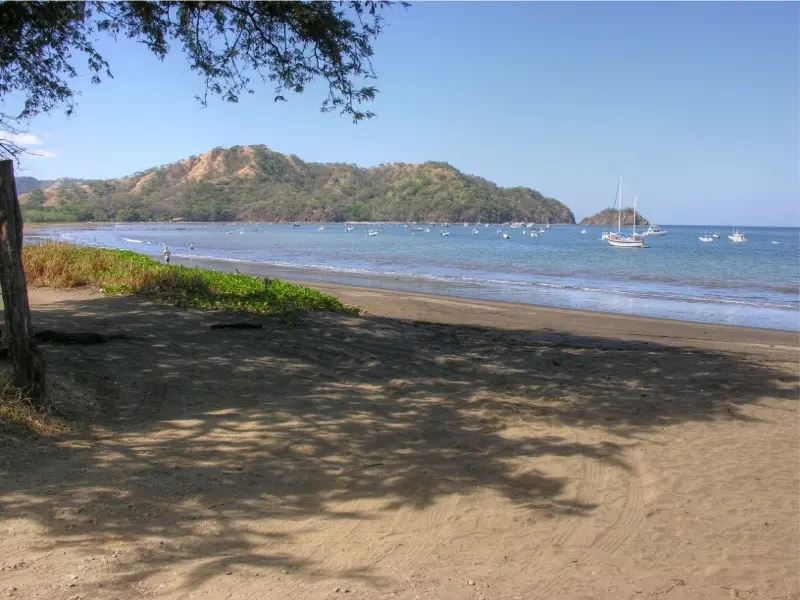
Tournaments: The big-money Pelagic Rockstar tournament is usually held in mid-January at Marina Pez Vela in Quepos, and the first leg of the Los Sueños Triple Crown is fished in January.
February
For many anglers, February is the month. The central and southern Pacific are in full sailfish season, the dry weather is settled, and multi-fish days are common when the bait is in. Book early for this month: it's the busiest of the year for charters on the central coast.
- Guanacaste: Still windy. Roosterfish are the main event inshore. Offshore sailfish are good on calmer days.
- Nicoya Peninsula: Roosterfish and snapper inshore all along the coast. The Gulf of Nicoya fishes for corvina and snapper all year.
- Central Pacific: Sailfish at their best, with Adventure Tours naming February as the peak. Roosterfish best inshore. Dorado and tuna are around offshore in smaller numbers.
- Southern Pacific: Crocodile Bay calls February and March prime time for sailfish. Inshore, roosterfish and snapper around the rocks of the Osa and the Golfo Dulce.
- Caribbean: Tarpon move into their second-best stretch of the year (best from February to April on our chart). Snook are good.
- Freshwater: Low water levels make for good guapote and machaca fishing on Lake Arenal and in the northern rivers.
Weather and sea: Dry and sunny on the whole Pacific. The Papagayo winds are usually at their strongest around February, and can top 70 km/h in surges that last several days. Rain is lighter on the Caribbean than in December and January, but never gone.
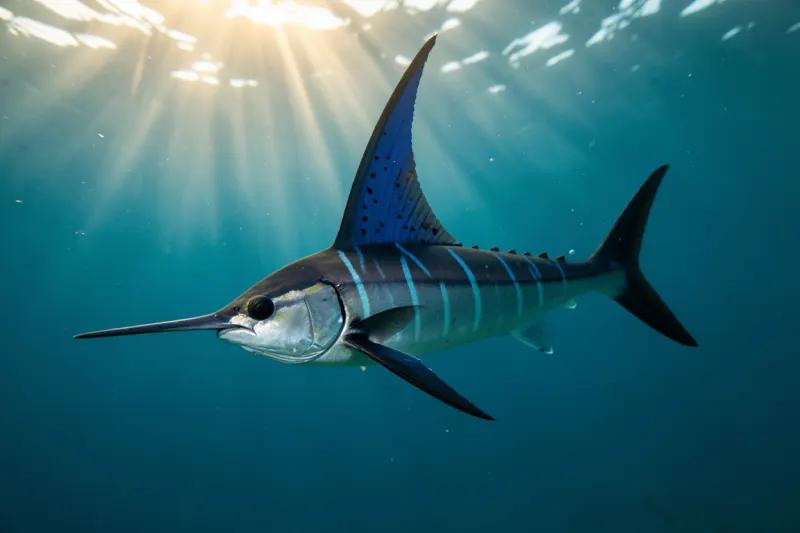
Tournaments: A women's billfish championship, the Pescadora, has been held in late February at Marina Pez Vela, and the Triple Crown runs its second leg around this time.
March
March is hot, dry and still prime billfish time on the central and southern coast. It's also a strong roosterfish month everywhere on the Pacific, and the snapper bite improves around rocky points.
- Guanacaste: Winds start to ease late in the month in many years. Roosterfish and snapper inshore are the reliable targets.
- Nicoya Peninsula: Inshore fishing for roosterfish, jacks and Sierra mackerel. Boats on the southern tip still find sailfish offshore.
- Central Pacific: Sailfish remain at their best. Roosterfish best inshore, with snapper on the reefs.
- Southern Pacific: Crocodile Bay calls March to May prime time for roosterfish and cubera snapper, and notes a second blue marlin peak in March and April.
- Caribbean: Tarpon in their best spell of the first half of the year. March is also one of the drier months at Limón.
- Freshwater: Peak low water in the northern lowlands. At Caño Negro, the big seasonal lagoon breaks up into smaller lakes from January to April. In the Barra del Colorado refuge, tropical gar (gaspar) can't be fished from March 1 to July 31.
Weather and sea: The driest month on much of the Pacific. Some of the hottest days of the year in Guanacaste. Light winds in the south.
Tournaments: March has hosted the IGFA Open at Marina Pez Vela and the Triple Crown's last leg is fished between March and early April.
April
April is the last dry month on the Pacific and a crossover month. Sailfish are still in their best season on the central and southern coast, and as the month goes on, Guanacaste starts to wake up.
- Guanacaste: The winds die down and the sea calms. Sailfish are still in "good" range, and roosterfish are at the end of their best stretch.
- Nicoya Peninsula: Roosterfish still strong. Northern Nicoya offshore boats begin looking for the green-season billfish.
- Central Pacific: Sailfish best. Black marlin start showing, with Adventure Tours naming April and May for them. FishingBooker notes school-sized tuna and dorado offshore.
- Southern Pacific: Crocodile Bay notes record-size roosterfish and cubera snapper in April, and school yellowfin in the 20 to 60 lb range near the coast. Sailfish numbers drop from mid-April.
- Caribbean: Tarpon still in their best spell, snook good.
- Freshwater: Lake Arenal often has low water, which local guides like for guapote from the shore. FishingBooker reports that Caño Negro closes to fishing from about April to July for the gar spawn; check current dates with SINAC before you go.
Weather and sea: The first afternoon showers usually reach the southern Pacific. Liberia's average April rain is still under 25 mm. The Caribbean is wet.
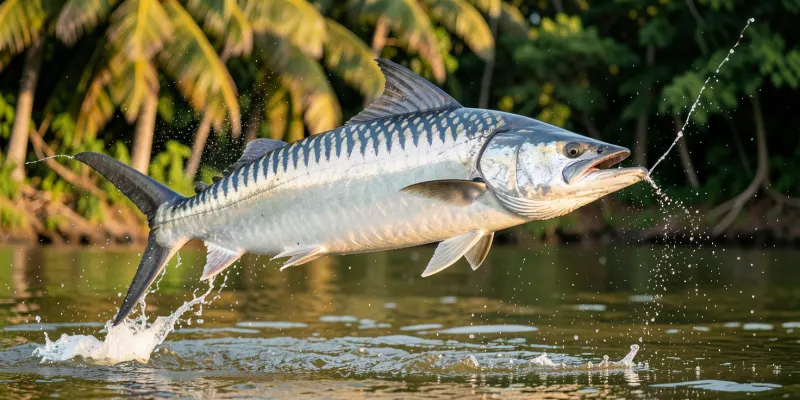
Tournaments: April is tournament month in Quepos. The Offshore World Championship is held at Marina Pez Vela each April, and Bisbee's Costa Rica Offshore was first fished there in April 2026.
May
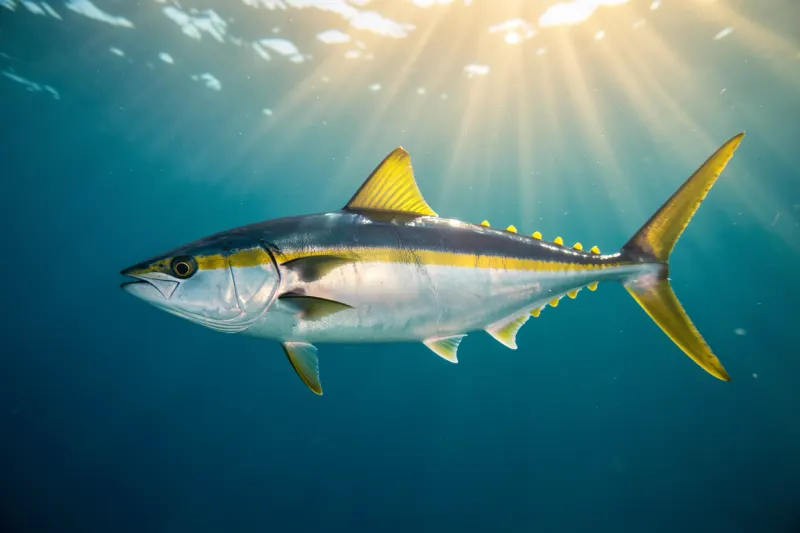
May is the switch. The rains start on the Pacific, the central coast moves out of its sailfish peak, and Guanacaste moves into its best offshore months. Yellowfin tuna and wahoo enter their best stretch along the whole Pacific.
- Guanacaste: Sailfish move into their best months, and blue marlin join them. Calm seas after months of wind.
- Nicoya Peninsula: Offshore fishing from Nosara and Sámara improves with the northern season. Inshore roosterfish and snapper continue.
- Central Pacific: Sailfish are still "good". Blue marlin, yellowfin tuna and wahoo all move into their best months. Adventure Tours puts the start of the dorado season in late May.
- Southern Pacific: Roosterfish and cubera still strong inshore. Crocodile Bay reports yellowfin schooling with spinner dolphins in May and June.
- Caribbean: Tarpon slow down as the rains build. ICT notes the rainy season from mid-May slows fishing in northern Limón.
- Freshwater: Fish are still fairly concentrated before the rain raises rivers. Guapote and machaca on Lake Arenal. On the Savegre near San Gerardo de Dota, Visit Costa Rica gives May and June as the fly-fishing season for trout.
Weather and sea: Rain returns to the Pacific, mostly in the afternoon, so morning trips often stay dry. Liberia's average jumps from under 25 mm in April to almost 200 mm in May.
Tournaments: Battle of the Bay, a Golfo Dulce tournament fished by boats from Golfito, Puerto Jiménez and Zancudo, was held in May in 2025 and 2026.
June
June is the start of the green season proper, with fewer visitors and calmer seas in the north. It's one of the best months of the year for variety on the Pacific: billfish, tuna, wahoo and inshore fish are all in play.
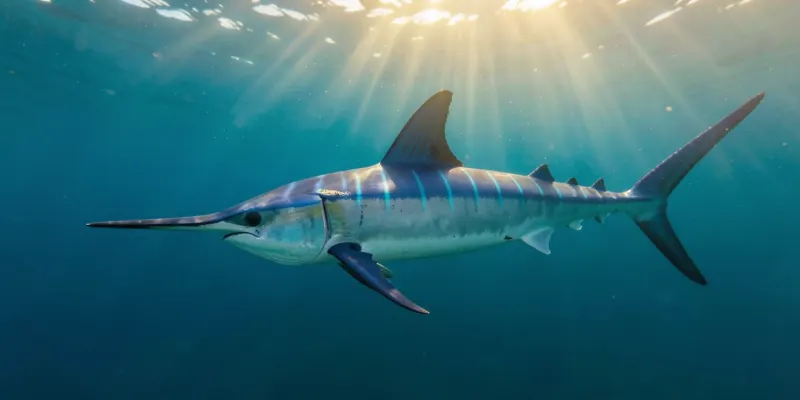
- Guanacaste: Sailfish and blue marlin both at their best. Staley's billfish guide quotes northern operators putting their marlin peak in June and July. Tuna and wahoo best.
- Nicoya Peninsula: Good offshore fishing from the northern beaches, with roosterfish and snapper inshore.
- Central Pacific: Blue marlin, tuna and wahoo at their best. Sailfish "good". Dorado beginning.
- Southern Pacific: Crocodile Bay names June as the month for roosterfish over 70 lb, and describes a second sailfish peak in late June and early July that local crews call the "Indian summer".
- Caribbean: Rainstorms often disrupt fishing. Tarpon and snook are only fair.
- Freshwater: Lakes fish fine, but rivers can flood after heavy rain.
Weather and sea: Afternoon rain on the Pacific, often heavy. Many years bring a short dry break around June 24, which Costa Ricans call the veranillo de San Juan; the IMN describes it as a pause of about 3 to 7 days.
Tournaments: Tuna Thunder, a Quepos tuna tournament, was fished in late June in 2025.
July
July is one of the best months on the northern Pacific and a good one everywhere on that coast. It's the first month of the dorado's best stretch on our chart, and tuna and wahoo are still in their peak.
- Guanacaste: Sailfish and blue marlin at their best. Dorado, tuna and wahoo all in their best months. Staley's billfish guide quotes one Flamingo operator putting sailfish and marlin at their peak from June to August.
- Nicoya Peninsula: Staley lists July and August as peak billfish months for Nosara, where deep water is close to the beach.
- Central Pacific: Blue marlin, dorado, tuna and wahoo all in their best stretch. Sailfish "good". Adventure Tours puts the start of the best snapper months in July.
- Southern Pacific: Crocodile Bay names July as prime for dorado and the start of black marlin, with strong inshore fishing for roosterfish and snapper.
- Caribbean: One of the slowest months for tarpon. July is among the wettest months at Limón.
- Freshwater: Lake Arenal is still good, though fish are spread out.
Weather and sea: The Pacific usually gets a drier spell in mid-July, the canícula, which the IMN dates from about July 15 to August 10 and says is strongest in Guanacaste. In those same weeks the Caribbean and northern lowlands tend to get more rain, not less.
Tournaments: The Presidential Flamingo Fishing Rodeo is usually held at Marina Flamingo in late July or early August.
August
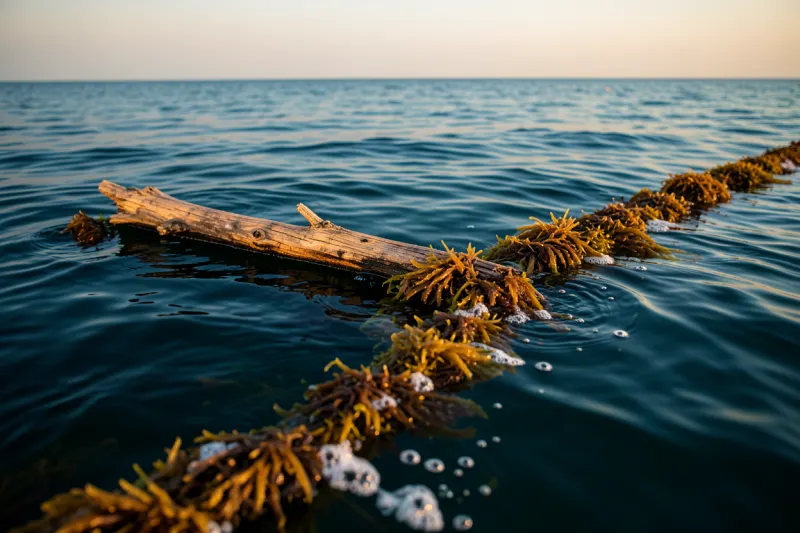
August is a strong all-round month on the Pacific and a poor one on the Caribbean. Rain washes logs and weed out of the rivers, and floating debris holds bait and dorado offshore.
- Guanacaste: Last month of the best sailfish stretch. Blue marlin, dorado, tuna and wahoo still at their best.
- Nicoya Peninsula: Offshore billfish and dorado from the northern beaches. Gulf of Nicoya corvina and snapper all year.
- Central Pacific: Blue marlin and dorado at their best. Sailfish "good", tuna and wahoo at the end of their peak. Staley's guide quotes Quepos boats putting a marlin peak from July to September.
- Southern Pacific: Crocodile Bay notes black marlin in July and August (the lodge's black marlin record came in August), strong tuna and a good dorado bite.
- Caribbean: Tarpon are slow. Weather is often unsettled, so most anglers fish the Pacific instead.
- Freshwater: FishingBooker reports Caño Negro reopening after the gar closure, with gar, snook, tarpon and guapote.
Weather and sea: The canícula usually ends around August 10 and the rain picks up again on the Pacific. Mornings remain the best time on the water.
September
September is the wettest month on most of the Pacific, and the start of the Caribbean's best season. If you only care about tarpon, this is the month to be on the Caribbean side.
- Guanacaste: Blue marlin still at their best, dorado best. Sailfish back to "good". Rain is heavy but the Papagayo winds are gone.
- Nicoya Peninsula: Dorado offshore, roosterfish and snapper inshore when the sea allows.
- Central Pacific: Blue marlin and dorado at their best. Heavy rain some days, but mornings are often fishable.
- Southern Pacific: Crocodile Bay notes more inshore wahoo in September and a strong dorado bite. This is the wettest part of the Pacific, and some lodges in the region close for part of the September to November period, so check before you book.
- Caribbean: Tarpon move into their best months. The Tico Times' 2026 tarpon guide names September and October as the top months, and snook also enter their best stretch.
- Freshwater: Rivers on the Pacific slope are high and muddy. Lakes are still fishable.
Weather and sea: Liberia averages close to 350 mm of rain in September, its wettest month. Limón averages about 140 mm, its driest. The Caribbean sea is often at its calmest, which matters because tarpon boats have to cross the river-mouth bars.
October
October is the quietest month for Pacific billfish and the best month of the year on the Caribbean. On the Pacific, it's dorado time.
- Guanacaste: Dorado at their best. Sailfish and marlin "good". Rain eases late in the month.
- Nicoya Peninsula: Dorado offshore. Inshore snapper and roosterfish.
- Central Pacific: Dorado at their best, and the snapper bite is good. Billfish are around in lower numbers.
- Southern Pacific: Crocodile Bay says dorado appear in numbers from October, with marlin close behind.
- Caribbean: Tarpon and snook both at their best. Note a local rule: in the Barra del Colorado refuge, SINAC closes fat snook (calba) fishing at the river mouth and fishing in the inner lagoons from October 1 to January 31 for spawning. The main river channels stay open.
- Freshwater: Rivers are high. Lake Arenal is fishable.
Weather and sea: Still wet on the Pacific, with Liberia averaging about 310 mm. October is another of the drier months at Limón.
November
November is a month of change. The Pacific starts to dry out, dorado are still at their best, and blue marlin return to "best" on our chart. The Caribbean turns wetter again.
- Guanacaste: Blue marlin and dorado at their best. Sailfish "good". The first windy days can arrive late in the month.
- Nicoya Peninsula: Staley lists November as a peak billfish month for Nosara. Inshore fishing picks up as the water clears.
- Central Pacific: Blue marlin and dorado both at their best, and sailfish start to build. Staley's guide quotes Quepos and Los Sueños boats naming November and December as a marlin peak.
- Southern Pacific: Crocodile Bay names November and December as the big months for blue marlin, dorado and large yellowfin.
- Caribbean: Snook in their best stretch, but tarpon drop off as rain and cold fronts return. Limón averages about 400 mm in November. Remember the Barra del Colorado calba closure runs to January 31.
- Freshwater: Water levels start to drop as the rain eases.
Weather and sea: The Pacific's rainy season tapers off; Liberia's average falls to about 100 mm. The Papagayo winds start building again from around November, according to studies of the wind jet.
Tournaments: Quepos has held a one-day Dorado Derby in November.
December
December brings the high season back to the central and southern Pacific, with sailfish returning to "best" on our chart and the marlin bite still strong. Guanacaste moves back into its windy season.
- Guanacaste: Blue marlin and dorado at their best. Sailfish "good". Windy afternoons start again, so morning trips are the norm.
- Nicoya Peninsula: Inshore roosterfish and snapper improve as the dry season settles. Offshore billfish from the southern tip.
- Central Pacific: Sailfish, blue marlin and dorado all at their best. FishingBooker names Jacó among the best places to start this month.
- Southern Pacific: Blue marlin and dorado best, sailfish building toward their February and March peak. Crocodile Bay notes yellowfin from 100 to 250 lb in December and January.
- Caribbean: Snook best, but December is the wettest month at Limón (about 445 mm on average) and one of the slowest for tarpon.
- Freshwater: Lakes start dropping and fish concentrate. On the Savegre, Visit Costa Rica gives December to March as the bait-fishing season for trout.
Weather and sea: Dry on most of the Pacific, with Liberia averaging about 12 mm. The holidays are the busiest time of year for hotels and boats.
Tournaments: The Flor de Caña tournament was fished at Marina Pez Vela in December 2025.
The whole year in one table
The main targets in each zone, month by month. "Best" fish are in their peak on our chart; others are listed when they're a regular catch that month.
| Month | Guanacaste | Nicoya Peninsula | Central Pacific | Southern Pacific | Caribbean | Freshwater |
|---|---|---|---|---|---|---|
| January | Roosterfish best; windy | Roosterfish, snapper | Sailfish and roosterfish best | Sailfish building; roosterfish | Snook best; tarpon good | Water dropping; guapote |
| February | Roosterfish best; windiest | Roosterfish, snapper | Sailfish peak; roosterfish | Sailfish prime | Tarpon best | Guapote, machaca |
| March | Roosterfish best | Roosterfish, jacks | Sailfish and roosterfish best | Sailfish, roosterfish, cubera | Tarpon best | Low water; gar closed at Barra del Colorado |
| April | Winds ease; roosterfish | Roosterfish | Sailfish best; black marlin | Record roosterfish and cubera | Tarpon best | Arenal low water; Caño Negro closure reported |
| May | Sailfish and marlin best | Northern offshore improves | Marlin, tuna, wahoo best | Roosterfish; tuna | Tarpon slowing | Savegre trout on fly |
| June | Sailfish, marlin, tuna, wahoo best | Offshore and inshore | Marlin, tuna, wahoo best | Big roosterfish; sailfish "Indian summer" | Fair | Lakes fine, rivers flood |
| July | Billfish, dorado, tuna, wahoo best | Nosara billfish peak | Marlin, dorado, tuna, wahoo best | Dorado prime; black marlin | Tarpon slow | Arenal good |
| August | Billfish, dorado, tuna, wahoo best | Nosara billfish peak | Marlin and dorado best | Black marlin; tuna | Tarpon slow | Caño Negro reopens |
| September | Marlin and dorado best | Dorado | Marlin and dorado best | Dorado; inshore wahoo | Tarpon and snook best | Lakes only |
| October | Dorado best | Dorado | Dorado best; snapper | Dorado arrive | Tarpon and snook best | Arenal |
| November | Marlin and dorado best | Nosara billfish peak | Marlin and dorado best | Marlin, dorado, big tuna | Snook best | Water dropping |
| December | Marlin and dorado best; windy | Roosterfish, snapper | Sailfish, marlin, dorado best | Marlin, dorado, big tuna | Snook best; wettest | Savegre trout on bait |
The season chart, fish by fish
This is the same data as the season chart on our species page: B is best, G is good, S is slow. Click through for each fish.
| Fish | Where | J | F | M | A | M | J | J | A | S | O | N | D |
|---|---|---|---|---|---|---|---|---|---|---|---|---|---|
| Sailfish | Central and South Pacific | B | B | B | B | G | G | G | G | G | G | G | B |
| Sailfish | Guanacaste | G | G | G | G | B | B | B | B | G | G | G | G |
| Blue marlin | Pacific, offshore | G | G | G | G | B | B | B | B | B | G | B | B |
| Roosterfish | Pacific, inshore | B | B | B | B | G | G | G | G | G | G | G | G |
| Dorado | Pacific, offshore | G | G | G | G | G | G | B | B | B | B | B | B |
| Yellowfin tuna | Pacific, offshore | G | G | G | G | B | B | B | B | G | G | G | G |
| Wahoo | Pacific, offshore | G | G | G | G | B | B | B | B | G | G | G | G |
| Tarpon | Caribbean | G | B | B | B | G | G | S | S | B | B | G | S |
| Snook | Caribbean | B | G | G | G | G | G | G | G | B | B | B | B |
Fish that don't change much through the year aren't on the chart: snapper, grouper, amberjack and the corvina of the Gulf of Nicoya are caught in every month.
Weather, wind and sea, month by month
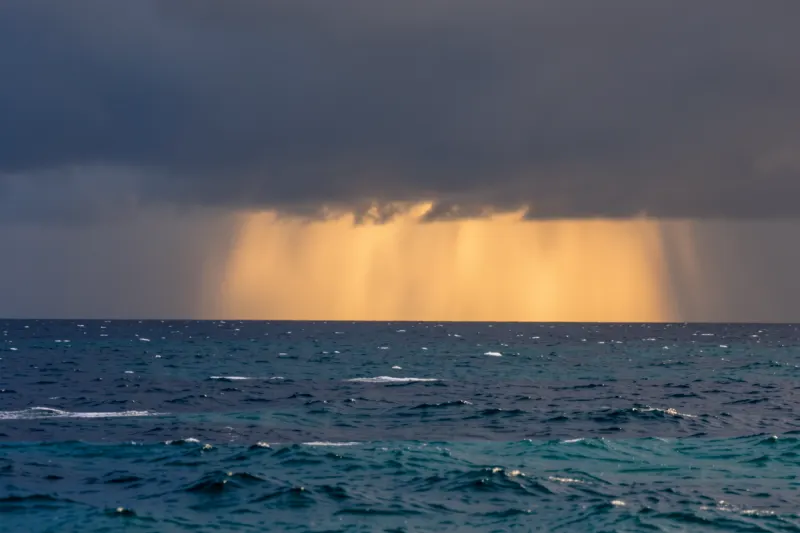
For anglers, rain matters less than wind and swell. Rain rarely cancels a trip; a strong wind or big sea does. Here's the year in short, with more in our Costa Rica weather guide.
| Month | Guanacaste and northern Nicoya | Central and Southern Pacific | Caribbean |
|---|---|---|---|
| January | Dry; strong offshore winds | Dry, calm | Wet; cold fronts bring rough days |
| February | Dry; winds usually strongest | Dry, calm | Wet, a little less than January |
| March | Dry, hot; winds easing late | Dry, calm | One of the drier months |
| April | Dry, hottest; winds fading | First showers in the south | Wet |
| May | Rains start, calm seas | Rains start, mostly afternoons | Wet; rainy season slows fishing |
| June | Afternoon rain; veranillo near June 24 | Afternoon rain | Wet, stormy spells |
| July | Canícula: drier mid-July to early August | Canícula drier spell | Among the wettest |
| August | Rain returns after about August 10 | Rain returns | Wet, unsettled |
| September | Wettest month | Wettest stretch; south very wet | Driest month, calmest sea |
| October | Very wet, easing late | Very wet | Dry spell continues |
| November | Drying; first wind late in the month | Drying | Wet again |
| December | Dry; winds return | Dry, calm | Wettest month |
The Papagayo winds
From about November to March, a strong wind jet blows from the Caribbean side across the low gap in the mountains and out over the Gulf of Papagayo. It's usually strongest around February, weakens from April and is gone by September. The wind also stirs up cooler, nutrient-rich water off the northern coast. Practically, it means early starts and inshore fishing in the lee of headlands for much of Guanacaste's dry season, and it's why the northern offshore fleet does its best work from May onward.
Rain on the Pacific
The Pacific dry season runs roughly December to April and the rains run May to November. September and October are the wettest months. Rain usually falls in the afternoon and evening, which suits fishing trips that leave at dawn. The rains also flush logs and weed lines out to sea, and that floating cover is a big part of why the dorado run peaks in the second half of the year.
The Caribbean's own pattern
The Caribbean has no real dry season. The calmest, driest stretches are usually September and October, with another drier patch around March. December, July and November are the wettest. Tarpon boats need a calm enough sea to cross the river-mouth bars and rivers that aren't brown with floodwater, which is why the best months follow the weather so closely.
Freshwater through the year
Freshwater fishing follows the water level more than the calendar. When the rains ease, rivers drop and lagoons shrink, and fish crowd into the water that's left.
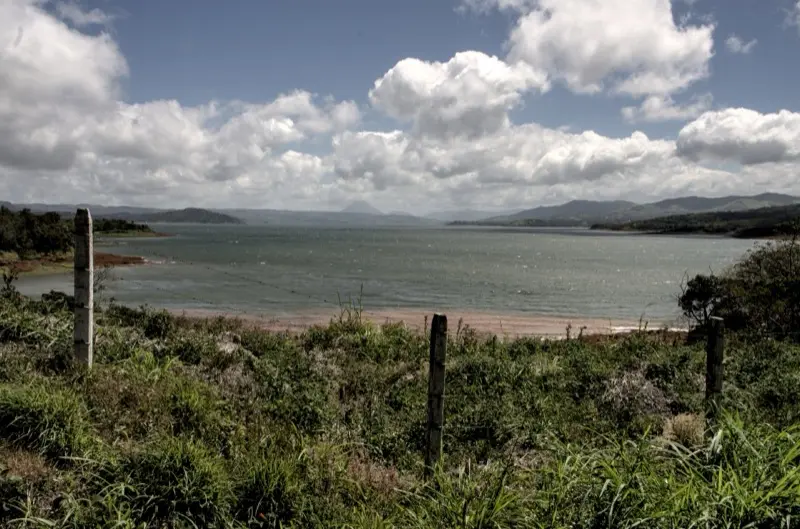
- Lake Arenal: Guapote (rainbow bass) and machaca all year, usually better when the lake is low, often in the dry season into April and May.
- Caño Negro and the northern lowlands: Best in the dry season, about January to April, when the big lagoon breaks into smaller lakes. FishingBooker reports a closure from about April to July for the gar spawn, reopening in August. Confirm the dates with SINAC.
- Barra del Colorado refuge: Under SINAC's 2026 guide, no fishing on Tuesdays (the river's rest day), gar (gaspar) closed from March 1 to July 31, and calba and the inner lagoons closed from October 1 to January 31. The refuge needs its own SINAC licence, separate from INCOPESCA's.
- Trout in the mountains: On the Savegre at San Gerardo de Dota, Visit Costa Rica gives December to March for bait fishing and May to June for fly fishing.
More detail in our freshwater fishing guide.
Planning around the seasons
- Pick the coast, then the month. If you can only travel in July, go north to Guanacaste. If you're set on February sailfish, go to Quepos, Los Sueños or the Golfo Dulce. For tarpon in September, go to the Caribbean.
- Leave a spare day. Wind or swell can cancel a day in any month, so build one in.
- Book high season early. The central Pacific in February and March and the holidays in late December fill up first.
- Ask about the last week. Captains know what's biting right now, which can beat any chart.
See our trip planning guide, the lodges guide for places like Crocodile Bay Resort and Silver King Lodge, our fishing techniques guide, and our tournaments guide for dates.
Frequently asked questions
What's the best month to fish in Costa Rica?
It depends on the coast. For sailfish on the central and southern Pacific, February and March are hard to beat. For Guanacaste's billfish, June to August. For Caribbean tarpon, September and October.
Is the rainy season a bad time to fish?
No. Rain on the Pacific usually falls in the afternoon, and the green season brings Guanacaste's best offshore fishing and the strongest dorado, tuna and wahoo months. September and October are very wet, so expect some lost afternoons.
When is the sailfish season in Costa Rica?
About December to April on the central and southern Pacific, and about May to August in Guanacaste. Sailfish are caught in every month somewhere on the Pacific.
When can I catch roosterfish?
All year on the Pacific coast. Our chart puts the best months from January to April, and southern fleets report big fish from March to June.
When is tarpon season on the Caribbean?
September and October are usually the best, with a second good stretch from about February to April. July, August and December are usually the slowest.
Does the wind stop fishing in Guanacaste?
It changes it. From about December to March, strong offshore winds make afternoons rough, so trips leave early and often fish inshore spots sheltered by headlands. The wind fades by May.
Are there closed seasons for sport fishing?
Not for the main sea fish, which are open all year. Some protected areas have their own rules, such as the Barra del Colorado refuge's closures for gar and fat snook, and fishing is banned inside national parks and biological reserves. Our rules guide has the details.
Which months are quietest and least crowded?
September to November are the quietest on the Pacific, with the fewest visitors. Some southern lodges close for part of that time, so check first.
Charters and places in this guide

Puerto Jiménez · fishing lodgeCrocodile Bay ResortCrocodile Bay is a sportfishing operation and marina in Puerto Jiménez, on the Osa Peninsula side of the Golfo Dulce, running…
Barra del Colorado · fishing lodgeSilver King LodgeSilver King Lodge is an all-inclusive fishing lodge on the Río Colorado, inside the Barra del Colorado Wildlife Refuge on Costa…Sources
- Best practices guide for tourist and sport fishing in Costa Rica, species peak-abundance data (MarViva, 2023)
- Billfish angler's guide to Costa Rica (Todd Staley, Sport Fishing Magazine, via FECOP)
- Fishing seasons by species, southern Pacific (Crocodile Bay Resort)
- Costa Rica fish species and best months, central Pacific (Adventure Tours Costa Rica)
- Costa Rica fishing seasons, month by month (FishingBooker, 2026)
- Best time and place to go tarpon fishing in Costa Rica (The Tico Times, May 2026)
- Hook up with tarpon season on Caribbean coast (Alberto Font, The Tico Times, 2010)
- Caribbean tourist guide, sport fishing (Instituto Costarricense de Turismo)
- Guía para pescadores responsables, aguas continentales, Refugio Nacional de Vida Silvestre Barra del Colorado (SINAC, Área de Conservación Tortuguero, 2026)
- Climate of Costa Rica, monthly rainfall for Liberia and Limón (Wikipedia)
- Papagayo Jet (Wikipedia)
- Canícula y veranillo de San Juan: the difference, according to the IMN (El Observador)
- Instituto Meteorológico Nacional (IMN), Costa Rica's national weather service
- Caño Negro Wildlife Refuge (Wikipedia)
- San Gerardo de Dota, trout seasons on the Savegre (Visit Costa Rica, official tourism board)
- Reglamento a la Ley de Pesca y Acuicultura, Decreto 36782 (INCOPESCA)
- Los Sueños Signature Triple Crown (organiser)
- Bisbee's Costa Rica Offshore (organiser)
- Battle of the Bay 2025, Golfo Dulce (Delfino.cr)
- Southern Pride wins the 9th Presidential Flamingo Fishing Rodeo (The Tico Times, 2024)


