
Costa Rica Fish Species
The Complete Guide
Costa Rica's sport fish fall into a dozen families, from billfish and tuna offshore to roosterfish, snapper and grouper on the Pacific rocks, tarpon and snook on the Caribbean, and guapote and trout in fresh water. Billfish, roosterfish and tarpon are released by law or rule, hammerhead sharks are protected, and most other fish can be kept within a limit of 5 per trip.
At a glance
- Coasts
- Pacific (most species), Caribbean (tarpon, snook, Caribbean snappers) and freshwater
- Groups covered
- 14, with about 80 species
- Released by law or rule
- sailfish, marlin, swordfish, roosterfish and tarpon
- Protected
- scalloped, great and smooth hammerheads (Decree 43900-MAG-MINAE, 2023)
- Keep limit
- 5 fish per trip for your own use; selling a sport catch is banned
- Best eating
- dorado, yellowfin tuna, wahoo, snapper, grouper and corvina
- Records
- Costa Rica holds the all-tackle records for common snook and Pacific black snook
- Licence
- INCOPESCA sport fishing licence for everyone fishing from a boat
The short answer
Costa Rica has two oceans and a lot of fresh water, so the list of fish you might catch is long. Offshore on the Pacific, it's billfish, tuna, dorado and wahoo. Inshore on the Pacific rocks, it's roosterfish, snapper, grouper, jacks and amberjack. On the Caribbean, it's tarpon and snook in the rivers and river mouths, with snapper and mackerel on the reefs. Inland, it's guapote and machaca in the lakes and rivers, and rainbow trout in the mountains.
This guide covers every species you're realistically likely to hook, grouped by family. For each fish you'll find the English name, the Spanish name Costa Rican crews use, the Latin name, where and when it's caught, how it's usually fished, and whether it goes home for dinner or back in the water. For the months, see our fishing seasons guide, and for the rules in full, our fishing rules guide.
How we built this list
We started from the species list in our content plan and checked every fish against FishBase, the Smithsonian Tropical Research Institute's Shorefishes databases for the eastern Pacific and the Caribbean, MarViva's 2023 sport-fishing guide for Costa Rica, and a 2026 study in the Revista de Biología Tropical that logged 685 fish caught on rod and reel by recreational anglers in Bahía Santa Elena, Guanacaste. Where a fish often turns up in fishing guides but doesn't actually live in Costa Rican waters, we say so in the section near the end on names that get mixed up.
A few rules apply to almost every fish below:
- Released by law or rule: sailfish, marlin and swordfish (billfish), roosterfish and tarpon. Billfish stay in the water for photos.
- Protected: the 3 large hammerhead sharks can't be caught or kept.
- Kept within a limit: the fisheries regulation (Decreto 36782) lets you land 5 fish per trip for your own use. Selling a sport catch is banned.
- Licence: everyone fishing from a boat needs an INCOPESCA sport fishing licence, which many charters arrange.
Billfish
Billfish are Costa Rica's headline fish, and they're all Pacific, all offshore and all released. Costa Rica's fisheries law (Ley 8436) names sailfish and marlin as species of tourist and sport-fishing interest. Natural baits have to be fished on circle hooks, and INCOPESCA's agreement AJDIP/280-2014 bans lifting a billfish onto the boat for photos, except for a world-record or approved tournament weigh-in.
| Fish | Spanish | Latin | Where and when | Keep or release |
|---|---|---|---|---|
| Sailfish | pez vela | Istiophorus platypterus | Whole Pacific; central and south best December to April, Guanacaste May to August | Release |
| Blue marlin | marlín azul | Makaira nigricans | Pacific offshore and seamounts; best about May to September and November to December | Release |
| Black marlin | marlín negro | Istiompax indica | Pacific, offshore and near islands; MarViva puts peak abundance May to October | Release |
| Striped marlin | marlín rayado or rosado | Kajikia audax | Pacific offshore; all year off Guanacaste, July to October in the centre and south (MarViva) | Release |
| Swordfish | pez espada | Xiphias gladius | Far offshore and deep; no reliable sport season | Release |
| Shortbill spearfish | marlín trompa corta | Tetrapturus angustirostris | Open Pacific; a rare, occasional catch | Release |
How they're caught: most boats troll hookless teasers to raise fish, then pitch a rigged ballyhoo or a live bait on a circle hook. Sailfish are usually fished on 20 to 30 lb class tackle, marlin on heavier gear, and many crews offer bait-and-switch on fly. Blue marlin outnumber the other two, black marlin are most likely near islands and seamounts, and the shortbill spearfish is a rare offshore bonus we wouldn't plan a trip around.
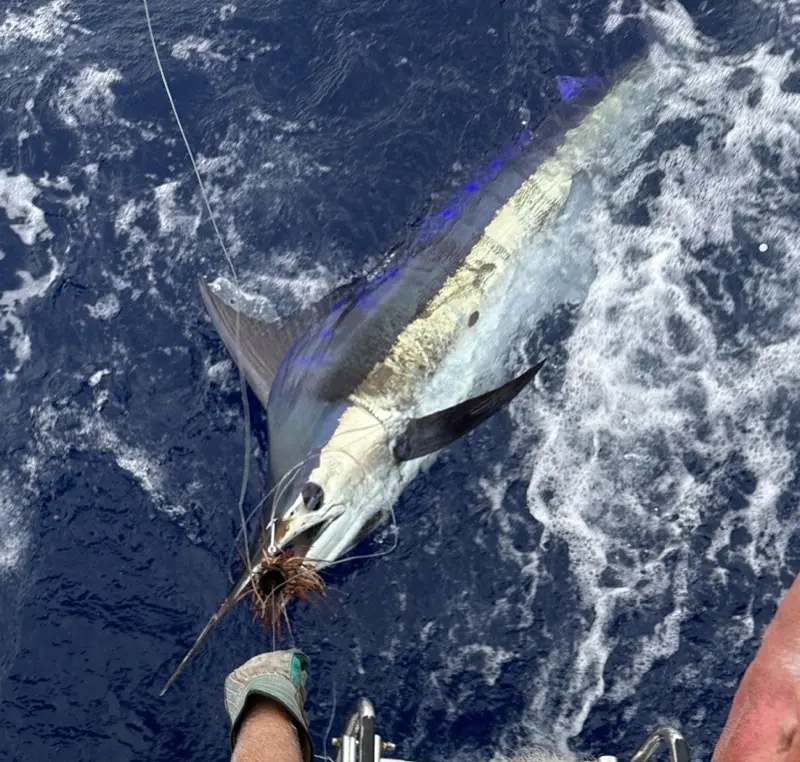
Billfish counts can be huge on a good day: the central Pacific is famous for multi-sailfish days in February and March. See our sailfish, marlin and swordfish pages for more.
Tuna and mackerel
The tuna family gives Costa Rica some of its best eating fish, and several of its best bait fish. Yellowfin are the big prize on the Pacific, and fisheries data in MarViva's guide shows them as the most common tuna in Costa Rican waters, present all year.
| Fish | Spanish | Latin | Where and when | Keep or release |
|---|---|---|---|---|
| Yellowfin tuna | atún aleta amarilla | Thunnus albacares | Pacific offshore all year; best about May to August | Keep |
| Bigeye tuna | atún ojo grande, patudo | Thunnus obesus | Deep offshore Pacific; occasional | Keep |
| Skipjack tuna | barrilete | Katsuwonus pelamis | Offshore schools, both coasts | Keep, or use as bait |
| Black skipjack | barrilete negro | Euthynnus lineatus | Pacific, inshore and offshore schools | Usually bait |
| Striped bonito | bonito | Sarda orientalis | Pacific, nearshore | Keep or bait |
| Pacific sierra | sierra | Scomberomorus sierra | Pacific beaches, points and bays, all year | Keep |
| Wahoo | wahoo, peto | Acanthocybium solandri | Pacific islands, seamounts, drop-offs; best May to August | Keep |
| King mackerel | carite | Scomberomorus cavalla | Caribbean, nearshore | Keep |
| Cero | sierra | Scomberomorus regalis | Caribbean reefs | Keep |
| Serra Spanish mackerel | sierra | Scomberomorus brasiliensis | Caribbean coast | Keep |
| Blackfin tuna | atún aleta negra | Thunnus atlanticus | Caribbean offshore; occasional | Keep |
| Little tunny | bonito | Euthynnus alletteratus | Caribbean offshore schools | Keep or bait |
How they're caught: yellowfin are found under diving birds or with spinner dolphins, then caught on trolled lures, live bait, poppers or jigs. Bigger fish run 100 lb and up, and Crocodile Bay Resort reports fish from 100 to 250 lb in the south in December and January. Sierra hit small spoons and plugs cast or trolled along the beaches. The small tunas (black skipjack and bonito) are what crews catch first in the morning to use as live bait for marlin and big tuna.
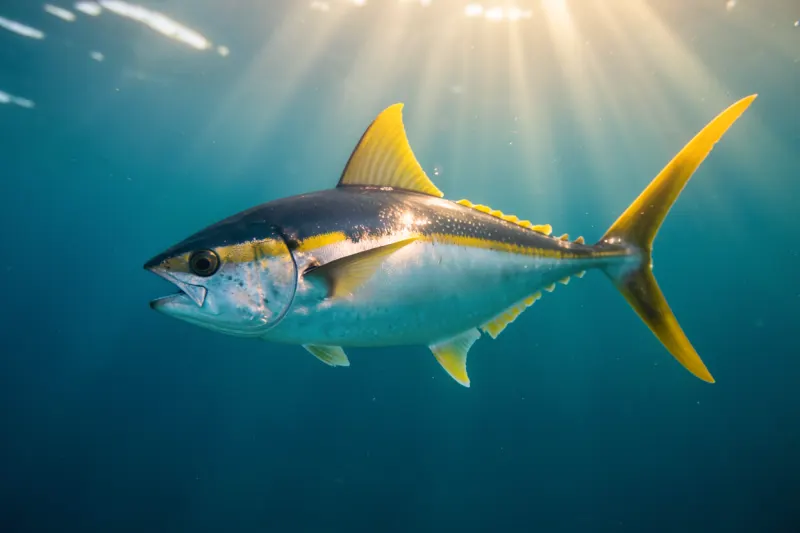
Wahoo are mackerel relatives, not tuna, but they're caught the same way: fast-trolled lures and wire leaders around rocky islands and seamounts. They're never caught in big numbers and they're one of the best fish to take home.
Jacks and pompano
Jacks are the hard-pulling workhorses of the Pacific inshore. The 2026 Bahía Santa Elena study found jacks (jureles) were the most-caught family on rod and reel there, ahead of snappers, and the Pacific crevalle jack was the single most common species.
| Fish | Spanish | Latin | Where and when | Keep or release |
|---|---|---|---|---|
| Pacific crevalle jack | jurel | Caranx caninus | Pacific inshore, river mouths, all year | Usually release |
| Green jack | jurel verde | Caranx caballus | Pacific inshore schools | Usually bait or release |
| Bigeye trevally | jurel ojón | Caranx sexfasciatus | Pacific reefs and points | Usually release |
| Bluefin trevally | jurel azul | Caranx melampygus | Pacific rocks and islands | Usually release |
| Golden trevally | jurel dorado | Gnathanodon speciosus | Pacific inshore; less common | Release |
| African pompano | pámpano africano, papelillo | Alectis ciliaris | Pacific reefs and seamounts | Keep or release |
| Almaco jack (amberjack) | medregal | Seriola rivoliana | Pacific deep reefs, seamounts, all year | Keep |
| Rainbow runner | macarela salmón | Elagatis bipinnulata | Pacific offshore, around floating objects | Keep |
| Gafftopsail pompano | pámpano | Trachinotus rhodopus | Pacific surf and rocky shores | Keep |
| Pacific threadfin jack | jurel | Caranx otrynter | Pacific; a small jack, seldom targeted | Release |
| Jack crevalle | jurel | Caranx hippos | Caribbean river mouths and coast | Usually release |
| Horse-eye jack | jurel ojón | Caranx latus | Caribbean rivers, reefs | Usually release |
| Permit | pámpano | Trachinotus falcatus | Caribbean; occasional | Release |
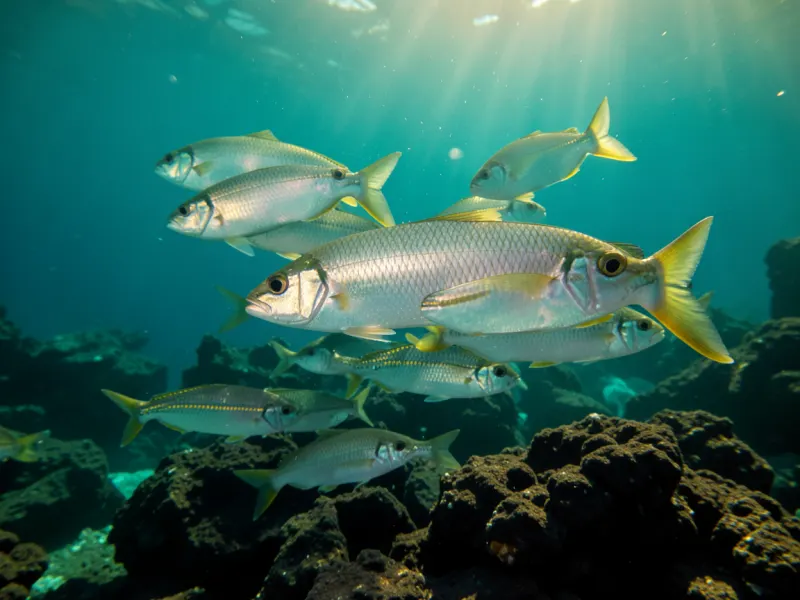
How they're caught: jacks smash poppers and stickbaits cast at rocks, and they take live bait slow-trolled for roosterfish. The almaco jack is a deep-water fish caught by vertical jigging and bottom fishing over pinnacles. Rainbow runners come up around floating logs while crews look for dorado. Most crews release jacks other than amberjack and the pompanos, since they're not the best eating.
Dorado and wahoo
These two are the dinner fish of the offshore fleet. Dorado (mahi-mahi) are fast, colourful and often found around anything floating, while wahoo hang around structure.
| Fish | Spanish | Latin | Where and when | Keep or release |
|---|---|---|---|---|
| Dorado (mahi-mahi) | dorado | Coryphaena hippurus | Pacific offshore; best about July to December | Keep |
| Wahoo | wahoo, peto | Acanthocybium solandri | Pacific offshore; best about May to August | Keep |
How they're caught: dorado are found by running weed lines and floating logs, especially after the rains flush debris out to sea. Once a school is found, crews keep one hooked fish in the water so the rest stay near the boat, and anglers cast light tackle or bait. The photo at the top of this page is a dorado jumping off Costa Rica's Pacific coast. A world-record dorado of about 39.5 kg was caught in Costa Rica, and MarViva's data puts peak abundance from October to February. Wahoo are covered under tuna and mackerel above.
Roosterfish
There's only one roosterfish, and it's a fish of the eastern Pacific found nowhere else. Its tall comb of 7 dorsal spines makes it unmistakable, and it's the fish many anglers come to Costa Rica's Pacific coast to catch.
| Fish | Spanish | Latin | Where and when | Keep or release |
|---|---|---|---|---|
| Roosterfish | pez gallo | Nematistius pectoralis | Pacific only, inshore near rocks, points and beaches; all year, often best January to April | Release |
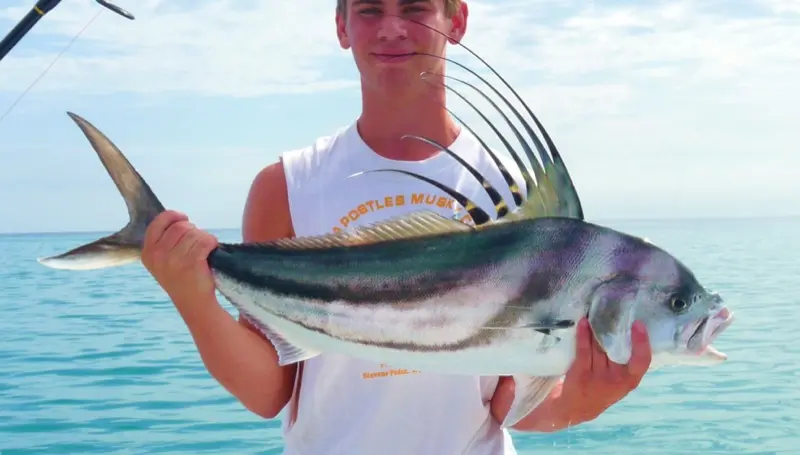
How they're caught: slow-trolling a live bait (often a blue runner or small bonito) along the rocks and beaches is the classic method, and many anglers love casting big poppers at the white water. INCOPESCA's 2014 sport-fishing rules (AJDIP/086-2014) list roosterfish with billfish and tarpon as catch-and-release species, and they can't be sold. Crocodile Bay Resort reports record-size fish in the south in April and fish over 70 lb in June.
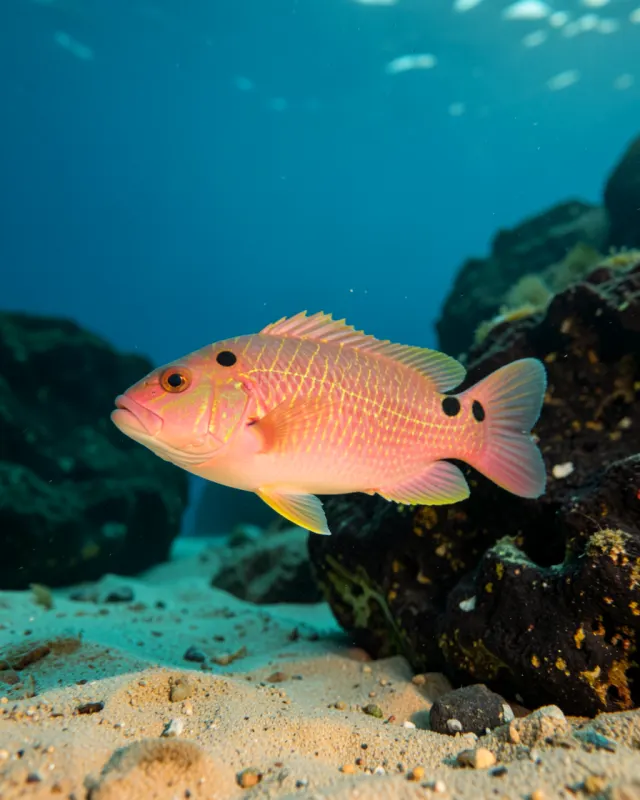
Pacific snappers
Snappers (pargos) are caught all year on the Pacific, they fight hard near rocks, and most of them are excellent eating. The Bahía Santa Elena study found yellow snapper the second most common fish caught by anglers there.
| Fish | Spanish | Latin | Where and when | Keep or release |
|---|---|---|---|---|
| Pacific dog (cubera) snapper | pargo dientón, pargo negro or prieto | Lutjanus novemfasciatus | Pacific rocks, river mouths, mangroves; all year | Keep smaller fish, release big ones |
| Pacific red snapper | pargo seda | Lutjanus peru | Deeper Pacific reefs | Keep |
| Colorado snapper | pargo colorado | Lutjanus colorado | Pacific mangroves, river mouths, reefs | Keep |
| Yellow snapper | pargo amarillo | Lutjanus argentiventris | Pacific rocks and mangroves; very common | Keep |
| Spotted rose snapper | pargo mancha, lunarejo | Lutjanus guttatus | Pacific reefs and sand edges | Keep |
| Mullet snapper | pargo roquero, raicero | Lutjanus aratus | Pacific mangroves and rocky shores | Keep |
| Blue-and-gold snapper | pargo rayado | Lutjanus viridis | Pacific reefs and islands; small, not a target | Release |
How they're caught: casting poppers and stickbaits at rocks at dawn, live bait near structure, and bottom fishing or jigging on reefs. The Pacific cubera is the giant of the family, reaching about 170 cm according to FishBase, and southern fleets report fish over 50 lb all year. Spotted rose snapper rarely get big but are one of the best-eating fish on the coast.
Caribbean snappers
The Caribbean snappers are a separate set of species from the Pacific ones. They're caught on the reefs off Limón, Cahuita and Puerto Viejo, and around the river mouths of the northern Caribbean.
| Fish | Spanish | Latin | Where and when | Keep or release |
|---|---|---|---|---|
| Cubera snapper | pargo cubera | Lutjanus cyanopterus | Caribbean reefs and river mouths | Keep smaller fish |
| Mutton snapper | pargo criollo | Lutjanus analis | Caribbean reefs and sand | Keep |
| Grey (mangrove) snapper | pargo prieto | Lutjanus griseus | Caribbean mangroves, river mouths, reefs | Keep |
| Lane snapper | pargo biajaiba | Lutjanus synagris | Caribbean reefs; a small snapper | Keep |
| Yellowtail snapper | rabirrubia | Ocyurus chrysurus | Caribbean reefs | Keep |
How they're caught: bottom fishing and drifting baits over reef, and casting along river mouths at dawn. The Caribbean is mainly a tarpon and snook coast, so snapper are usually a side catch on offshore days out of Limón or lodges like Silver King Lodge.
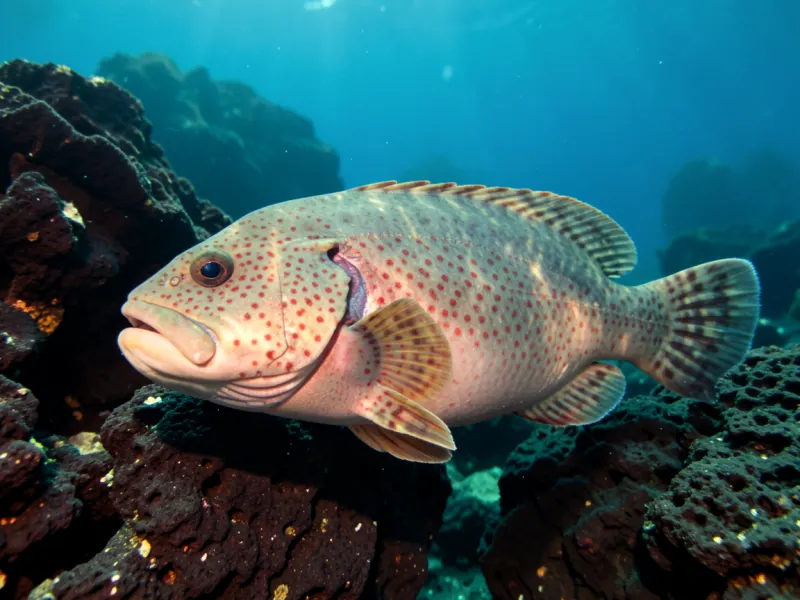
Groupers
Groupers and cabrillas are the true sea basses of Costa Rica's Pacific reefs. They live tight to rock, so the fight is a tug-of-war.
| Fish | Spanish | Latin | Where and when | Keep or release |
|---|---|---|---|---|
| Broomtail grouper | cabrilla, mero | Mycteroperca xenarcha | Pacific rocks and pinnacles, all year | Keep smaller fish |
| Spotted cabrilla | cabrilla pinta | Epinephelus analogus | Pacific reefs and rocks, all year | Keep |
| Flag cabrilla | cabrilla piedrera | Epinephelus labriformis | Pacific reefs; a small grouper | Keep or release |
| Panama graysby | cabrilla enjambre | Cephalopholis panamensis | Pacific reefs; small | Release |
| Leather bass | mero cuero | Dermatolepis dermatolepis | Pacific rocks and islands | Release |
| Pacific goliath grouper | mero guasa | Epinephelus quinquefasciatus | Pacific rocks and river mouths; rare | Release |
How they're caught: bottom fishing with live or cut bait, and vertical jigging over rocky pinnacles. Pull hard early or the fish will reach its hole. The Pacific goliath grows to about 250 cm and is slow-growing and rare; we found no specific Costa Rican rule for it, but responsible crews release every one. Deep-caught fish suffer from the pressure change, so release them quickly, ideally with a descending weight.
Corvina
Corvina are croakers, not true basses, but they're what's usually sold as "sea bass" in Costa Rica. They live in the Gulf of Nicoya, Pacific estuaries, river mouths and surf beaches.
| Fish | Spanish | Latin | Where and when | Keep or release |
|---|---|---|---|---|
| White corvina | corvina reina | Cynoscion albus | Gulf of Nicoya, estuaries, river mouths; all year | Keep if 50 cm or more |
| Striped corvina | corvina rayada | Cynoscion reticulatus | Pacific estuaries and sandy shores | Keep |
| Corvina aguada | corvina aguada | Cynoscion squamipinnis | Gulf of Nicoya | Keep if 33 cm or more |
| Corvina picuda | corvina picuda | Cynoscion phoxocephalus | Gulf of Nicoya | Keep if 32 cm or more |
| Corvina agria | corvina agria | Micropogonias altipinnis | Gulf of Nicoya | Keep if 46 cm or more |
How they're caught: bait and lures fished on the bottom in channels and river mouths, and from the beach on falling tides. INCOPESCA's agreement AJDIP/026-2018 sets legal first-capture sizes for these corvinas (the sizes in the table), based on when each species first breeds. Those are commercial rules, but they're the right guide for what to keep.
Snook
Costa Rica has snook on both coasts, and it holds two all-tackle world records for them: common snook, and a Pacific black snook confirmed by the IGFA in 2026.
| Fish | Spanish | Latin | Where and when | Keep or release |
|---|---|---|---|---|
| Pacific black snook | róbalo negro | Centropomus nigrescens | Pacific river mouths, estuaries, surf | Keep a small one, release the big ones |
| Pacific white snook | róbalo blanco | Centropomus viridis | Pacific estuaries and beaches | Keep a small one |
| Common snook | róbalo | Centropomus undecimalis | Caribbean river mouths, lagoons, surf; best about September to January | Keep a small one |
| Fat snook | calba | Centropomus parallelus | Caribbean rivers and lagoons; often November to February | Keep a small one, outside closures |
How they're caught: casting plugs and jigs at river mouths, mangrove edges and the surf, and live bait at dawn and dusk. In the Barra del Colorado refuge, SINAC closes fat snook (calba) fishing at the river mouth and the inner lagoons from October 1 to January 31. The biggest snook are mostly breeding females, so release those.
Tarpon
Tarpon are the Caribbean's giant, and the one fish that brings anglers to Barra del Colorado, Tortuguero and Parismina. They jump like few other fish.
| Fish | Spanish | Latin | Where and when | Keep or release |
|---|---|---|---|---|
| Tarpon | sábalo, sábalo real | Megalops atlanticus | Caribbean river mouths, rivers, lagoons; best September and October, then about February to April. A few now in the southern Pacific | Release |
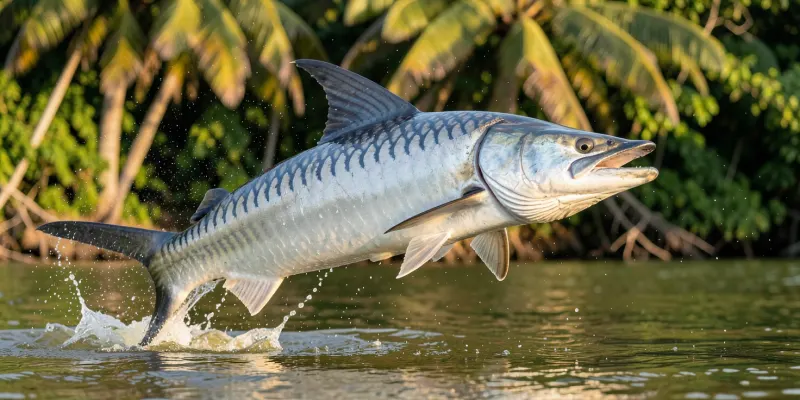
How they're caught: jigs and plugs fished near the river-mouth bars and in the rivers, plus drifting live bait. Ley 8436 names tarpon a species of tourist and sport-fishing interest, and INCOPESCA's 2014 rules say tarpon are released in the water. MarViva notes tarpon have now spread to the eastern Pacific, likely through the Panama Canal, and a few are caught in the southern Pacific.
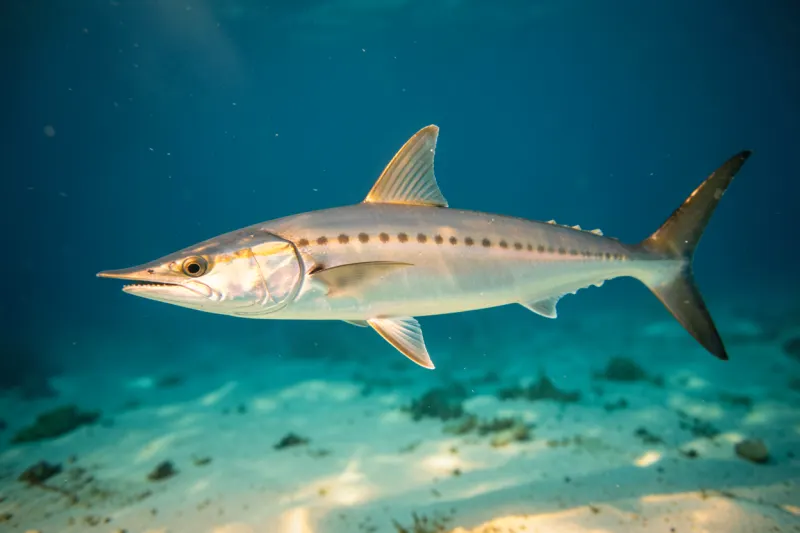
Barracuda and other inshore fish
This is the catch-all family: fish that turn up on inshore trips, sometimes as the target, often as a welcome bonus.
| Fish | Spanish | Latin | Where and when | Keep or release |
|---|---|---|---|---|
| Mexican barracuda | picuda | Sphyraena ensis | Pacific coast and bays | Keep smaller ones |
| Great barracuda | barracuda, picuda | Sphyraena barracuda | Caribbean reefs and coast | Usually release |
| Pacific ladyfish | machete | Elops affinis | Pacific estuaries and beaches | Release |
| Pacific tripletail | dormilona | Lobotes pacificus | Pacific, around floating debris | Keep |
| Blue bobo (Pacific threadfin) | bobo | Polydactylus approximans | Pacific sandy beaches; small | Release or bait |
| Finescale triggerfish | pez chancho, cochi | Balistes polylepis | Pacific rocky reefs, common | Keep |
| Cobia | cobia | Rachycentron canadum | Caribbean only; occasional | Keep |
How they're caught: barracuda hit fast lures and live baits on the rocks. Ladyfish jump wildly on light lures in river mouths. Tripletail hang under floating logs and lines, and take a cast bait. Triggerfish ("chanchos") are among the most common catches on Pacific reefs, steal bait, and eat well.
Sharks
Sharks are a sensitive subject in Costa Rica, and sport crews treat them as catch and release. Three hammerheads are protected outright: Decree 43900-MAG-MINAE (2023) bans catching, transporting, storing or selling scalloped, great and smooth hammerheads, and The Tico Times reports that any caught by accident must be released immediately.
| Fish | Spanish | Latin | Where and when | Keep or release |
|---|---|---|---|---|
| Bull shark | tiburón toro | Carcharhinus leucas | Both coasts, river mouths, and up rivers | Release |
| Blacktip shark | tiburón punta negra | Carcharhinus limbatus | Both coasts, inshore | Release |
| Silky shark | tiburón sedoso | Carcharhinus falciformis | Pacific offshore, around floating objects | Release |
| Thresher sharks | tiburón zorro | Alopias spp. | Pacific offshore; rarely hooked on sport gear | Release |
| Shortfin mako | tiburón mako | Isurus oxyrinchus | Open ocean, both coasts; rare | Release |
| Hammerheads | tiburón martillo | Sphyrna lewini, S. mokarran, S. zygaena | Pacific, around islands such as Cocos | Protected: release at once |
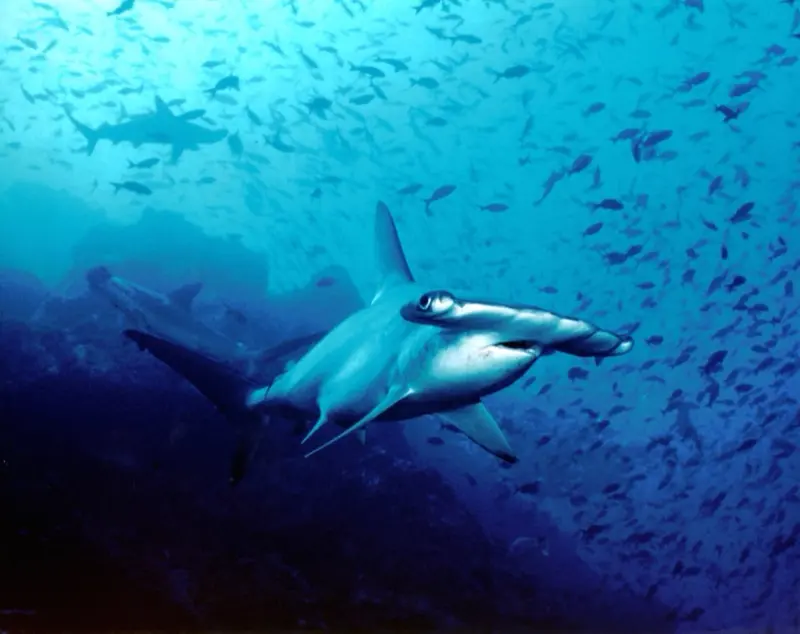
How they're met: most sharks are hooked by accident while bottom fishing, chumming for tuna or fighting a fish that a shark then grabs. Silky sharks are often around floating logs. If you hook one, keep it in the water, cut the leader close and let it go. Isla del Coco is a national park and a shark sanctuary where fishing isn't allowed. Our conservation guide has more on why.
Freshwater fish
Inland, Costa Rica's sport fish are mostly native cichlids and characins, plus trout stocked in the mountain rivers. The best fishing is in Lake Arenal, the northern lowlands around Caño Negro and the Río Frío, the Caribbean rivers, and the trout streams of the Talamanca mountains.
| Fish | Spanish | Latin | Where and when | Keep or release |
|---|---|---|---|---|
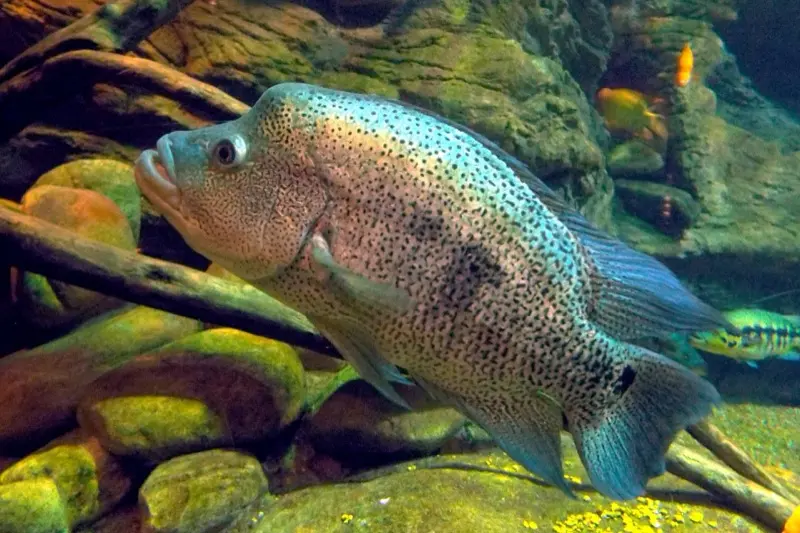
| Guapote (rainbow bass) | guapote, guapote lagunero | Parachromis dovii | Lake Arenal, northern rivers and lagoons; all year, better at low water | Keep a few |
| Jaguar guapote | guapote tigre | Parachromis managuensis | Northern Caribbean-slope rivers and lagoons | Keep |
| Machaca | machaca | Brycon guatemalensis | Caribbean-slope rivers, Lake Arenal | Keep or release |
| Mojarra | mojarra | Several native cichlids | Lakes, rivers and lagoons | Keep |
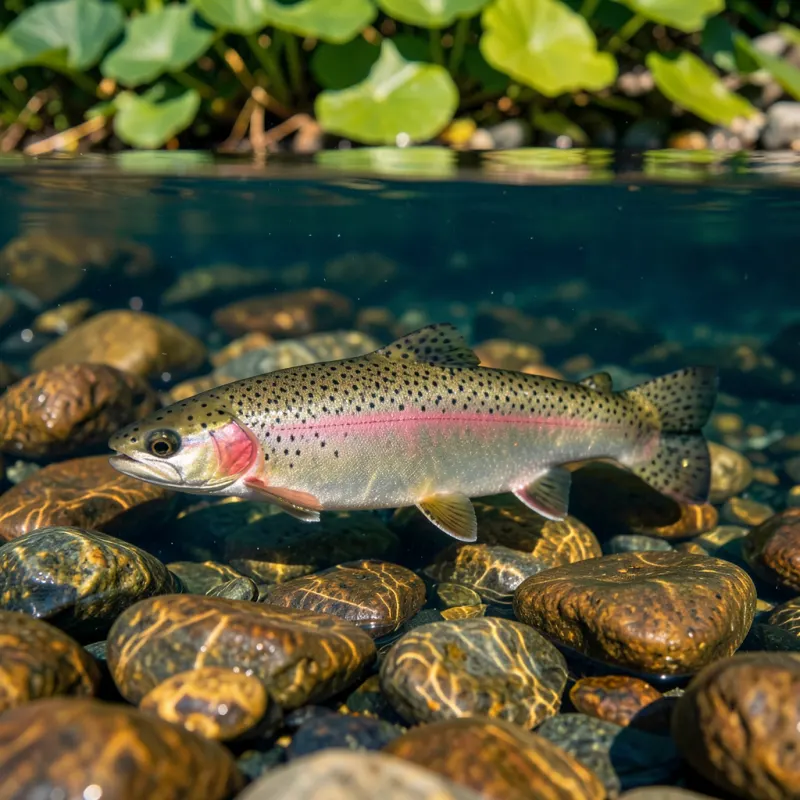
| Rainbow trout | trucha | Oncorhynchus mykiss (introduced) | Mountain rivers such as the Savegre; bait December to March, fly May to June | Keep |
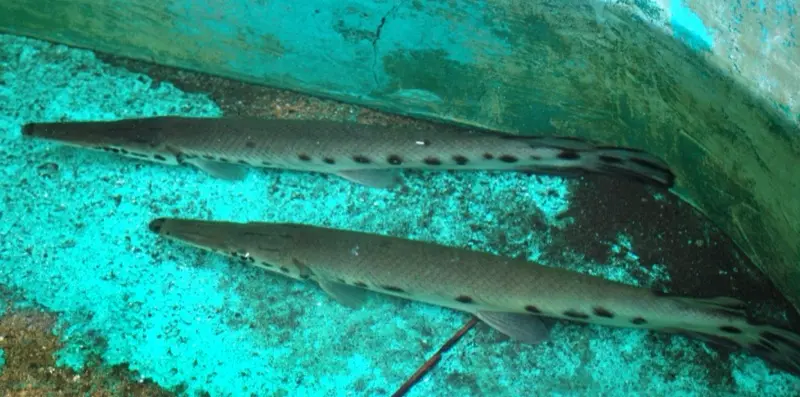
| Tropical gar | gaspar | Atractosteus tropicus | Caño Negro, Barra del Colorado and other northern wetlands | Keep 2 at most where allowed, or release |
| Bobo (mountain mullet) | bobo | Joturus pichardi | Fast rivers on both slopes | Keep |
| Tilapia | tilapia | Oreochromis spp. (introduced) | Lakes and reservoirs | Keep; at Barra del Colorado, SINAC says never release them |
How they're caught: guapote hit plugs, spinners and live bait near drowned timber and weed edges. Machaca rise to small surface flies and fruit-imitating baits. Trout take spinners, flies and bait in the pools. Tarpon and snook also run up the big northern rivers. In the Barra del Colorado refuge, SINAC's 2026 guide closes gar fishing from March 1 to July 31, allows 2 gar per licence with a recommended minimum of 80 cm, asks anglers to keep (not release) tilapia, and bans fishing on Tuesdays.
See our freshwater fishing guide for where to go.
Names that get mixed up
Some fish names in fishing guides and on menus don't match what actually swims here. These are the ones we checked and corrected:
- Spanish mackerel: the Atlantic Spanish mackerel (Scomberomorus maculatus) only reaches as far south as Mexico's Yucatán. FishBase says Caribbean Central American records belong to the serra Spanish mackerel (S. brasiliensis). On the Pacific, the "sierra" is S. sierra.
- Pacific barracuda: the fish sold under that name in the US (Sphyraena argentea) lives from Alaska to Baja California. Costa Rica's Pacific barracuda is the Mexican barracuda (S. ensis), called picuda.
- Gulf corvina: Cynoscion othonopterus lives only in Mexico's Gulf of California. The "gulf corvinas" of Costa Rica are the Gulf of Nicoya's corvina aguada, picuda and agria.
- Cobia: a Caribbean fish here; FishBase says it's absent from the eastern Pacific.
- Sea bass: what restaurants call sea bass is usually corvina. The true sea basses here are the groupers and cabrillas.
- Mahi-mahi and dorado: the same fish. "Dorado" is the name you'll hear on the boat.
- Wahoo and sierra: both have teeth and stripes. Wahoo are bigger, live offshore and have a long snout; sierra are spotted and live along the beaches.
Which fish can I eat?
For most anglers, the best fish to keep are dorado, yellowfin tuna, wahoo, snapper, smaller groupers, sierra and corvina. Within the 5-fish limit, take what you'll eat and let the big breeders go. Many crews will clean and fillet your catch at the dock, and some restaurants in fishing towns will cook what you bring in; ask your captain or lodge how it works locally.
Frequently asked questions
What's the most popular sport fish in Costa Rica?
The sailfish. It's caught all along the Pacific and released, and the central and southern coasts can produce many fish a day in peak season. Roosterfish, dorado, tuna and Caribbean tarpon are close behind.
Which fish must be released in Costa Rica?
Sailfish, marlin and swordfish (billfish), roosterfish and tarpon are catch and release. The 3 big hammerhead sharks are protected and must be let go at once. Sport crews release other sharks as standard practice.
How many fish can I keep?
The fisheries regulation allows 5 fish per trip to be landed for your own use, and you can't sell a sport catch. Some protected areas have their own limits, such as 2 gar per licence at Barra del Colorado.
What do Costa Ricans call the fish?
Pez vela (sailfish), marlín (marlin), dorado (mahi-mahi), atún (tuna), pez gallo (roosterfish), pargo (snapper), cabrilla or mero (grouper), róbalo (snook), sábalo (tarpon), jurel (jack) and picuda (barracuda) are the names you'll hear most on the boats.
Are there sailfish on the Caribbean side?
Almost all of Costa Rica's sailfishing is on the Pacific. The Caribbean is known for tarpon and snook, with some offshore fishing for tuna and wahoo.
Where can I catch roosterfish?
Anywhere on the Pacific coast with rocky points and beaches, from Guanacaste to the Osa Peninsula. The species only lives in the eastern Pacific, so there are none on the Caribbean.
Can I fish for trout in Costa Rica?
Yes. Rainbow trout were introduced to the cool mountain rivers, and the Savegre at San Gerardo de Dota is the best-known spot, with bait fishing from December to March and fly fishing in May and June according to Visit Costa Rica.
Charters and places in this guide

Barra del Colorado · fishing lodgeSilver King LodgeSilver King Lodge is an all-inclusive fishing lodge on the Río Colorado, inside the Barra del Colorado Wildlife Refuge on Costa…
Puerto Jiménez · fishing lodgeCrocodile Bay ResortCrocodile Bay is a sportfishing operation and marina in Puerto Jiménez, on the Osa Peninsula side of the Golfo Dulce, running…Sources
- Best practices guide for tourist and sport fishing in Costa Rica (MarViva, 2023)
- Pesca recreativa de captura y liberación, Bahía Santa Elena (Vargas-Araya, Zúñiga and Espinoza, Revista de Biología Tropical, 2026)
- Shorefishes of the Tropical Eastern Pacific online information system (Smithsonian Tropical Research Institute)
- Shorefishes of the Greater Caribbean online information system (Smithsonian Tropical Research Institute)
- FishBase species summaries (FishBase consortium)
- Scomberomorus maculatus distribution note on Caribbean records (FishBase)
- Scomberomorus brasiliensis species summary (FishBase)
- Sphyraena ensis species summary (FishBase)
- Sphyraena argentea species summary (FishBase)
- Cynoscion othonopterus species summary (FishBase)
- Rachycentron canadum species summary (FishBase)
- Parachromis dovii species summary (FishBase)
- Ley de Pesca y Acuicultura N.º 8436 (INCOPESCA)
- Reglamento a la Ley de Pesca y Acuicultura, Decreto 36782 (INCOPESCA)
- Acuerdo AJDIP/086-2014, sport-fishing rules including roosterfish and tarpon (INCOPESCA)
- Acuerdo AJDIP/280-2014, billfish handling (INCOPESCA)
- Acuerdo AJDIP/026-2018, legal first-capture sizes for corvina (INCOPESCA, via FAOLEX)
- Costa Rica announces ban on fishing of hammerhead sharks (Mongabay, 2023)
- Costa Rica expands marine conservation payments to protect hammerhead sharks (The Tico Times, 2026)
- Guía para pescadores responsables, Refugio Nacional de Vida Silvestre Barra del Colorado (SINAC, 2026)
- Costa Rica angler's Pacific black snook confirmed as world record (The Tico Times, July 2026)
- Fishing seasons by species, southern Pacific (Crocodile Bay Resort)
- A near-world record dolphin, citing the 1976 Costa Rica all-tackle record (Sport Fishing)
- Cocos Island public-use regulation, Decree 45744-MINAE (2026)
- Costa Rica's Coco Island National Park declared a natural shark sanctuary (The Tico Times, 2022)
- Billfish angler's guide to Costa Rica (Todd Staley, Sport Fishing Magazine, via FECOP)
- San Gerardo de Dota and trout on the Savegre (Visit Costa Rica)
- Costa Rica fishing seasons (FishingBooker, 2026)


