
Fishing Costa Rica's Caribbean Coast
The Complete Guide
Costa Rica's Caribbean coast is tarpon and snook water, fished from small boats in jungle rivers, lagoons and river mouths rather than from marinas. The heart of it is the roadless north, from Barra del Colorado through Tortuguero to Parismina, reached by small plane or boat; September and October, and about February to April, are usually the best months. South of Limón, fishing is a small-boat, half-day affair around Cahuita, Puerto Viejo and Manzanillo.
At a glance
- Main fish
- Tarpon, common and fat snook (calba), jacks, mackerel, snapper
- Best months
- September and October, then about February to April
- Where boats leave
- Lodge docks and village landings; there are no marinas
- Tarpon
- Always released alive under Costa Rican law
- Calba
- Closed season at the Río Colorado mouth from October 1 to January 31
- Licences
- INCOPESCA licence for boat fishing; a separate SINAC licence inside the Barra del Colorado refuge's rivers and lagoons
- Getting there
- Small plane to the lodges or Tortuguero, or road to a river landing and then boat
- From San José
- About 2.5 to 3 hours by road to Limón; the northern villages have no road
The short answer
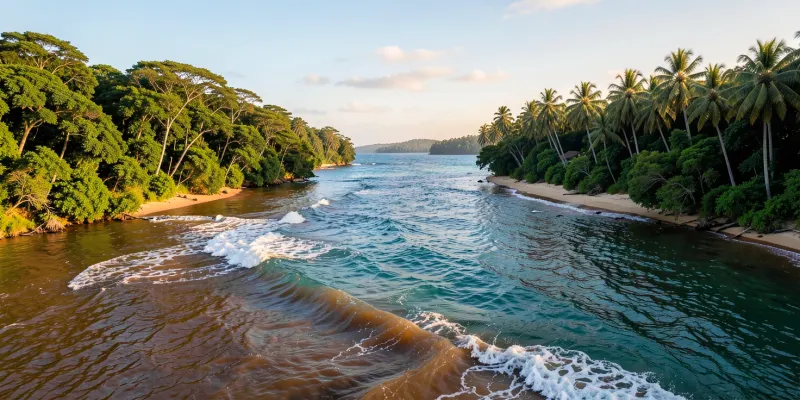
Costa Rica's Caribbean coast is where you come for tarpon and snook, not billfish. There are no marinas and no big charter fleet. Instead, small boats with local guides fish jungle rivers, back lagoons and the river mouths where fresh water meets the sea, and on calm days they cross the bar to find tarpon schools rolling just offshore.
The best of it is in the roadless north of Limón Province, from Barra del Colorado near the Nicaraguan border down through Tortuguero to Parismina. You get there by small plane or by boat. South of Puerto Limón, around Cahuita, Puerto Viejo and Manzanillo, much of the coast is protected and the fishing is a half-day, small-boat affair you'd fit into a beach holiday. September and October are usually the best months, with a second good stretch from about February to April, and every tarpon is released.
This guide covers the whole coast: the towns and landings, who to fish with, the lodges, what's biting each month, the rules (which are stricter here than many visitors expect), tackle, getting there, weather, tournaments, and a full list of every fishing business we found. For the species themselves, see our pages on tarpon and snook, and for the country-wide picture, the fishing seasons and fish species guides.
Loading the map…
- Charters
- Marinas
- Lodges
- Fishing towns
- No fishing
- Fish
Towns and where the boats leave from
The Caribbean coast runs about 200 kilometers from the Nicaraguan border to Panama, all of it in Limón Province. Fishing happens in five places, and they're very different from one another.
| Town | What the fishing is | Where boats leave | How you get there |
|---|---|---|---|
| Barra del Colorado | Tarpon and snook in the Río Colorado, its lagoons and the river mouth; the coast's lodge capital | Lodge docks and village landings on the river | Small plane, or road to Puerto Lindo and then boat |
| Tortuguero | Tarpon and snook at the river mouth and just outside, plus the canals | Village and lodge docks on the canals | SANSA flight, or road to La Pavona and then boat |
| Parismina | Tarpon off the Parismina river mouth, snook from boats and shore | Village landing on the river | Road to Caño Blanco and then a short boat ride |
| Limón and Moín | Small-boat trips on the open sea; tackle shops and services | Small landings around Limón and the Moín docks | Road (Route 32) or SANSA flight to Limón |
| Cahuita, Puerto Viejo and Manzanillo | Half-day trips for jacks, mackerel, kingfish and snapper; shore casting at creek mouths | Beach launches | Road from San José or Limón |
Barra del Colorado
Barra del Colorado sits where the Río Colorado, a branch of the Río San Juan, reaches the Caribbean, a short run south of the Nicaraguan border. It's a fishing outpost, not a beach town: no roads, no cars, houses on stilts along the river, and a handful of lodges. The Tico Times traces its fishing history to the late 1960s, when a San José tackle shop owner found tarpon in the river that nobody had fished with a fly, and to Casa Mar, the lodge where anglers worked out deep-water fly techniques for tarpon in the 1970s. Most of the old lodges are gone, but the river still holds resident tarpon all year.
Today the village is the home of Silver King Lodge, local guides working out of Barra del Colorado Sur, and a community group, the Asociación Ecoturística de Barra del Colorado Sur, which FECOP (the Costa Rican sport fishing federation) says is building its plans around the tarpon, called sábalo real here.
Tortuguero
Tortuguero is best known for its national park and nesting green turtles, but the river mouth by the village is one of the classic tarpon and snook spots on the coast. Most visitors come for wildlife and add a half or full day of fishing, booked through their hotel or a village guide. The Manatus Hotel, on the canals, is one of the hotels that arranges fishing trips. Because the village sits next to a national park, fishing here goes with a local guide who knows where it's allowed (more on that under the rules below).
Parismina
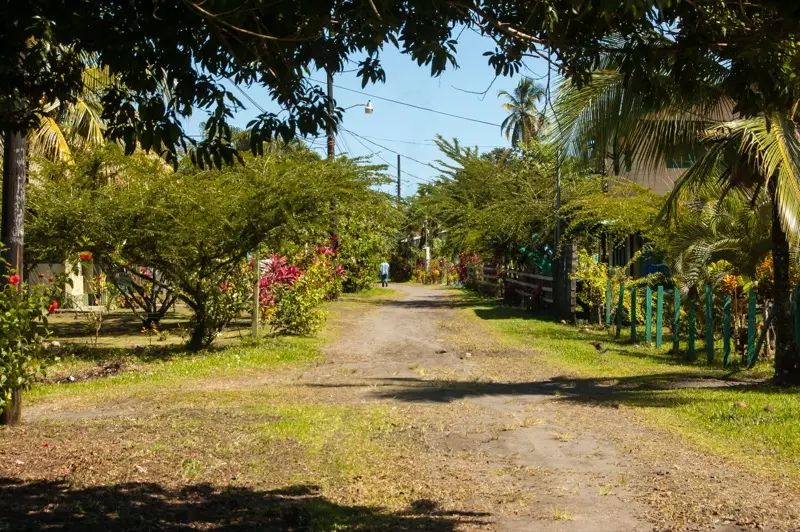
Parismina is a small village on a strip of land between the Parismina river mouth and the sea, south of Tortuguero. The ICT (Costa Rica's tourism board) names the mouths of the Parismina and nearby Jalova as places to fish for tarpon from boats and from the shore. It's also where the IGFA all-tackle record for common snook was caught, a 24.3 kilogram fish in 1978. FECOP's 2026 reporting names several Parismina families and small lodges involved in sport fishing, including Esmeralda Lodge, Green Gold Eco Lodge and the guide Garvin Watson of Parismina Domus Dei. None of them publishes fishing trips online, so ask in the village or through your lodge.
Limón (Puerto Limón and Moín)
Puerto Limón is the coast's port city and its only real service hub, with the coast's tackle shops, fuel and hardware. It isn't a fishing destination in its own right, but small local boats fish the open sea off the city for kingfish, mackerel, jacks and snapper when the sea is calm. Moín, just north of the city, is where private boats leave for the long canal run to Tortuguero. Our older guide to Limón and the Caribbean has more background.
Cahuita, Puerto Viejo and Manzanillo
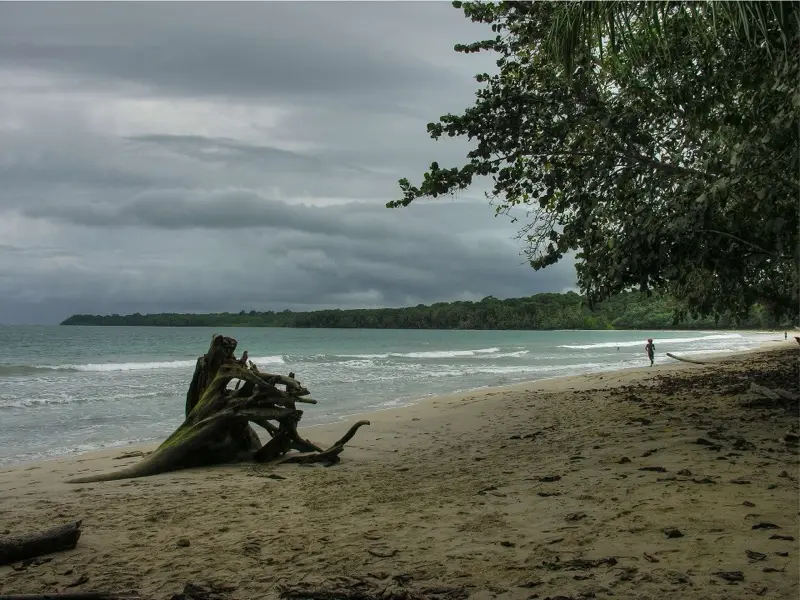
The southern Caribbean is beach country: reef breaks, Afro-Caribbean food and music, and jungle running down to golden sand. Cahuita National Park and the Gandoca-Manzanillo refuge protect long stretches of shore and reef, so fishing happens outside them, from small boats launched off the beach and from the shore at creek and river mouths. One operator, Caribe Fishing Tours, works out of Punta Uva near Puerto Viejo. See our guide to fishing near Puerto Viejo for the local detail.
Marinas, docks and boat ramps
There isn't a single marina on Costa Rica's Caribbean coast, and there's no public boat ramp set up for visiting sportfishing boats. That shapes everything about fishing here:
- Lodge docks. In Barra del Colorado and Tortuguero, you board at your lodge's own dock. Silver King says its dock is about 5 minutes from the main fishing water.
- Village landings. Independent guides in Barra del Colorado Sur, Tortuguero and Parismina pick you up at the village landings or your hotel's dock.
- River landings at the end of the road. These are where you leave the car and take a boat: La Pavona (for Tortuguero), Puerto Lindo (for Barra del Colorado) and Caño Blanco (for Parismina). They're transfer docks, not places to launch your own boat.
- Moín. The docks north of Limón where private boats leave for the canals. The canal run passes the Parismina river mouth, and silt there can make the crossing hard at low tide.
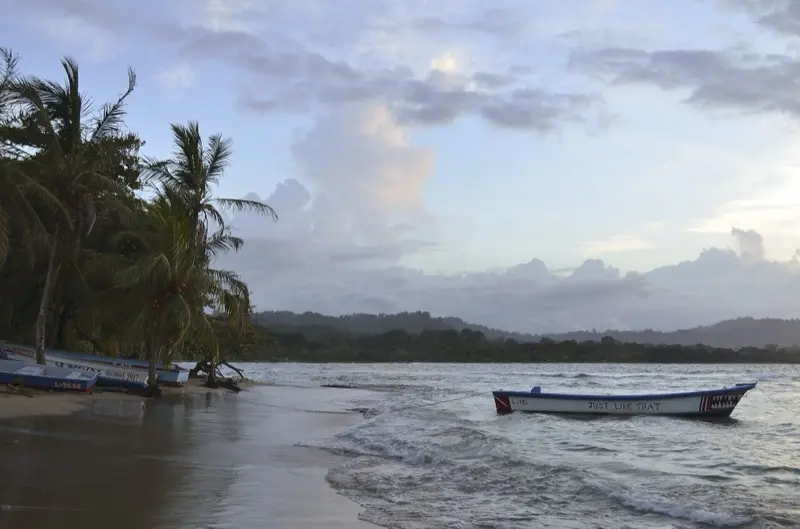
- Beach launches. From Cahuita to Manzanillo, captains launch small boats straight off the beach.
If you're thinking of trailering your own boat to the Caribbean, don't. The river bars are dangerous to anyone who doesn't cross them daily, the protected areas have their own permits, and local guides know where it's legal to fish.
The best outfitters on the Caribbean
How we chose: only on evidence we could check in November 2026 (a working website or booking page, dated 2026 reviews or posts, named boats and crew, and how they handle fish). Nobody pays to be listed. The Caribbean has very few fishing businesses with any public presence, so only 4 passed; the rest are in the full list further down.
- Silver King Lodge, Barra del Colorado. The coast's best-known tarpon lodge, open all year, all-inclusive, with 23-foot boats, local guides the lodge says average more than 30 years on the river, and tackle supplied. It changed hands in 2025 and takes up to 24 guests; its site lists 2026 packages, and The Tico Times covered it in January, July and October 2026. It has the only IGFA-certified scale in Barra.
- Tarpon Sport Fishing, Barra del Colorado Sur. Owner and guide Capt. Daniel Solís, with 14 years on the river, runs a custom 24-foot boat (built 2020) with a 150 HP Yamaha for 2 anglers, targeting tarpon. Its FishingBooker page is bookable, with reviews from January and October 2026.
- Caribe Fishing Tours, Punta Uva (Puerto Viejo). The one active fishing operator we found on the south Caribbean, run by Captain Alan, with fishing, dolphin and snorkeling trips. Reviewers mention tuna, snapper and kingfish. Its Instagram was posting through November 2026, and it takes bookings on WhatsApp (+506 6394 4107).
- Manatus Hotel, Tortuguero. Not a fishing lodge, but a canal-side hotel that books half and full-day river and sea trips with a local operator, Eddie Brown's company, which has its own boats and permits. The easiest way to add fishing to a Tortuguero wildlife trip.
One to watch: Río Colorado Lodge in Barra del Colorado, a lodge with roots going back to 1972, says on its website that it's now booking all-inclusive tarpon and snook trips for 2027. We couldn't find 2026 guest reviews, so we'll add it here once it's back in full swing.
Fishing lodges and good bases to stay
On most of this coast, the lodge and the fishing are the same thing. In the north, there's very little in the villages beyond a few small hotels, so lodges sell all-inclusive packages: transfers from San José, the flight or boat, meals, boats, guides and usually tackle. That's the simplest way to fish here, and for Barra del Colorado it's close to the only way.
| Base | Best for | What to know |
|---|---|---|
| Barra del Colorado | A dedicated tarpon trip of 3 days or more | Lodges include the flight or boat. Silver King Lodge is open all year; Río Colorado Lodge is booking for 2027. Kawé Lodge is a small community lodge named by FECOP. |
| Tortuguero | Wildlife plus a day or two of fishing | Many canal-side hotels. The Manatus Hotel books fishing; elsewhere ask your hotel for a licensed local guide. |
| Parismina | A quiet, low-key village stay with local guides | Small lodges such as Esmeralda Lodge and Green Gold Eco Lodge; arrange fishing locally. |
| Limón | Overnight on the way through; tackle shopping | City hotels; no fishing lodges. |
| Cahuita, Puerto Viejo, Manzanillo | A beach holiday with a morning of fishing | Guesthouses, cabins and small hotels; book a half day with a local captain. |
A popular pairing is a few nights in Puerto Viejo or Cahuita for the beaches and food, then a few nights in Tortuguero or Barra del Colorado for the fishing. Shuttles connect them, and our lodges guide compares fishing lodges across all of Costa Rica.
What's biting, month by month
Fish are here all year. The calendar matters less than the weather: a big swell can close the river-mouth bars for days, and heavy rain muddies the rivers. This table follows our site's season chart for tarpon and snook, adds the rules that change by month, and gives Limón's average rainfall from the national weather service (IMN).
| Month | Tarpon | Snook | Rules to know | Rain at Limón |
|---|---|---|---|---|
| January | Good | Best (fat snook) | Calba and inner lagoons closed at Barra del Colorado | About 320 mm |
| February | Best | Good | Inner lagoons at Barra reopen | About 240 mm |
| March | Best | Good | Gar closed at Barra from March 1 | About 210 mm |
| April | Best | Good | About 265 mm | |
| May | Good | Good | Rainy season starts mid-May | About 335 mm |
| June | Good | Good | About 290 mm | |
| July | Slow | Good | Gar reopens at Barra after July 31 | About 425 mm |
| August | Slow | Good | About 305 mm | |
| September | Best | Best | Calmest, driest month on average | About 140 mm |
| October | Best | Best | Calba and inner lagoons closed at Barra from October 1 | About 205 mm |
| November | Good | Best | About 400 mm | |
| December | Slow | Best | About 445 mm |
A few things stand behind that table:
- Tarpon. The Tico Times called September and October two of the best months in May 2026, when seas often flatten and schools gather off the river mouths. Alberto Font, writing in the same paper, named September and October and March and April. Silver King Lodge calls February to mid-June and mid-August to the end of November its prime time.
- Snook. Big common snook and the fat snook (calba) runs together make about September to January the best stretch for snook.
- The rain. The ICT notes the rainy season starts around mid-May, and that the rivers then dump so much sediment that the fishing slows for a while.
Inshore, offshore and the named fishing grounds
Fishing here splits into three kinds of water, and on any day your guide picks between them depending on the sea.
Inside the rivers and lagoons
The Río Colorado, the Tortuguero canals and the Parismina river are big, brown, slow jungle waterways with side channels (caños) and lagoons. Tarpon live in them all year, and snook hold along the banks, logs and mangrove edges. On rough days, this is where you'll fish. Silver King lists snook, tripletail, cubera snapper, jacks, rainbow bass (guapote), machaca and alligator gar (gaspar) as river and lagoon catches when the tarpon are quiet.
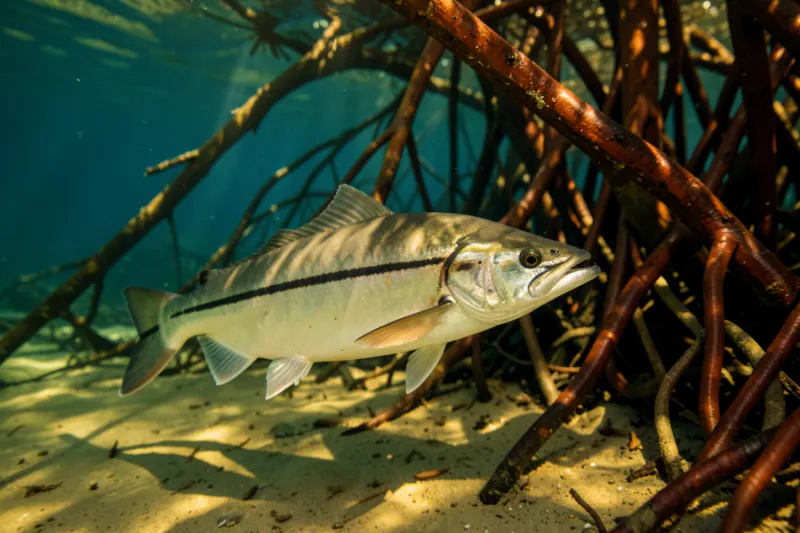
At Barra del Colorado, SINAC's 2026 anglers' guide names the open water inside the refuge: the main channel of the Río Colorado, Caño Bravo, Caño Penitencia (from the La Suerte river mouth to Samay Lagoon), Samay Lagoon and Laguna Agua Dulce. These stay open all year, except Tuesdays. More than 20 inner lagoons, including Laguna Kawe, Laguna Yaki, Laguna Leona and Caño Palma, close every year from October 1 to January 31 for spawning.
The river-mouth bars
Every river here ends in a sandbar where the current meets the surf, and that's where the fishing is most famous and most dangerous. Bait gathers in the mixing water, and tarpon and snook follow. On calm days, the guide reads the waves and runs the boat through a gap in the breakers. On big days, nobody crosses. FECOP says the big snook, fish of 35 pounds or more, come from the beaches beside the river mouths, though rarely in numbers.
Outside: the nearshore and offshore Caribbean
Past the bar, tarpon gather in schools that FECOP says can cover several acres, rolling at the surface. Guides drift or slow-troll lures and jigs through them, or fish sardines on circle hooks (which the law requires with natural bait). On very calm days, boats from the north can run farther out for tuna, Atlantic sailfish, wahoo and Spanish mackerel, as Silver King lists them. FECOP's 2026 reporting also mentions kingfish, snapper, cubera, dog snapper and big grouper (mero) in the wider Caribbean.
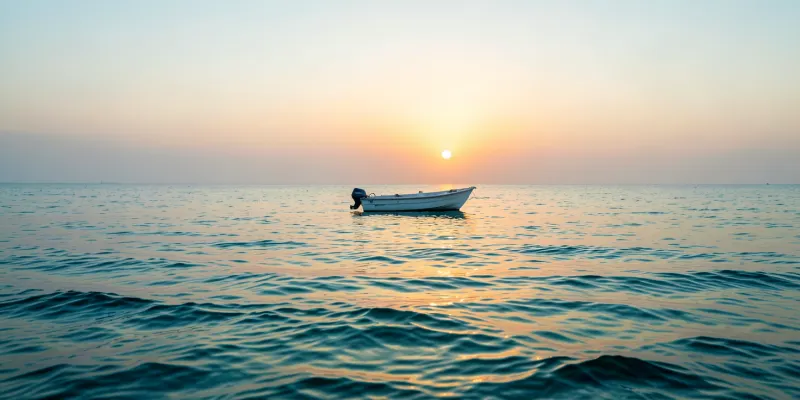
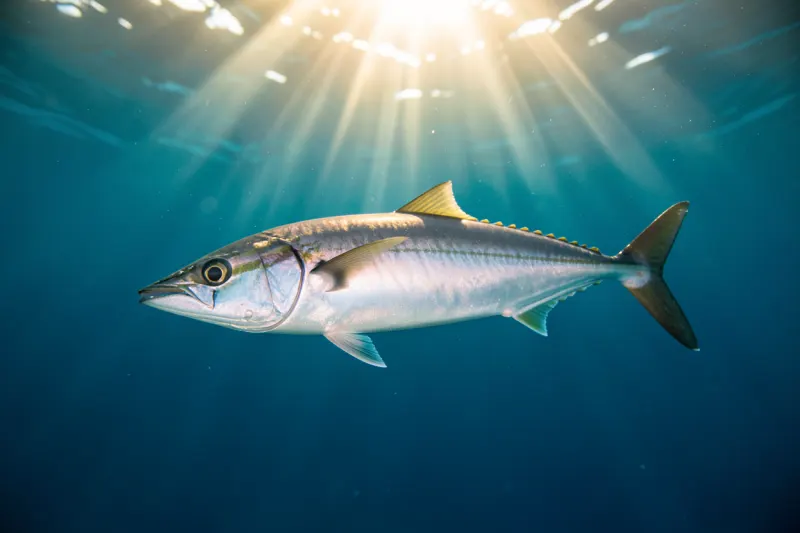
South of Limón, the open-sea fishing is mostly trolling along the outside of the reefs and rocky points for jack crevalle, barracuda, Spanish and cero mackerel and kingfish, and jigging rocky patches for snapper.
How tarpon fishing works here
A typical tarpon day starts early, in a small, fast, open boat with a local guide and 1 or 2 anglers. If the bar is passable, you'll head outside to look for fish rolling at the surface; if not, you'll fish the river channels.
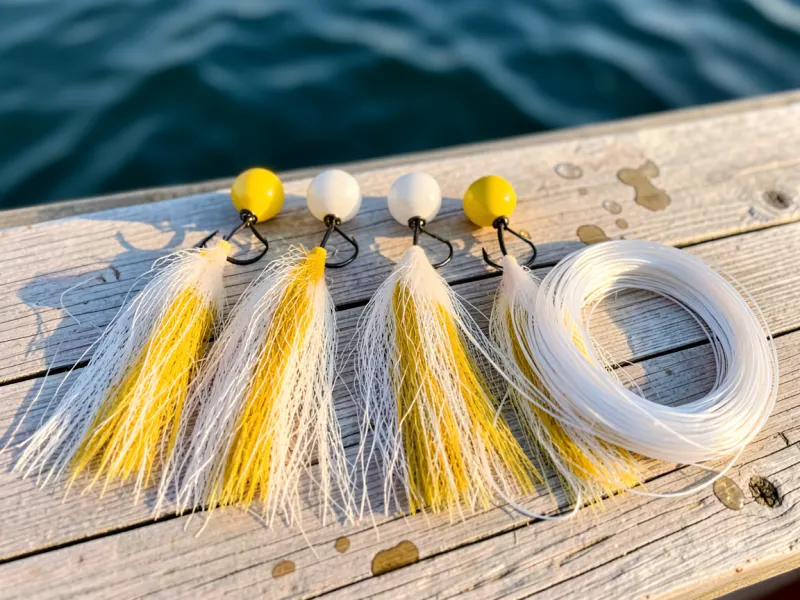
The local method is to drift (al garete, in Spanish) with heavy bucktail jigs, which guides here call chimbolos, bouncing them through the school while reading which way the fish are moving. When FECOP brought fishermen from the Golfo Dulce over to learn the Caribbean way in 2026, that's what they were taught, and the group released a tarpon estimated at about 90 pounds on one outing. Lures and flies are used too: FECOP credits the late Bill Barnes, who ran Casa Mar, with making fly fishing for tarpon popular here.
What to expect:
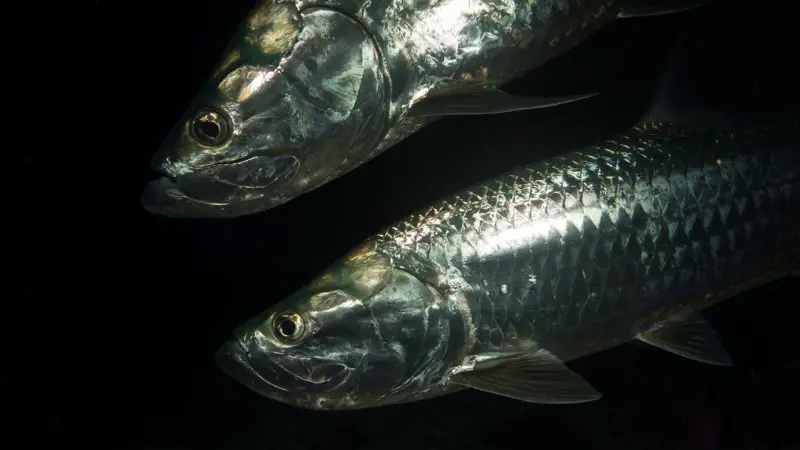
- Size. The Tico Times put common catches at Barra del Colorado at about 75 to 150 pounds, with fish over 200 pounds taken. FishBase lists the species' maximum at 250 centimeters and 161 kilograms.
- The fight. Tarpon have bony mouths that are hard to hook, and they jump again and again. Many anglers count a jump as a win, and a big fish can take a long time to bring alongside.
- The release. Tarpon are released in the water. INCOPESCA's sport-fishing rules say they shouldn't be lifted aboard, so expect a photo with the fish beside the boat.
- Tackle. Heavy spinning or conventional gear for big ocean fish. Lodges usually supply it; Silver King stocks Penn conventional gear and fly rods.
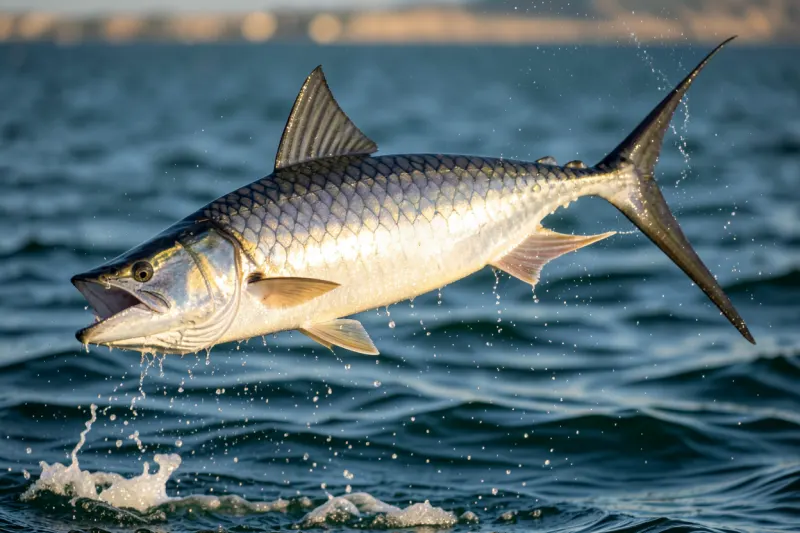
Tarpon are slow-growing and long-lived (MarViva gives a maximum age of 55 years), and a study in the Revista de Biología Tropical found a marked drop in their numbers in Costa Rica and called the population poorly understood. FECOP's 2026 reporting quotes local fishermen saying they now have to travel farther to find good tarpon fishing than they used to. Careful releases matter here.
The fall calba run
Fat snook (Centropomus parallelus), called calba (or calva) on this coast, are smaller, deeper-bodied cousins of the common snook. FECOP says they average about 5 to 8 pounds and run in big numbers along the Caribbean, starting around December; older Tico Times reports describe the run building from November and lasting through December, and Alberto Font gave November to February. Light spinning tackle and small jigs from a boat or the beach at the river mouths are the classic way to fish them.
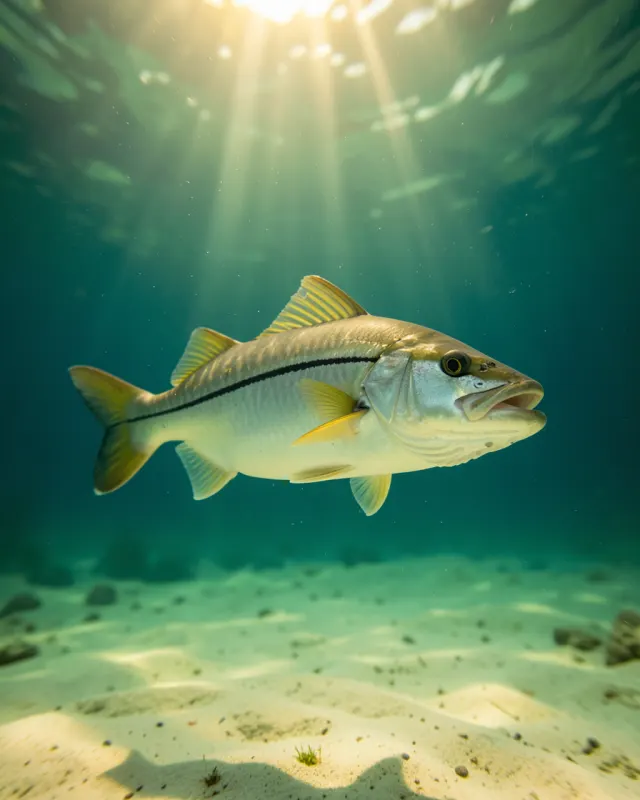
There's an important catch. At Barra del Colorado, SINAC's 2026 anglers' guide sets a closed season for calba at the mouth of the Río Colorado from October 1 to January 31, which covers most of the run. In those months, the guide also bans fishing with nets or any other gear within 1.5 kilometers either side of the centre of the river mouth and 2 kilometers out to sea; for the rest of the year, only rods and hand lines are allowed there. We read that as closing the river mouth to fishing during the calba season, and the inner lagoons close over the same months. Ask your lodge or guide exactly where you can fish before you go, and check whether similar rules apply in Tortuguero and Parismina, which aren't covered by that guide.
Protected areas and the rules here
More of the Caribbean coast is protected than on any stretch of the Pacific, and each kind of area has different rules. This is a summary; our fishing rules guide covers the national picture.
Barra del Colorado Wildlife Refuge
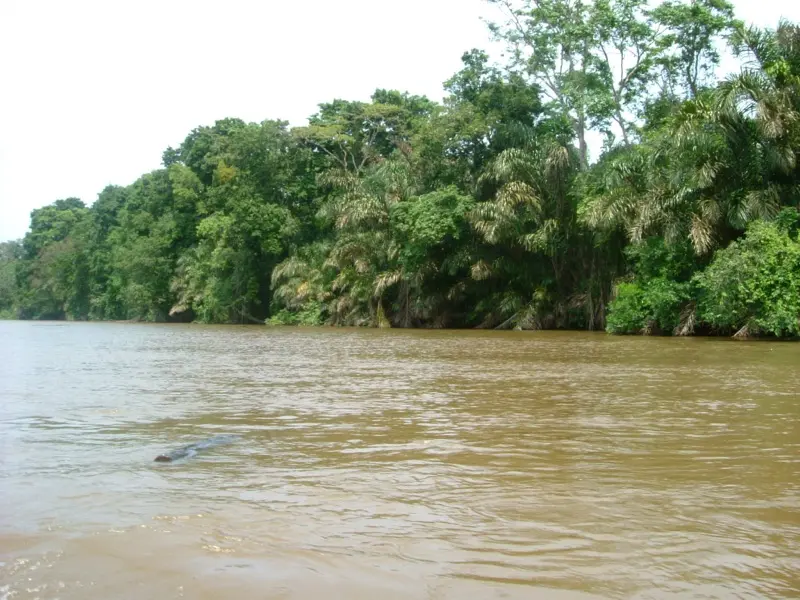
The refuge covers the rivers, lagoons and lowland forest around Barra del Colorado, with a marine management area and a responsible fishing area offshore, which SINAC and INCOPESCA manage under a joint fishing plan. SINAC's January 2026 guide for its inland waters says:
- Allowed: sport and subsistence fishing with a rod or hand line, from shore or a boat. No nets, cast nets, spears, traps, chemicals or electricity.
- Hours: 5 a.m. to 6 p.m. No fishing at all on Tuesdays, the river's rest day.
- Closed seasons: the inner lagoons and calba at the river mouth, October 1 to January 31; alligator gar (gaspar), March 1 to July 31, with a recommended minimum of 80 centimeters and no more than 2 per licence.
- Limits: small fish go back alive. Species without a set size: 5 fish a day per licence. Tilapia and pez diablo (an invasive armored catfish) must be killed, not returned.
- Licence: a SINAC licence, separate from INCOPESCA's, valid for 1 year and requested through a digital form. An October 2025 version of the guide had it issued at SINAC's Guápiles office instead, so ask your lodge how it's handled.
- Who checks: SINAC, the coast guard, INCOPESCA, the border police and the Fuerza Pública. Fishing without a licence, in a closed season or with banned gear can mean fines, losing your tackle or worse.
Tortuguero National Park
Costa Rica's fishing law (Ley 8436, article 9) bans sport fishing in national parks, and Tortuguero National Park protects the beach, the coastal sea and many of the canals. Fishing still happens around the village and the river mouth, in water where the rules allow it, but the boundaries aren't marked on the water. Fish with a licensed local guide, carry your INCOPESCA licence, and ask the guide where you'll be fishing. The Manatus Hotel describes fishing there as catch and release.
Cahuita and Gandoca-Manzanillo
Cahuita National Park protects the coral reef off Punta Cahuita, and sport fishing is banned inside it. The Gandoca-Manzanillo refuge covers the coast and sea from Manzanillo to Panama, where fishing is limited by the refuge's own management plan. Local captains know the lines; stay with one.
Licences and what you can keep
- INCOPESCA licence. Everyone fishing from a boat needs an INCOPESCA sport-fishing licence (Ley 8436, article 75), sold online in 8-day, 30-day and 1-year versions. Many guides and lodges arrange it; ask.
- Tarpon. Declared a species of tourist and sport-fishing interest (article 76) and always released, without being lifted from the water.
- Everything else. National rules let you land 5 fish per trip for your own use (Decreto 36782, article 68), selling sport catches is banned, and inside the Barra refuge the SINAC limits above apply. Releasing big snook, which are mostly breeding females, helps the fishery.
- Hooks. Circle hooks are required when fishing with live or dead natural bait.
Bait, tackle and ice
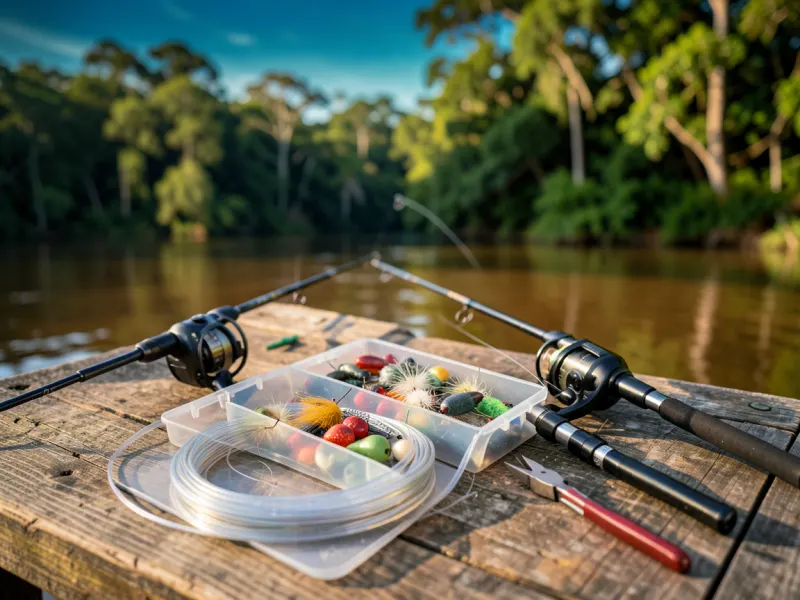
Most visiting anglers don't need a tackle shop: the northern lodges supply rods, reels, lures and jigs, and guides bring their own bait. If you want to shop, the coast's stores are clustered in Limón and the towns along Route 32 on the way in from San José. These all showed signs of being open in 2026:
| Shop | Town | What they offer |
|---|---|---|
| Kraken CR (krakentiendacr.com) | Guácimo | Its own Kraken lures plus sea, river, lagoon and mangrove tackle, rods, reels and clothing; online store |
| Pesca San Miguel | Guápiles | General tackle; staff help beginners |
| Feliz Pesca | Limón centro | Wide range of tackle; services reels and gear |
| Familia de Pesca (online store) | Limón (Villa del Mar 1) | General tackle |
| Beraca Sport | Limón (Las Brisas) | General tackle |
| Tarpon Rock Fishing Store | Limón | General tackle |
| Tienda de pesca MCN | Matama, Limón | General tackle |
| Talamanca De Pesca | Talamanca | Well-stocked general tackle; ready-to-fish kits |
A few practical tips:
- Bring your own leaders and terminal tackle if you're particular about them. Heavy fluorocarbon leader is a good idea for snook, which have sharp gill covers.
- Fly anglers should bring everything. We found no fly shop anywhere on the coast. Silver King stocks fly rods and reels for guests.
- Weight limits. Small planes to the lodges have strict luggage limits; Silver King allows 30 pounds plus one small extra item and can store the rest. Check before you pack rod tubes.
- Ice. Lodges and guides handle it. There's no marina fuel dock with an ice machine; in Limón, local fish receivers sell ice.
Our bait and tackle guide lists shops across the country, including the bigger stores in San José.
Getting there
The north of this coast has no roads at all. Plan the trip around a plane or a boat transfer, and leave slack in your schedule for weather.
By small plane
- Barra del Colorado. Lodges fly guests in. Silver King includes a flight of about 25 minutes from San José. SANSA's current destination list doesn't include Barra del Colorado, so treat lodge transfers as the way in.
- Tortuguero. SANSA flies from San José to Tortuguero's airstrip, north of the village; hotels meet you by boat.
- Limón. SANSA also flies to Puerto Limón, about an hour by road from Cahuita and Puerto Viejo.
By road and boat
- Barra del Colorado: drive or take a bus to Puerto Lindo, north of Cariari; the ICT says the last 32 kilometers are gravel, then a boat of about an hour to the coast.
- Tortuguero: drive or bus to La Pavona (via Guápiles and Cariari), then about an hour by boat up the canals. Private boats also run the long canal route from Moín, near Limón.
- Parismina: drive or bus to Caño Blanco via Siquirres, then a short water taxi. Schedules change, so check with your lodge.
- Limón, Cahuita and Puerto Viejo: paved road all the way on Route 32 through Braulio Carrillo National Park, then Route 36 south.
Drive times
| From | To | About |
|---|---|---|
| San José | Puerto Limón | 2.5 to 3 hours |
| San José | Puerto Viejo de Talamanca | 4 to 4.5 hours |
| San José | La Pavona (Tortuguero boats) | 3 hours or more, plus about an hour by boat |
| Liberia | Puerto Limón | About 5.5 hours, more with Central Valley traffic |
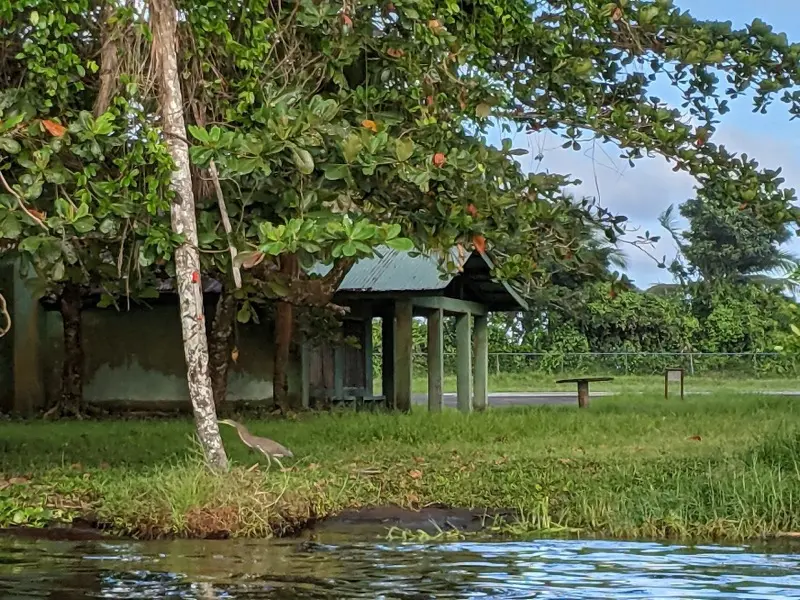
Traffic on Route 32 and landslides in Braulio Carrillo during heavy rain can add hours. If you're flying home, build in a spare night in San José. Our trip planning guide covers the rest.
Where to eat your catch
We couldn't confirm any restaurant on the Caribbean coast that, in 2025 or 2026, advertises cooking fish that guests bring in, so we're not naming one. Here's how it usually works:
- In the north, the lodge cooks. At all-inclusive lodges, meals are part of the package, and the kitchen will usually cook a snook, snapper or jack you've kept, if the rules allow you to keep it. Tarpon are always released.
- In Tortuguero and Parismina, ask your hotel or guide; small family restaurants (sodas) in the villages sometimes cook a guest's fish if you ask ahead.
- In Cahuita and Puerto Viejo, local captains can often point you to a place that will cook your catch Caribbean style.
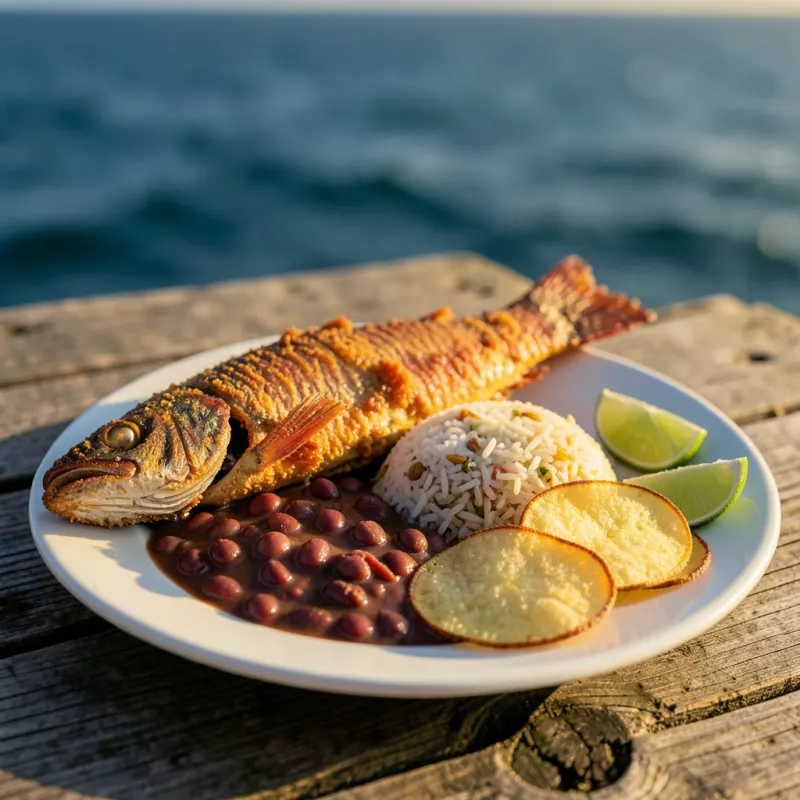
Caribbean cooking is its own thing in Costa Rica: rice and beans cooked in coconut milk, fried fish, rondón (a coconut seafood stew) and fried plantains. Whatever you eat, remember the limits: 5 fish per trip nationally, and the SINAC limits inside the Barra del Colorado refuge.
Weather and sea conditions
The Caribbean side has no real dry season. IMN figures for Puerto Limón show about 3,575 millimeters of rain a year and an average temperature around 26°C, but the rain isn't spread evenly:
- September and October are the calmest, driest stretch: September averages about 140 millimeters over 11 rainy days. That's when the Pacific is at its wettest, so it's a good time to switch coasts.
- February to April is the second relatively dry window.
- July, November and December are the wettest; December averages about 445 millimeters.
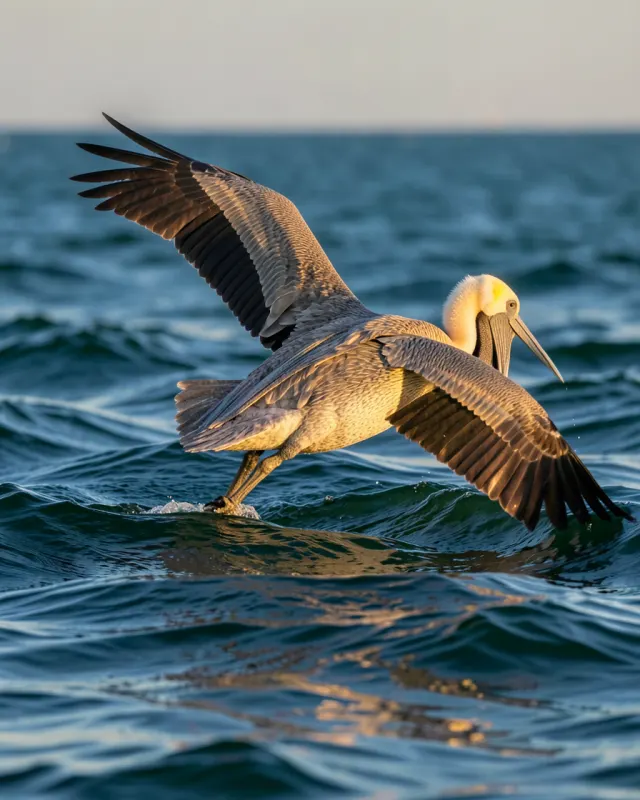
For fishing, the sea matters more than the rain. North swells and strong winds close the river-mouth bars and keep boats inside, sometimes for days, and big rains turn the rivers to chocolate. Guides decide each morning. Hurricanes are rare here, but they do happen: Hurricane Otto in November 2016 was the first on record to hit Costa Rica directly, and about 90 kilometers of Limón's coast, including Barra del Colorado and Tortuguero, was evacuated. Our weather guide has more.
Tournaments on the Caribbean
The Caribbean had a busy tournament scene in the past, and FECOP's 2026 reporting says those seasons and tournaments once took hundreds of tarpon a year, where catch and release is now the norm. Today:
- The Club Amateur de Pesca tarpon tournament. The Tico Times wrote in May 2026 that the club holds both legs of its yearly tarpon tournament in September and October. We couldn't find published results for recent years, so check with the club before planning around it.
- A new local association. In September 2026, Caribbean fishermen founded ALIPRED, the Asociación Limonense de Pesca Recreativa y Deportiva, at a meeting in Siquirres held as part of FECOP's Tarpon Trail exchanges, with INCOPESCA, SINAC and the coast guard taking part. It aims to link fishermen from Barra del Colorado, Parismina and Puerto Viejo, so watch for local events from it.
See our tournaments guide for the national calendar.

Every fishing business on the Caribbean coast
Every business we found that offers fishing on the Caribbean coast, checked in November 2026. A listing here isn't a recommendation; see the best outfitters above for the ones we could confirm in detail. Where a business has no website or booking page, we say how to find it.
| Business | Town | What they do | Website or booking |
|---|---|---|---|
| Silver King Lodge | Barra del Colorado | All-inclusive tarpon and snook lodge, open all year | silverkinglodge.com |
| Tarpon Sport Fishing (Capt. Daniel Solís) | Barra del Colorado Sur | Guided tarpon trips on a 24-foot boat | FishingBooker |
| Río Colorado Lodge | Barra del Colorado | All-inclusive tarpon and snook lodge, booking for 2027 | riocoloradolodge.com |
| Kawé Lodge (Eduardo Pérez) | Barra del Colorado | Small community lodge involved in tarpon fishing | No website found; ask in the village |
| Manatus Hotel | Tortuguero | Canal-side hotel that books river and sea fishing | |
| Tortuguero Sport Fishing (Elvin "Primo" Gutiérrez) | Tortuguero | Local tarpon and snook guide; catch and release | No working website found; ask your Tortuguero hotel |
| Esmeralda Lodge (Gerald Pérez) | Parismina | Small lodge in the village's fishing community | No website found |
| Green Gold Eco Lodge | Parismina | Small lodge in the village's fishing community | No website found |
| Garvin Watson (Parismina Domus Dei) | Parismina | Local guide and sport-fishing leader | No website found |
| Caribe Fishing Tours (Captain Alan) | Punta Uva, Puerto Viejo | Half and full-day sea fishing, dolphin and snorkel trips |
Frequently asked questions
What fish can you catch on Costa Rica's Caribbean coast?
Mainly tarpon and snook, including the fat snook (calba) runs. Jacks, barracuda, kingfish, Spanish and cero mackerel, snapper, tripletail and, in the rivers, rainbow bass, machaca and gar fill in. On very calm days, boats from the north can go offshore for tuna and Atlantic sailfish.
When is the best time to fish the Caribbean side?
September and October usually bring the calmest seas and some of the best tarpon fishing, and about February to April is the second good window. Fish are caught all year, but rough seas and muddy rivers can stop fishing for days in any month.
Do I have to release tarpon?
Yes. Costa Rican law names tarpon a species of sport-fishing interest, and INCOPESCA's rules say they're released in the water without being lifted aboard.
Can I fish the calba run at Barra del Colorado?
Only outside the closed areas. SINAC's 2026 guide closes calba at the Río Colorado mouth, and the inner lagoons, from October 1 to January 31. Ask your lodge where you can fish in those months.
Do I need a fishing licence?
Yes, to fish from a boat you need an INCOPESCA sport-fishing licence. Inside the Barra del Colorado refuge's rivers and lagoons, SINAC also requires its own 1-year licence. Lodges and guides can help with both.
How do I get to Barra del Colorado or Tortuguero?
By small plane or boat; no roads reach either. Barra del Colorado lodges fly guests in from San José, and SANSA flies to Tortuguero. By land, you drive to Puerto Lindo (for Barra) or La Pavona (for Tortuguero) and finish by boat.
Is there a marina on the Caribbean coast?
No. Boats leave from lodge docks, village landings and beaches, and you'll fish with a local guide rather than a charter fleet.
Can you fish near Puerto Viejo and Cahuita?
Yes, outside the protected areas. Caribe Fishing Tours runs sea trips from Punta Uva, and shore anglers fish creek and river mouths. Cahuita National Park is closed to sport fishing.
Charters and places in this guide

Barra del Colorado · fishing lodgeSilver King LodgeSilver King Lodge is an all-inclusive fishing lodge on the Río Colorado, inside the Barra del Colorado Wildlife Refuge on Costa…
Tortuguero · resortManatus HotelManatus Hotel is a small hotel on the canals of Tortuguero, on Costa Rica's northern Caribbean coast, reached only by boat or…Sources
- Guía para pescadores responsables, aguas continentales, Refugio Nacional de Vida Silvestre Barra del Colorado (SINAC, Área de Conservación Tortuguero, January 2026)
- Guía para pescadores responsables, Barra del Colorado, licences at the Guápiles office (SINAC ACTo, October 2025)
- Plan de aprovechamiento del recurso pesquero, Barra del Colorado refuge and marine areas (SINAC and INCOPESCA)
- Ley de Pesca y Acuicultura N.º 8436, articles 9, 75 and 76 (INCOPESCA)
- Acuerdo AJDIP/086-2014, sport-fishing rules (INCOPESCA)
- Reglamento a la Ley de Pesca y Acuicultura, Decreto 36782 (INCOPESCA)
- Amar lo propio: pescar en el Caribe costarricense (FECOP in El Mundo CR, May 21, 2026)
- Pescadores de Limón crean asociación para fortalecer pesca recreativa y deportiva (Delfino.cr, September 16, 2026)
- Costa Rica fishing by region, Caribbean tarpon and snook (FECOP)
- Best time and place to go tarpon fishing in Costa Rica (The Tico Times, May 2026)
- No roads, no cars, just tarpon at Costa Rica's Silver King Lodge (The Tico Times, October 2026)
- Giant tarpon and wildlife at Costa Rica's Silver King Lodge (The Tico Times, January 2026)
- Hook up with tarpon season on Caribbean coast (Alberto Font, The Tico Times, 2010)
- Caribbean tourist guide, sport fishing (Instituto Costarricense de Turismo)
- Caribbean tourist guide, road and boat to Barra del Colorado via Puerto Lindo (Instituto Costarricense de Turismo)
- Silver King Lodge (official site)
- Río Colorado Lodge (official site)
- Tarpon Sport Fishing, Barra del Colorado Sur (FishingBooker)
- Caribe Fishing Tours (official Instagram)
- Kraken CR tackle shop (official site)
- Destinations (SANSA Airlines)
- Tortuguero boat routes: La Pavona, Moín and Caño Blanco (Costa Rica Guide)
- Liberia to Puerto Limón by road (Rome2rio)
- Puerto Limón climate, monthly rainfall from the Instituto Meteorológico Nacional (Wikipedia)
- Hurricane Otto (Wikipedia)
- Megalops atlanticus species summary (FishBase)
- Research and conservation needs of Megalops atlanticus in Costa Rica (Revista de Biología Tropical)


