
The Gulf of Nicoya
Corvina, snook and the inner gulf
The Gulf of Nicoya is a shallow, mangrove-edged estuary where inshore trips from Puntarenas and Paquera fish for corvina, snook, snapper and jacks, with roosterfish in the clearer outer gulf. The inner gulf closes to all fishing, sport included, from 1 May to 31 July, and Isla San Lucas is a no-fishing national park, so go with a local crew who knows the lines.
At a glance
- Size
- An estuary of about 1,540 km², fed mainly by the Tempisque River
- Inner gulf fish
- Corvina reina, aguada and picuda, white and black snook, snapper, jacks
- Outer gulf fish
- Roosterfish, snappers, corvina agria, sierra mackerel, jacks, the odd dorado
- Closed season
- Inner gulf, 1 May to 31 July (2025 and 2026), sport fishing included
- No fishing
- Isla San Lucas National Park, sea area included
- Boats leave from
- Puntarenas (estuary docks and marinas) and Punta Cuchillo by Paquera
- Getting there
- About 2 hours by road from San José; ferry to Paquera
Part of our complete guide: Fishing the Nicoya Peninsula: the complete guide
The short answer
The Gulf of Nicoya is Costa Rica's other kind of saltwater fishing. Instead of blue water and billfish, it's a big, shallow, muddy-bottomed estuary edged with mangroves and dotted with islands, where small boats from Puntarenas and Paquera fish for corvina, snook, snapper and jacks. It's calm, close to San José, and very different from the beach launches on the Pacific side of the peninsula, which our complete guide to fishing the Nicoya Peninsula covers along with the rest of the zone.
It's also one of the most regulated stretches of water in the country. The inner gulf closes to all fishing, sport included, from 1 May to 31 July each year to protect spawning corvina, Isla San Lucas is a no-fishing national park, and the islands are ringed with community-run fishing areas. Fish here with a local operator who knows where the lines are, and plan around the closure.
How the gulf is laid out
The gulf is an estuary of about 1,540 km², according to INCOPESCA's researchers, fed above all by the Tempisque River, which brings in the fresh water and nutrients that make it so productive. For decades it's been split into 3 fishing zones, and they're a handy way to understand where the fish are:
| Zone | Where | What the water is like | Fish INCOPESCA says concentrate here |
|---|---|---|---|
| Inner gulf (zone 201) | From around Estero Moraga up to the Tempisque mouth | Average depth about 10 m, edged with mangroves, fresh water in the rainy season | Juveniles of most species, adult corvina reina, white and black snook |
| Middle gulf (zone 202) | Down to a line from the tip of the Puntarenas spit to Punta Gigante by Paquera | Strong mixing of river and ocean water | Adult corvina reina, aguada and picuda |
| Outer gulf (zone 203) | From that line out to Cabo Blanco and Punta Judas | 20 to 200 m deep, mostly ocean water | Corvina agria, spotted rose, colorado and dog snapper |
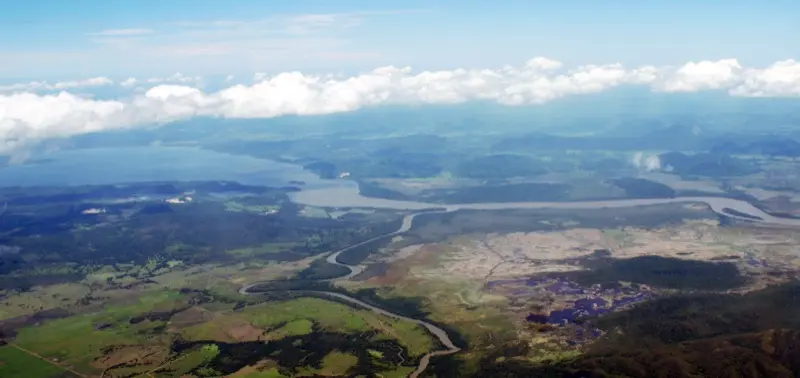
The islands give the gulf its structure. Chira, the biggest, sits up toward the Tempisque; Venado, Caballo and Bejuco are in the middle gulf; San Lucas lies just off Puntarenas; and the Negritos and Tortuga islands guard the mouth. Puntarenas itself sits on a long sand spit on the mainland shore, with the estuary and its mangroves behind it.
The fish
Corvina
Corvina is the gulf's signature fish, and it's the one most Costa Ricans think of when they order ceviche. INCOPESCA says more than 27 kinds of corvina are caught in the gulf, but 4 matter most. The sizes below are the legal minimum sizes for landing them, set by INCOPESCA in 2018:
| Corvina | Scientific name | Legal minimum size | Where |
|---|---|---|---|
| Reina (whitefin weakfish) | Cynoscion albus | 50 cm | Inner and middle gulf; the biggest of them |
| Aguada | Cynoscion squamipinnis | 33 cm | Middle gulf |
| Picuda | Cynoscion phoxocephalus | 32 cm | Middle gulf |
| Agria | Micropogonias altipinnis | 46 cm | Outer gulf |
The corvina reina is the prize. FishBase gives it a maximum length of about 130 cm, and INCOPESCA's 2019 study found most of the females it measured in the gulf were between about 60 and 90 cm. Corvina feed over mud and sand, so they're mostly caught near the bottom on live bait or jigs, along channel edges and drop-offs.
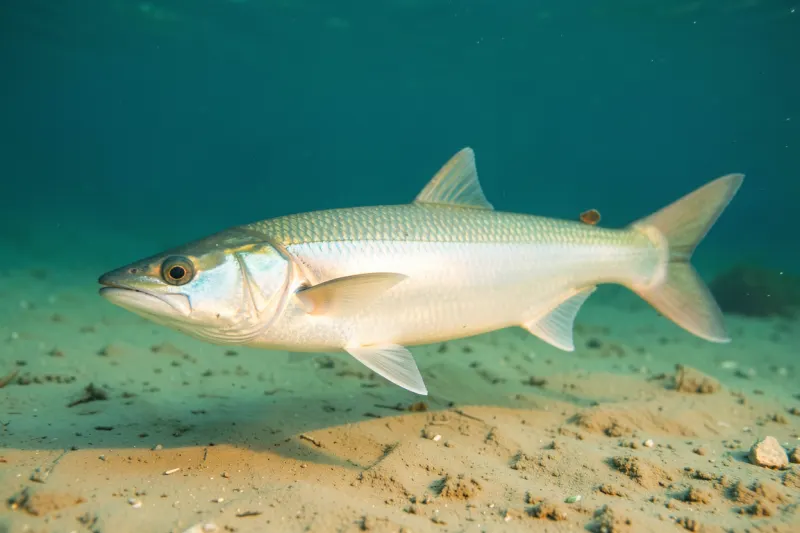
The same study is why the closure falls where it does. It found the 3 main corvinas spawn through much of the year, with the most sustained spawning from June to August, a second peak in October, and important months in December and March as well.
Snook
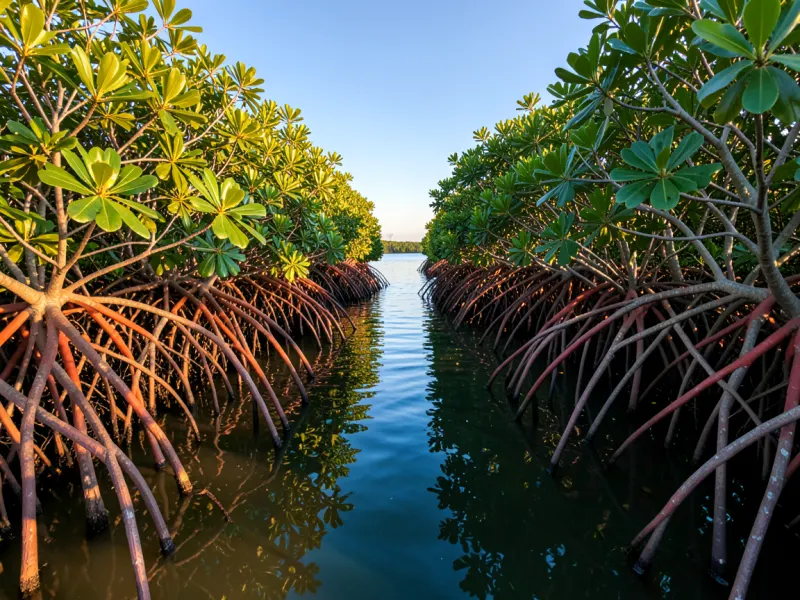
The gulf's mangroves and river mouths hold both Pacific snook: the white snook (Centropomus viridis) and the black snook (C. nigrescens). INCOPESCA lists adults of both among the fish of the inner gulf. Snook hang on structure, such as mangrove roots, rocks, pilings and the edges of channels, and they feed hardest when the tide is moving. Puntarenas guides who run mangrove trips fish the estuary behind the town, and the timing of the tide decides whether they can get in: one review of a Puntarenas mangrove trip in January 2026 describes the mangrove leg being dropped because the tide was too high.
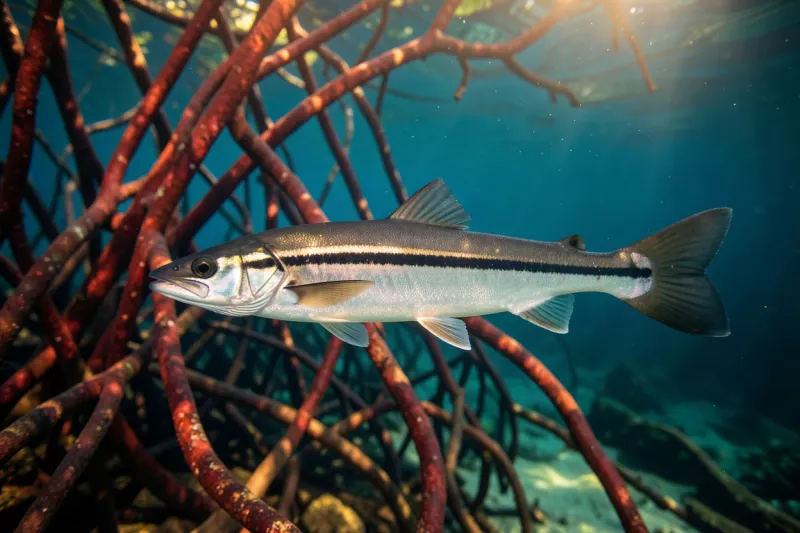
For the species on both coasts, record fish and how guides fish for them, see our page on snook in Costa Rica.
Snapper, jacks and roosterfish in the outer gulf
As you head toward the mouth, the water clears and deepens and the fishing looks more like the open Pacific. Puntarenas operators list snapper, jacks, sierra mackerel, roosterfish and the odd dorado, and Coco's Tours adds snook and corvina to its gulf list. On the peninsula side, the rocky Negritos islands and the shore near Paquera are roosterfish and snapper ground: Bahía Rica, the lodge at Punta Cuchillo, calls roosterfish its specialty, and its booking page lists jacks, dog snapper, bigeye trevally and tuna too.
How the gulf is fished
Gulf trips are short and calm. Most run 4 or 5 hours, morning or afternoon, in center consoles or pangas of about 20 to 30 feet, with up to 4 anglers. You'll see 4 main methods:
- Bottom fishing with live bait for corvina and snapper, over mud and rock in the middle and outer gulf.
- Casting to mangrove edges and river mouths for snook, with lures or live bait, timed to the tide.
- Slow-trolling live bait or casting poppers around rocks and islands for roosterfish and jacks in the outer gulf.
- Light trolling for sierra mackerel, which is how many trips start.
Live bait is part of most days. Sport anglers don't need a special licence to catch live bait for their own use, though INCOPESCA bans catching and keeping live bait in pens inside the inner gulf for boats without the right permit. Your captain will handle it. Our guide to fishing techniques in Costa Rica explains the methods in more depth.
The closed season (veda)
Every year INCOPESCA closes the inner gulf to fishing for 3 months. In both 2025 and 2026 it ran from 1 May to 31 July, and MarViva's 2024 handbook to the gulf's rules states plainly that the closure applies to sport fishing as well as small-scale commercial fishing.
Where it applies
Inside a line from Punta Torres (known as Peñón, on the mainland south of Caldera) to the lighthouse on Isla Negritos, then to the east side of Punta Cuchillos on the Nicoya Peninsula, and from there up the gulf to the mouth of the Tempisque. That takes in Puntarenas, San Lucas, Chira, Venado and Caballo.
Why
The Tico Times and El Mundo, reporting the 2026 closure, said it protects the breeding and growth of corvina reina, aguada and picuda. INCOPESCA's 2019 study had recommended a total closure from June to August, the main spawning months.
What's still allowed
The 2025 agreement made narrow exceptions: hand-line fishing for barracuda by licensed small-scale fishers in parts of the gulf, shellfish gathering, mariculture, fishing for home consumption by coastal families, sardine boats in the outer part of the closed zone in June and July, and one tourist and sport fishing tournament around the Puntarenas lighthouse on 12 July 2025, with inspectors present. None of that opens the inner gulf to ordinary sport charters.
What it means for you
If you're in Puntarenas between May and July, expect inshore trips to run outside the line toward the outer gulf, or not at all, and ask the operator exactly where they'll fish. Paquera's boats are right by the Punta Cuchillos end of the line, with open water outside it; Bahía Rica's booking page shows reviewed trips in June and July 2026. The details are set again each year, so check the current year's dates before you book.
Other protected water in the gulf
Outside the closure, several areas have their own rules. Based on MarViva's 2024 handbook and our Nicoya Peninsula guide:
- Isla San Lucas National Park, the former prison island off Puntarenas, protects its sea area too: fishing and taking anything from the water is banned there (the park plan allows only modest subsistence fishing). Treat it as a place to look at, not fish.
- Isla Guayabo and the Negritos islands are biological reserves; your captain will know how close boats may go.
- Responsible fishing areas (AMPRs) around Chira (Palito-Montero), Isla Caballo, Isla Venado, Níspero, Costa de Pájaros and Paquera-Tambor are run with local fishing associations, mainly for small-scale hand-line fishing, with zones and gear rules set in each area's plan.
- River mouths are closed to commercial fishing for a 1 km half-circle under the fishing law, which helps the snook.
The national rules apply everywhere too: an INCOPESCA licence for everyone fishing from a boat, billfish released, and up to 5 fish a trip landed for eating. Our guide to Costa Rica's fishing rules has the details.
Where the boats leave from
Gulf trips leave from 2 places: Puntarenas, on the mainland, and the Paquera side of the peninsula. We opened each operator's website or booking page on 15 November 2026. Nobody pays to be listed.
Turismo Marítimo del PacíficoPuntarenas
Founded in 2010 by captain Marco Guzmán, it runs private 5-hour inshore gulf trips, morning or afternoon, on 2 center consoles, Don Quito I and Doña Mary V, from the Guima Frost Marina in Barrio El Cocal, about 400 m east of the cruise dock.
Coco's ToursPuntarenas
Half-day (7 AM to noon) and full-day inshore gulf trips with a certified captain and a bilingual guide, from its base about 200 m west of the ferry pier in Barrio El Carmen. Its list: mackerel, dorado, roosterfish, jacks, snook and corvina. Groups of at least 4.
Costera Sol y Sal FishingPuntarenas
Captain Jorge Figueira runs inshore, reef and mangrove trips on a 21-foot center console, including the Puntarenas mangroves for snook. Ask exactly where you'll fish and how the tide affects the mangrove leg.
Bahía Rica Fishing and Kayak LodgePaquera
A small lodge run since 2007 by Norwegian owners, 1.5 km east of the Paquera ferry landing at Punta Cuchillo, fishing the outer gulf and beyond on the 25-foot super panga Mono Congo. It sells fishing-and-stay packages, kayak trips and Isla Tortuga days.
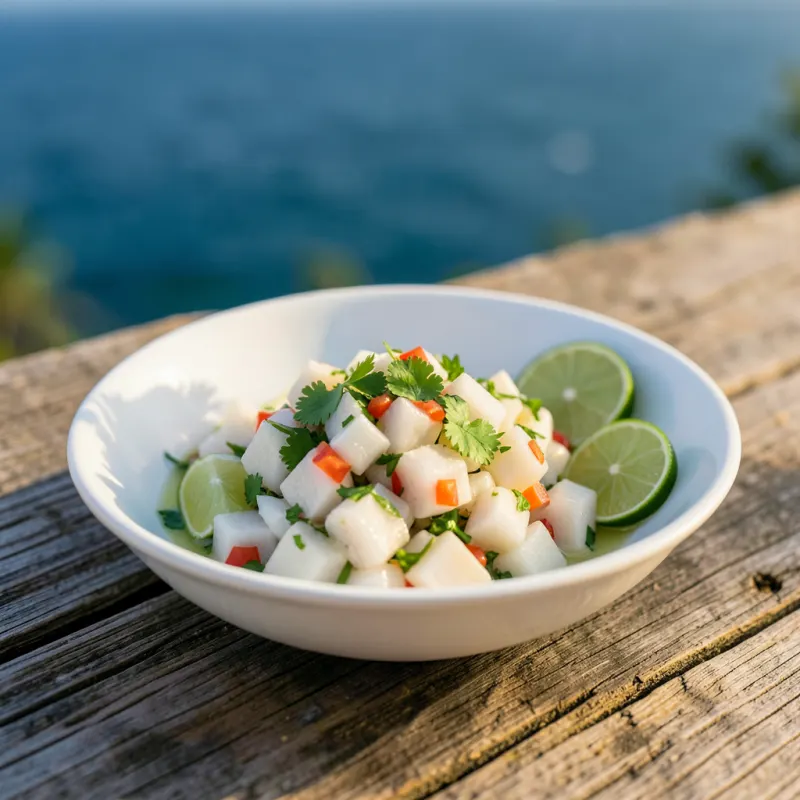
If you keep a corvina for the table, check it's over the legal size in the table above. It's the classic fish for Costa Rican ceviche, and Bahía Rica, for one, includes cleaning and filleting on its trips.
The full list of gulf operators, including newer listings, is in the "Every fishing business" table of our Nicoya Peninsula guide.
Month by month in the gulf
This follows the month-by-month table in our Nicoya Peninsula guide and the national season chart. Treat it as a rough guide: the best information is what local crews caught last week.
| Months | Inner and middle gulf | Outer gulf | Notes |
|---|---|---|---|
| January to April | Corvina, snook, snapper, jacks | Roosterfish at their peak, snapper, sierra | Dry season, clear water, calm mornings |
| May to July | Closed to all fishing | Roosterfish, snapper, jacks | The veda; ask where your boat can go |
| August | Corvina as the gulf reopens | Roosterfish, snapper | Inner gulf reopens after 31 July |
| September and October | Snook and corvina | Snapper, jacks | Wettest months; rivers run high and colored |
| November and December | Corvina, snapper | Roosterfish, snapper | Changeover back to dry |
The INCOPESCA study notes the gulf's currents and saltiness swing with the seasons: dry from December to April, rainy from May to November, when the Tempisque pours in fresh water.
Getting there
Puntarenas is about 2 hours by road from San José, which makes the gulf the easiest saltwater fishing for a day trip from the capital; our guide to fishing near San José compares the options. Cruise passengers can fish straight from the port: Turismo Marítimo del Pacífico and Coco's Tours both work from near the cruise and ferry piers.
To reach Paquera and Bahía Rica, take Naviera Tambor's car ferry from Puntarenas, which crosses in about an hour and a quarter, with 8 sailings a day each way on the April 2026 timetable. The peninsula side of the gulf, from Paquera round to Tambor and Montezuma, is covered as a trip in our guide to the southern Nicoya Peninsula, and if you'd rather fish the open Pacific from a beach, read our guide to panga fishing on the Nicoya Peninsula. For everything else in the zone, from flights to the full operator list, start with the Nicoya Peninsula fishing guide.
Frequently asked questions
Can I fish the Gulf of Nicoya in June?
Not inside the inner gulf, which was closed from 1 May to 31 July in both 2025 and 2026, sport fishing included. Boats can still fish outside the closure line toward the mouth of the gulf, so ask your operator where they'll go.
What's the best fish to target in the gulf?
Corvina, especially the big corvina reina, and snook in the mangroves and river mouths. In the outer gulf, roosterfish and snapper are the main targets.
Is the Gulf of Nicoya good for a day trip from San José?
Yes. Puntarenas is about 2 hours by road, and inshore gulf trips run 4 to 5 hours, so it fits in a long day.
Can I fish around Isla San Lucas?
No. Isla San Lucas is a national park, and fishing in its sea area is banned.
Is the gulf calm enough for people who get seasick?
It's far calmer than the open Pacific side of the peninsula, especially in the inner and middle gulf, which makes it a good choice for families and anyone nervous about swell.
Charters and places in this guide

Sources
- Época reproductiva de la corvina reina, aguada y picuda en el Golfo de Nicoya, Documento técnico 24 (INCOPESCA, 2019)
- El ordenamiento pesquero vigente en el Golfo de Nicoya (MarViva, 2024)
- Acuerdo AJDIP/084-2025, Gulf of Nicoya closed season 2025 (INCOPESCA)
- Costa Rica enforces seasonal fishing ban in Gulf of Nicoya (The Tico Times, April 2026)
- Inicia veda pesquera en el Golfo de Nicoya (El Mundo CR, April 2026)
- Cynoscion albus, whitefin weakfish (FishBase)
- Sportfishing with Bahía Rica in the Gulf of Nicoya (The Tico Times, 2012)
- Turismo Marítimo del Pacífico (official site)
- Coco's Tours, inshore fishing in the Gulf of Nicoya (official site)
- Costera Sol y Sal Fishing, mangrove and gulf trips (FishingBooker)
- Bahía Rica Adventures, Mono Congo (FishingBooker)
- Bahía Rica Fishing and Kayak Lodge (official site)
- Schedules and fares, Puntarenas to Paquera (Naviera Tambor)


