
Caño Negro and the Río Frío
Tarpon, snook and gar in fresh water
Caño Negro and the Río Frío, near the Nicaraguan border, are where you hook tarpon in fresh water, along with snook, guapote and the armoured tropical gar. The rainy months from about August to December bring the high water and the tarpon programme's season; you need a refuge permit as well as a guide, and the refuge closes to fishing for part of each year.
At a glance
- Where
- Caño Negro Wildlife Refuge (9,969 hectares, Ramsar wetland since 1991) and the Río Frío, Los Chiles, near the Nicaraguan border
- Main fish
- Tarpon, snook, tropical gar (gaspar), guapote and jaguar guapote, machaca
- Tarpon
- Atlantic fish that swim in from the Caribbean via the San Juan River; always released
- High water
- About August to December, when the lagoon spreads out and the fly-fishing tarpon season runs
- Low water
- About January to April, when the lagoon shrinks to channels and small lakes
- Rules
- Rod and line only, with a refuge permit; nets are illegal; closed for part of the year (dates vary by source)
- Getting there
- About 4 hours by road from San José
Part of our complete guide: Freshwater fishing in Costa Rica: the complete guide
Caño Negro is the place to hook a tarpon in fresh water, more than 200 kilometres from the sea. The fish swim in from the Caribbean up the San Juan River system and into the Río Frío and the lagoons of the Caño Negro Wildlife Refuge, on the Nicaraguan border, where they share the brown water with snook, guapote and the prehistoric-looking tropical gar. Plan on a lodge-based trip with a guide and a panga, ideally in the high-water months from about August to December, and expect to jump more tarpon than you land.
This guide builds on the Caño Negro section of our complete guide to freshwater fishing in Costa Rica, with more on how the water rises and falls, what a 2026 study found about the tarpon, how the fishing works and the permit you'll need. If you're coming from La Fortuna, our guide to guapote on Lake Arenal covers the other big freshwater trip of the north.
How the refuge and the river fit together
The Caño Negro National Wildlife Refuge covers 9,969 hectares of wetland, forest and pasture in the lower basin of the Río Frío, mostly in the canton of Los Chiles and partly in Guatuso, at just 30 to 44 metres above sea level. It's been a Ramsar wetland of international importance since December 1991, and SINAC, the national conservation agency, runs it through its Arenal Huetar Norte office.
The Río Frío is the backbone. It runs north through the refuge toward Los Chiles and the border, and on into the San Juan, the river that divides Costa Rica from Nicaragua and drains to the Caribbean. That connection is why sea fish turn up here: the tarpon and snook travel inland through the San Juan system, and the 2026 study below describes tarpon migrating about 240 kilometres to reach the fishing grounds.
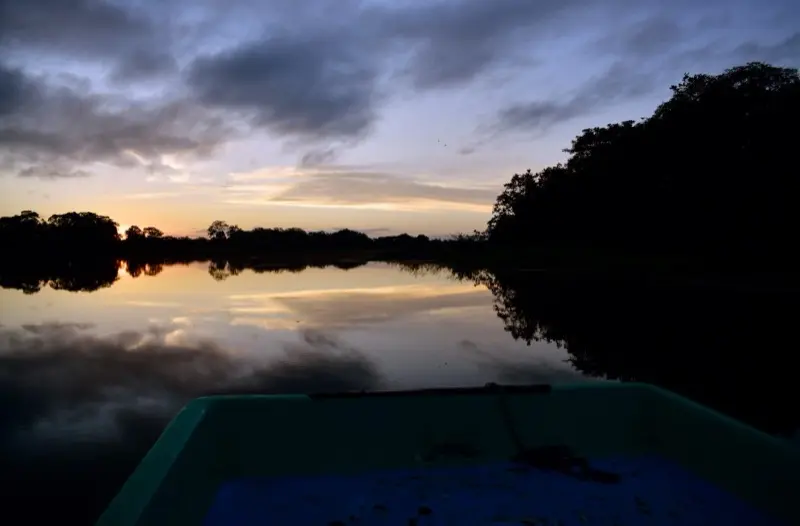
The water level changes everything:
Rainy season
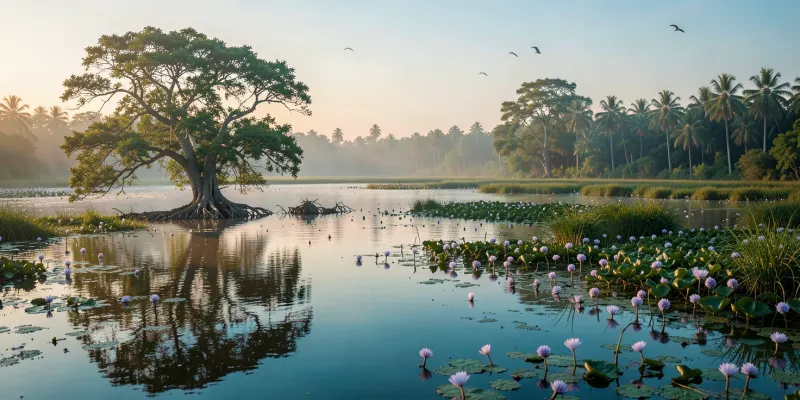
The Río Frío and its tributary, the Río Mónico, spill over and fill Laguna Caño Negro, which spreads over about 800 hectares at its largest. The Tico Times reported the water rising almost 3 metres. In the wettest stretch the river runs over its banks into flooded forest.
Dry season, about January to April
From December the water drops steadily for 3 to 4 months, and the lagoon breaks up into separate smaller lakes and channels until little more than the main river channel is left. Some lagoons become impassable by boat.
The fish
Tarponsábalo
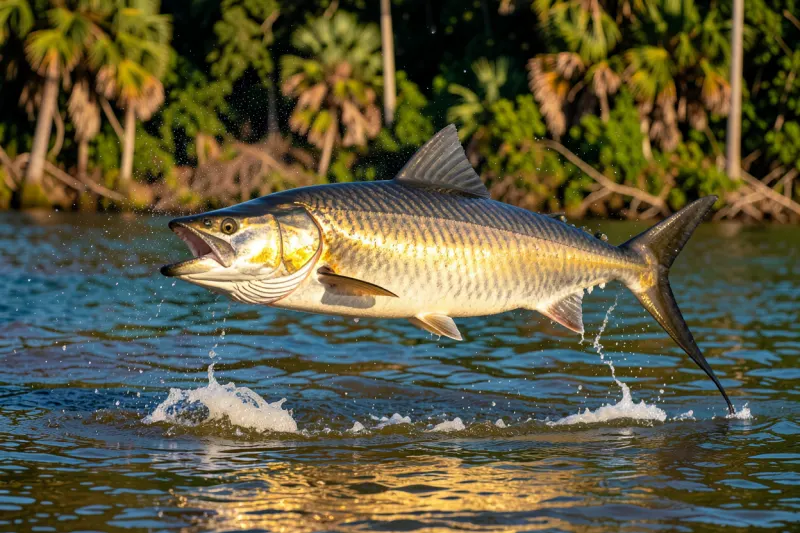
The headline fish. The 2026 study calls the refuge's catch-and-release tarpon fishery an important source of tourism income for the area. Jungle tarpon here are often golden brown rather than chrome, stained by the tannic water, as tarpon guide Thomas Enderlin has written. Hotel de Campo describes only mature fish in its lagoons, from more than 50 pounds up to about 200. Tarpon are always released in Costa Rica; our tarpon guide covers the species.
Snookrobalo
Natural Lodge Caño Negro lists snook in Caño Negro, the Río Frío and the San Juan, and the Costa Rica Tourism Institute names snook alongside tarpon as the fish anglers come for. See our snook guide for both coasts.
Tropical gargaspar
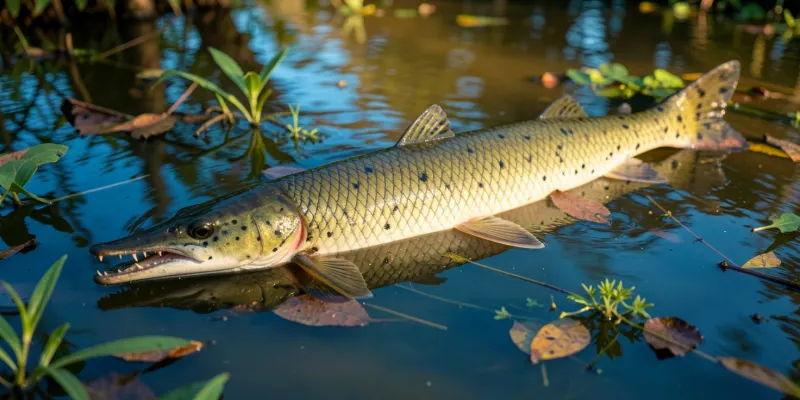
A long, olive, armoured fish with a narrow, toothy snout, which lodges call alligator gar. It grows to about 1.25 metres and can gulp air in warm, still water, which suits the shallow dry-season lagoons. FishBase rates it slow to recover from fishing pressure. Hotel de Campo fishes for gar with live or artificial bait.
Guapote, jaguar guapote and the rest
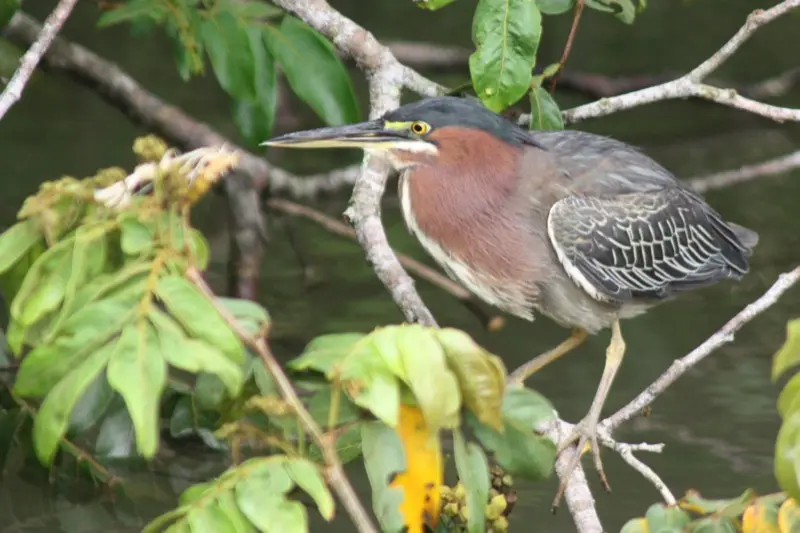
The 2026 study lists gar, guapote tigre (jaguar guapote), tarpon and invasive tilapia among the refuge's important fish. Travel guides add guapote, freshwater drum, mojarra and machaca, and bull sharks are known to come up from the sea.
When to go
Sources don't line up neatly here, so this is what each one says, and how to read them.
| Months | Water | What the sources say |
|---|---|---|
| January to March | Dropping fast; lagoon breaking up | Fish concentrated in channels and small lakes; the refuge is open under the season one guide gives |
| April to June | Lowest, then rains return | One lodge names March to June for most tarpon; but the refuge is closed to fishing for part of this stretch (see the rules below) |
| July | Rising | Open from 1 July, according to one travel guide; others say the closure runs through July |
| August to mid-December | High; river over its banks | The fly-fishing tarpon season studied in 2026; another lodge names October and November for most tarpon |
Hotel de Campo says its tarpon are resident and can be fished all year, with no migratory season. The researchers, whose team guides the fly-only programme, describe tarpon arriving with the rains. The practical answer: the high-water months from August to about mid-December are the safest bet for tarpon, the dry months suit gar and fishing tight channels, and you should always check the refuge's open season before you book anything between late March and July.
What the tarpon numbers say
The best data on this fishery comes from a study published in 2026 in the Revista de Biología Tropical by Thomas Enderlin, Maripaz Roldán-Morales and two FECOP scientists, Johel Chaves-Campos and Damián Martínez-Fernández. They counted tarpon bites per day on a fly-only, 100% catch-and-release programme on about 30 kilometres of the Río Frío and its lagoons, from Caño Negro village to the Nicaraguan border, every season from 2014 to 2025 except 2022 and 2023. Each season runs about 15 weeks, from 1 August to 15 December, with up to 4 anglers a week in 2 boats.
What they found is worth knowing before you go:
- Before November 2016, anglers averaged 3 to 8 bites a day.
- Hurricane Otto, the first hurricane on record to cross Costa Rica, came through the northern zone in late November 2016. Bites fell to zero and stayed there until partway through the 2017 season.
- Since then the bite has mostly stayed between 0 and 3 a day, and between 1 and 2 since 2021.
The authors link the drop to the hurricane on top of decades of pressure on the Río Frío basin: wetlands drained for farming, pineapple expansion since the 2000s, farm runoff and sediment. So set your expectations accordingly. A good day might mean a couple of shots at a big fish, and success is counted in tarpon jumped, not landed, as Hotel de Campo puts it.
How it's fished
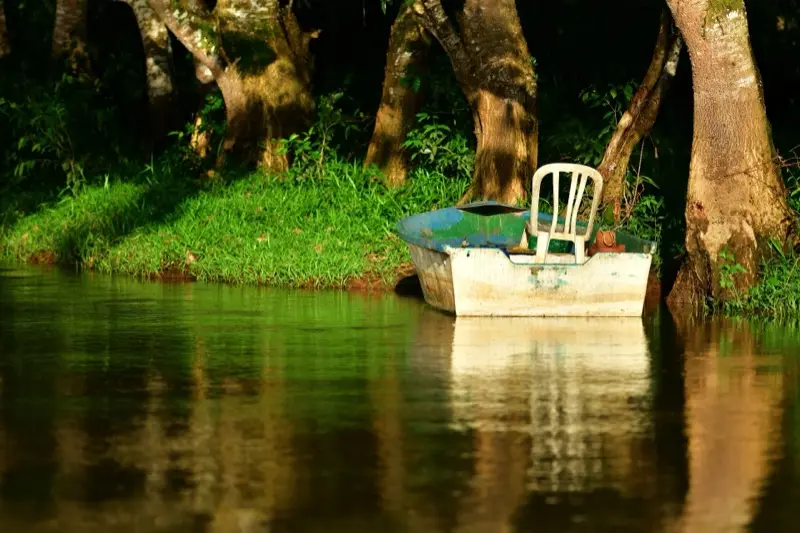
Almost all of it is from a small panga with a local guide, casting rather than trolling.
Tarpon on the fly
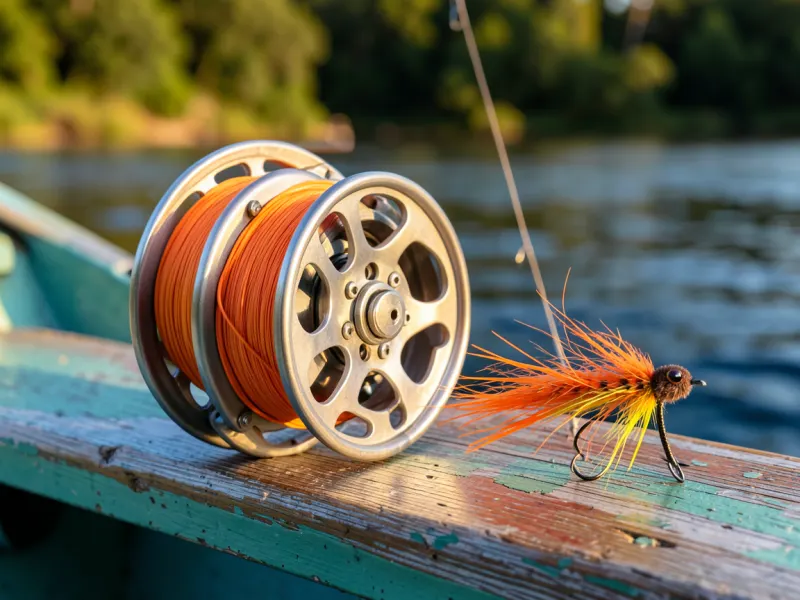
The study's team fishes 12-weight rods, a heavy line that throws big flies and lets you fight a fish fast so it can be released quickly. Enderlin has described anchoring and re-anchoring to keep hooked fish out of the branches and undercut banks, and fish taking a big orange fly stripped across the surface. Most guests are fly-fishing beginners, the study says, so the guides teach casting and fighting on the boat. Hotel de Campo also calls fly fishing the best way to catch the bigger fish.
Tarpon on conventional tackle
Spinning tackle is popular too. Natural Lodge Caño Negro suggests a 6.5 to 8-foot rod, a levelwind reel with a star drag and 150 to 200 yards of 15 to 20-pound line, or saltwater spinning gear, with surface plugs or deep-running lures (a yellow and silver mirror-sided lure is a local favourite), cast from an anchored or drifting boat, or live bait under a float.
Gar, snook and guapote
Gar take live or artificial bait. Snook and guapote hit plugs and soft baits around fallen trees and the lagoon edges. In the dry season, when the water is low and clear, the fish are easier to find but more nervous.
Handling
Keep tarpon in the water for the release, handle gar gently and be careful with the turtles: a Caño Negro guide told The Tico Times that careless anglers snag turtles and injure them taking the hook out. Never lift a big fish by the jaw or gills.
Who to fish with
We chose these on evidence we could check this month (a working, current website or booking page, years in business, recent dates). Nobody pays to be listed.
Hotel de Campo Caño NegroCaño Negro village
A small lodge facing one of the refuge lagoons, 150 metres east of the village entrance, which calls itself the first fishing lodge in Caño Negro, since 1998. Its panga-style boats go straight from the lodge into the lagoons for tarpon (fly or spin, strictly catch and release) and gar, on day trips or packages of 1 to 3 fishing days. Its fishing page links to 2026 content.
Natural Lodge Caño NegroCaño Negro village
The village's other lodge lists sport fishing among its tours, has blog posts dated 2026, and writes about tarpon, snook and guapote on Caño Negro and the Río Frío, with trips toward the San Juan and Lake Nicaragua. Ask it directly what it runs itself. canonegrolodge.com
Jungle Tarpon Reservenorthern zone
A fly-only tarpon programme for 4 anglers a week, 2 to a boat, staying in a riverside house with its own dock, about 5.5 hours by private transfer from San José. The outfitter is Fly Fishing Costa Rica, the team behind the 2026 study, and the season runs from August to mid-December. It's sold through fly-fishing travel agents; Orvis lists a hosted week from 26 September to 4 October 2026.
Fly Fish in Costa RicaSan José, trips nationwide
A long-running fly-fishing outfitter that includes jungle tarpon among its custom trips, along with trout and machaca. flyfishincostarica.com
Permits and the rules
A refuge permit as well as a guide
Fishing inside the refuge is allowed with rod and line and a SINAC refuge permit. Travel guides say you buy it at the ranger station in Caño Negro village (weekday office hours) or through the lodges, and The Tico Times reported that it needed photos and your passport or ID. Most lodges handle it; confirm who's arranging it when you book.
No nets, and rangers patrol
Nets are illegal under the Wildlife Conservation Law; CRHoy filmed a pair caught with one inside the refuge, and in September 2025 SINAC and the border police ran joint land and water patrols against illegal fishing.
The closed season
Caño Negro closes to fishing for part of each year, but we couldn't find SINAC's current dates published anywhere. One travel guide gives the open season as 1 July to 31 March (closed April to June); other sources say the closure runs April to July. Ask your lodge or the refuge office before booking anything from late March to July.
Gar need extra care
In January 2026 SINAC closed tropical gar to fishing from March to July in the Barra del Colorado refuge on the Caribbean side, because the species recovers slowly. That rule isn't for Caño Negro, but it's a good guide: release every gar, especially in those months.
Mind the border
The Río Frío runs north to Los Chiles and the San Juan. Don't let a drift carry you into Nicaraguan water; trips there need proper immigration paperwork, so leave that to a lodge that arranges it.
The national rules, from licences to which fish must be released, are in our Costa Rica fishing rules guide.
Getting there and where to stay
Caño Negro village is about 4 hours by road from San José, by way of Ciudad Quesada or via Upala and Los Chiles, and it's an easy add-on to a stay in La Fortuna. The refuge lies about 30 kilometres southeast of Upala. Boats also run up the Río Frío from Los Chiles. A 4x4 helps on the dirt roads in the rainy season. Stay in the village, at one of the two lodges above, so you can be on the water at first light.
If you want saltwater tarpon on the same trip, the fish that pass through here also run the Caribbean river mouths. Our guide to tarpon season on the Caribbean covers the months, Silver King Lodge fishes the Río Colorado, and the wider coast is in our Caribbean fishing guide. For guapote, trout and everything else in fresh water, head back to our complete freshwater fishing guide.
Frequently asked questions
Can you really catch tarpon in fresh water at Caño Negro?
Yes. Atlantic tarpon swim in from the Caribbean through the San Juan River system and into the Río Frío and the refuge lagoons. They're always released.
What's the best time of year to fish Caño Negro for tarpon?
The high-water months from about August to mid-December are the safest bet; that's the season of the fly-only tarpon programme. One lodge fishes all year, and another names March to June and October to November, but the refuge closes to fishing for part of the spring and early summer.
How many tarpon will I catch?
Be realistic. A 2026 study found fly anglers averaging 3 to 8 bites a day before Hurricane Otto in 2016 and mostly 1 to 2 a day since 2021. Jumping one big fish is a good day.
Do I need a permit to fish in Caño Negro?
Yes, a SINAC refuge permit, sold at the ranger station in the village or through the lodges, as well as following the national rules. Only rod and line are allowed.
What is a gaspar?
The tropical gar (Atractosteus tropicus), a long, armoured fish with a narrow, toothy snout that lodges call alligator gar. It grows to about 1.25 metres, recovers slowly from fishing, and should always be released.
Charters and places in this guide

Sources
- Posible impacto del huracán Otto en la abundancia del sábalo para pesca turística en el Humedal Caño Negro (Enderlin, Roldán-Morales, Chaves-Campos and Martínez-Fernández, Revista de Biología Tropical 74, 2026)
- Caño Negro Wildlife Refuge (Wikipedia)
- Caño Negro refuge, fishing season and permit (Costa Rica Guide)
- Fishing in Costa Rica, Caño Negro licence (Costa Rica Guide)
- Birders, anglers rub shoulders in Caño Negro (The Tico Times, 2010)
- Costa Rica sport fishing, Caño Negro (Hotel de Campo Caño Negro)
- Caño Negro, Río Frío, Lake Nicaragua and San Juan River fishing (Natural Lodge Caño Negro)
- Orvis Week at Jungle Tarpon Reserve, 2026 (Orvis)
- Jungle Tarpon Reserve (Aardvark McLeod)
- Giant jungle tarpon of Costa Rica (Thomas Enderlin, MidCurrent, 2018)
- Caño Negro tourist guide, sport fishing (Instituto Costarricense de Turismo)
- Sorprenden a dos personas pescando en refugio de vida silvestre (CRHoy)
- SINAC y Policía de Fronteras fortalecen control ambiental en el Refugio Caño Negro (Delfino.cr, September 2025)
- Guía para pescadores responsables, aguas continentales, Refugio Barra del Colorado (SINAC, Área de Conservación Tortuguero, January 2026)
- Atractosteus tropicus, tropical gar (FishBase)
- Fly Fish in Costa Rica (official site)


