
The Papagayo winds
How they change Guanacaste fishing from December to March
The Papagayo winds are strong northeast winds that blow across northern Guanacaste from about December to March, strongest in February and March. They make offshore runs rough and cancel some trips, so crews fish inshore for roosterfish and snapper or run south toward calmer water, and they also pull up cold, rich water that feeds the whole gulf.
At a glance
- When
- About December to March, strongest in February and March
- Direction
- From the northeast, off the land and out to sea
- Where it's strongest
- The far north (Bahía Salinas, Santa Elena) and the Gulf of Papagayo
- Calmer
- Close inshore in the lee of headlands, and farther south toward Flamingo and Tamarindo
- Effect on the sea
- Rough water offshore, and cold upwelling that cools and greens the water
- Best fishing then
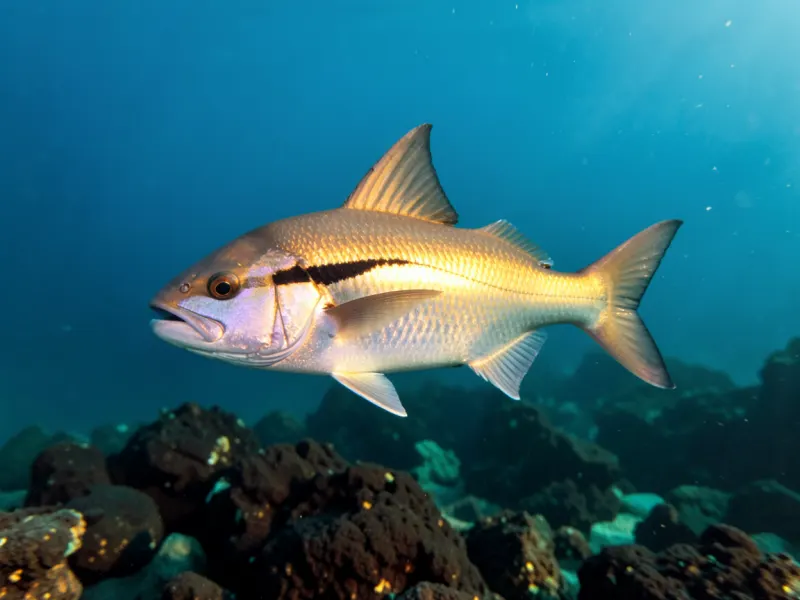
- Inshore roosterfish, snapper and jacks
- Plan
- Morning trips, a spare day, a bigger boat for offshore days
Part of our complete guide: Fishing in Guanacaste: the complete guide
The short answer
If you fish Guanacaste between December and March, the wind will shape your trip. The Papagayo winds (locals just say "the Papagayos") are strong, dry northeast winds that pour across the north of the province and out to sea, strongest in February and March. They can blow for days at a time, make offshore runs rough and cancel some trips. Our complete guide to fishing in Guanacaste gives the big picture; this page explains the wind itself and what crews do about it.
The good news: the wind rarely shuts the fishing down completely. Close to shore, in the lee of the headlands, the water often stays fishable, and this is prime time for roosterfish in Guanacaste. Farther south, around Flamingo and Tamarindo, the wind is usually lighter. With morning trips, a spare day and a flexible crew, a dry-season trip works well.
What the Papagayo winds are
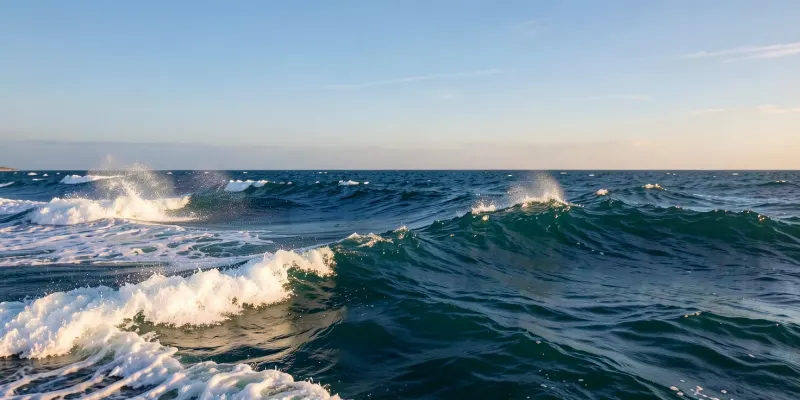
The Papagayos are a "gap wind." In the northern winter, cold fronts from North America raise air pressure over the Caribbean side of Central America. Air flows from high pressure toward the lower pressure over the Pacific, and in most places the mountains block it. Around Lake Nicaragua and the far north of Costa Rica, though, the mountain chain dips low, and the air squeezes through that gap and speeds up, like water through a narrowed hose. It comes out over the Gulf of Papagayo as a jet of wind blowing from the northeast toward the southwest.
Scientists have studied the jet for decades because it's one of 3 such winds on the Pacific side of Central America, with the gaps at Tehuantepec in Mexico and at Panama. A few things they agree on:
Season
Costa Rican researchers measuring at Bahía Salinas, by the Nicaraguan border, found wind strongest from December to March and weakest in June, September and October, with a smaller bump in July.
Pulses
the wind comes in surges that tend to arrive every few weeks and last several days, rather than blowing at one steady strength all season.
Strength
it's strongest in the far north. Bahía Salinas is a well-known kitesurfing bay, and Wikipedia's entry puts the wind there at 20 to 40 knots in season.
They're also why the dry season is so dry. As Las Catalinas, a town near Potrero, describes it, the wind pushes away humidity and clouds and leaves clear, sunny days.
What the wind does to the sea
Rough water offshore, calmer water close in
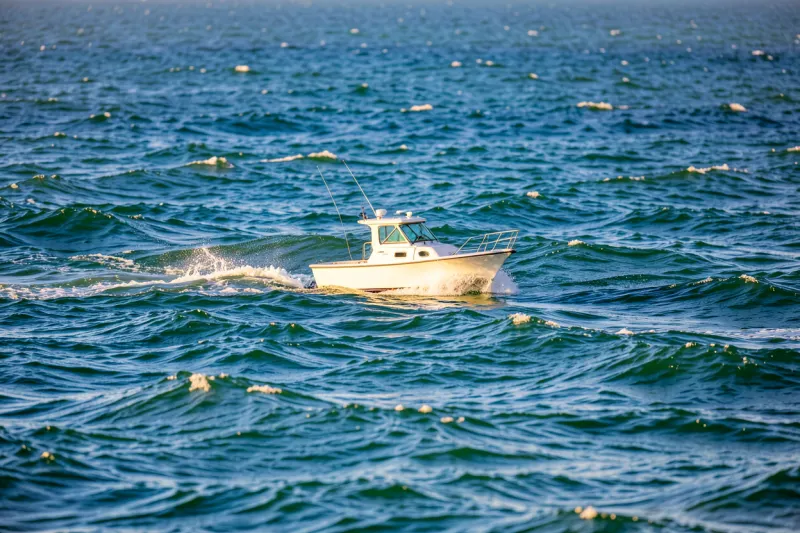
Because the wind blows off the land, the sea right against the shore can look calm while it builds into short, steep chop a few miles out. A German sailing guide to the gulf puts it bluntly: the water can be calm close inshore while there's a gale 20 miles out. That's the main reason dry-season fishing in the north turns inshore.
It also means a calm-looking bay can fool you. The same guide warns that anchored boats drag when the wind sets in at night, and that a bay that's calm in the evening can be a different place at 3 in the morning. Sources don't agree on one time of day when the wind is strongest: windsurf guides for the far north describe it blowing hard by mid-morning and easing in the late afternoon, while sailors warn of it arriving at night. Trust your captain's read of the forecast.
Cold, green water: the upwelling
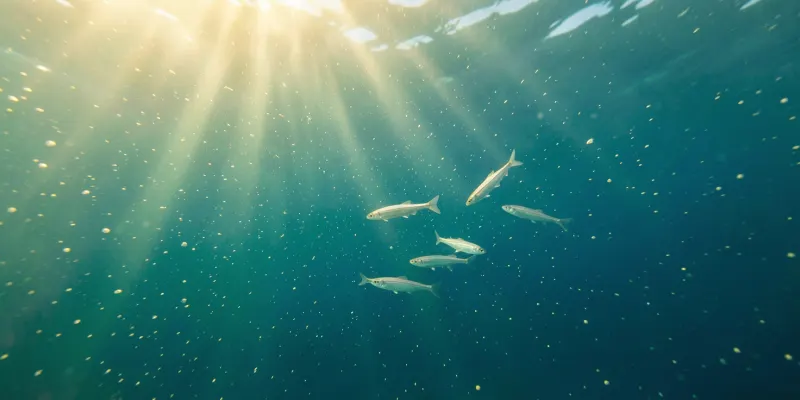
The wind does something important under the surface too. It pushes the warm top layer of the sea away from the coast, and cold water rises from below to replace it. This is called upwelling, and it's one of the biggest events in the year for the northern Pacific coast.
The numbers are striking. The Bahía Salinas study, which sampled the bay from 2008 to 2014, found the upwelling starting in December and ending in April or May. The coldest water it recorded, 15.15°C near the bottom, was in February 2011; the warmest, 29.93°C near the surface, in June 2009. A second study of the Gulf of Papagayo, from 2017 to 2019, found the lowest water temperatures early in the year, chlorophyll (a sign of plankton) at its highest at the same time, and cooling events below the surface lining up with spells of strong wind.
What it means for fishing:
More food
the cold water brings up nutrients, plankton blooms, and baitfish follow. Inshore fish like roosterfish, snapper and jacks feed around the rocks.
Cooler, greener water
visibility changes from day to day, and a long blow can leave inshore water stirred up and dirty. A Flamingo captain wrote in 2019 that inshore fishing holds up until the wind blows hard enough to dirty the water.
A squeezed habitat offshore
the 2026 study of Pacific captains notes that this kind of upwelling pushes the cool layer closer to the surface, which can concentrate sailfish and their prey in other parts of Central America. In northern Costa Rica, the same captains said the problem isn't the fish; it's that the wind makes it hard to reach them.
How the winds change Guanacaste fishing
The 2026 study, which interviewed captains in Tamarindo, Flamingo, Cuajiniquil and El Jobo, sums it up: northern captains name the rainy season, not the dry season, as their best time for sailfish and marlin, mainly because the Papagayo winds make sea conditions hazardous and limit boat access from about November to April. Several northern captains said they move their boats south to the Central Pacific in the dry season to keep fishing billfish. That's why Guanacaste's billfish season runs opposite to the rest of the country, as our Costa Rica fishing seasons guide shows.
| Month | Wind | Inshore (roosterfish, snapper) | Offshore (billfish, tuna, dorado) |
|---|---|---|---|
| November | Usually not blowing yet | Good | Good, a transition month |
| December | Starting, on and off | Good | Good, some days too rough |
| January | Regular surges | Best | Good on calm days, best farther south |
| February | Strongest | Best, in the lee of headlands | Often limited in the north |
| March | Strong | Best, if the water stays clean | Often limited in the north |
| April | Easing | Best | Improving |
| May | Light, rains begin | Good | Best season starts |
North to south: where it blows hardest
The wind is strongest near the gap and weakens to the south:
Bahía Salinas, Santa Elena and El Jobo
right in the path of the jet. Beautiful in the dry season, but often too windy to fish offshore. Local captains here fish inshore and pick their days.
The Gulf of PapagayoHermosa, Coco, Marina Papagayo
windy, but full of coves and points that give shelter. INCOPESCA's management plan for the gulf notes that Culebra Bay has been valued as a harbour since pre-Columbian times for its protection from strong winds, and that the Papagayos kept Spanish ships out in colonial times.
Flamingo and the Catalinas
near the southern edge of the strongest wind. Capt. Skeet Warren, who ran Bushwacker Sportfishing out of Flamingo for 18 years before selling the boat to Capt. Emilio Villarreal in 2024, wrote that the winds blow hard north of Flamingo and that he could almost always get out of them by running south.
Tamarindo and south
usually lighter wind. Warren described running toward Punta Guiones, on the Nicoya coast, where deep water comes close to shore and tall mountains block the offshore wind. For the coast beyond Tamarindo, see our Nicoya Peninsula fishing guide.
How crews fish around the wind
Go inshore
On a windy day, most Guanacaste crews fish the rocks and islands close to shore. That's roosterfish, snapper, jacks and amberjack, caught on live bait or with poppers, and it's often the best fishing of the year. Wind doesn't have to mean no fish: a FishingBooker review of a Papagayo trip in August 2026 describes catching 3 roosterfish close to shore on a windy day. Our roosterfish in Guanacaste guide covers the spots and methods.
Run south
For offshore days, the bigger boats out of Flamingo run south toward calmer water, as Warren described. It costs more time on the water, so a full day makes more sense than a half day.
Start early, stay flexible
Most crews start early and keep the option to change plans at the dock. Warren's standing advice to winter clients was to book the fishing day early in the vacation, so it can be moved if the wind is up, and to consider a bigger boat at this time of year.
Planning a dry-season trip
- Book your fishing day early in the trip. If the wind cancels it, you still have days to reschedule. (More tips in planning a Costa Rica fishing trip.)
- Choose your target to suit the season. December to March in the north is roosterfish and inshore time; if you're set on sailfish, come from May to August, or fish the Central Pacific, where the dry season is billfish season.
- Pick your base with the wind in mind. Coco and Hermosa are closest to the airport but windiest; Flamingo and Tamarindo tend to be calmer. In Tamarindo, Capullo Sport Fishing runs half to full days inshore and offshore from the beach, and Rhino Charger Sport Fishing fishes mostly offshore, with inshore trips by arrangement.
- Choose the right boat. A small panga is great for the rocks; for an offshore day in the windy months, a bigger boat rides the chop more comfortably.
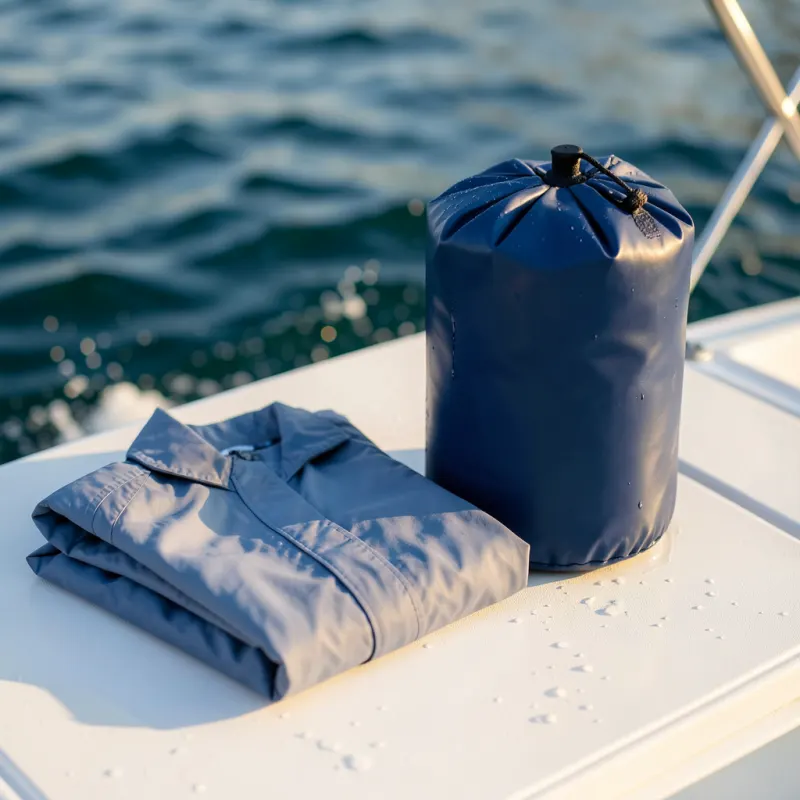
- Pack for spray. A light rain jacket, a dry bag for your phone and seasickness tablets taken before you leave make a windy morning much easier.
- Trust the captain's call. If a crew says the sea is too rough, it is. The Papagayos deserve respect.
For the weather pattern on every coast of the country, see our guide to Costa Rica's weather, and for marinas, outfitters and everything else on this coast, our complete Guanacaste fishing guide.
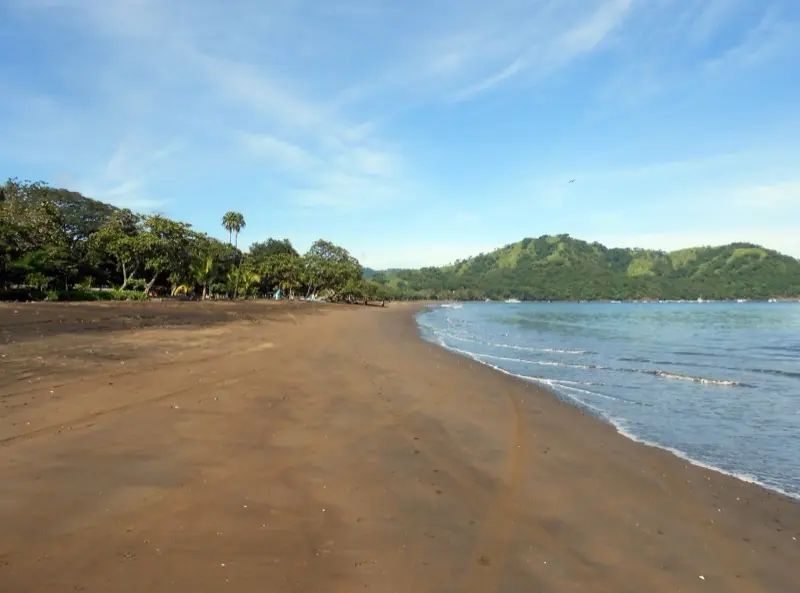
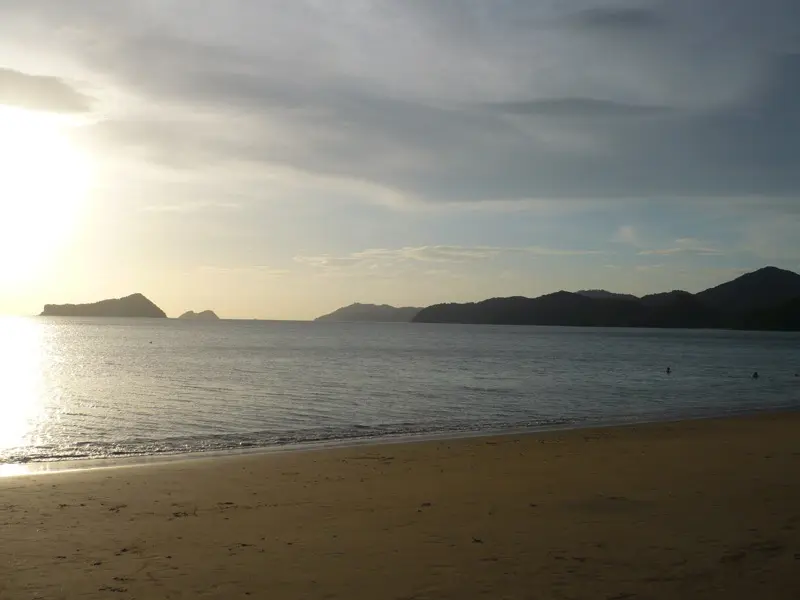
Come back in the rainy season and the same bay looks like this: green hills, flat water and boats heading offshore for sailfish.
Frequently asked questions
When do the Papagayo winds blow?
From about December to March, strongest in February and March. November is usually calm, and the wind fades through April.
Will the wind cancel my fishing trip?
It might cancel an offshore trip on a strong day, but inshore trips close to the rocks usually go ahead. Book your fishing day early in your vacation so it can be moved.
Is fishing good during the windy season?
Yes, especially inshore. January to April is the best time for roosterfish in Guanacaste, and the cold upwelling water brings plenty of bait. Offshore billfishing in the north is better from May to December.
Where is it calmer in the windy months?
Close to shore in the lee of headlands, and farther south. Flamingo sits near the southern edge of the strongest wind, and Tamarindo and the Nicoya coast are usually calmer than Coco and the far north.
Why is the water cold in Guanacaste in February?
The wind pushes warm surface water offshore and cold, deeper water rises to replace it. Researchers at Bahía Salinas recorded water as cold as about 15°C near the bottom in February.
Charters and places in this guide

Playa Flamingo · charterBushwacker Fishing ChartersBushwacker is a one-boat charter in Playa Flamingo, on Guanacaste's north Pacific coast, built around a 42-foot Bertram with a…
Tamarindo · charterCapullo Sport FishingCapullo Sport Fishing is a long-running Tamarindo charter with two boats: the 36-foot Topaz Capullo for groups of up to 8 and the…
Tamarindo · charterRhino Charger Sport FishingRhino Charger Sport Fishing is a one-boat charter in Tamarindo, on Guanacaste's Pacific coast, built around a 34-foot Island…Sources
- Spatial and temporal dynamics of the hydrology at Salinas Bay, Costa Rica (Rodríguez, Alfaro and Cortés, Revista de Biología Tropical, 2021)
- Hydrographic variability in the Gulf of Papagayo, Costa Rica during 2017 to 2019 (Cambronero-Solano et al., Revista de Biología Tropical, 2021)
- Fishers' knowledge reveals spatio-temporal dynamics of billfish sport and tourist fisheries on the Pacific coast of Costa Rica (Berkowitz-Sklar et al., Revista de Biología Tropical, 2026)
- Papagayo Jet (Wikipedia)
- Bahia Salinas (Wikipedia)
- Flamingo report, November 2018 (Capt. Skeet Warren, Coastal Angler)
- Flamingo report, January 2019 (Capt. Skeet Warren, Coastal Angler)
- Flamingo report, November 2019 (Capt. Skeet Warren, Coastal Angler)
- Danger zone: the Gulf of Papagayo (sailing guide, Nammert)
- The Papagayo winds (Las Catalinas Daily)
- Plan de Ordenamiento Pesquero, Área Marina de Pesca Responsable Papagayo (INCOPESCA, 2021)
- Guanacaste roosterfish fishing charters and reports (FishingBooker, 2026)
- Fishing seasons in the Gulf of Papagayo (Papagayo Fishing)

