
Golfo Dulce fishing
Roosterfish, snapper and Matapalo
The Golfo Dulce is Costa Rica's calmest big inshore fishery: a deep, sheltered gulf where small boats chase roosterfish, cubera snapper, jacks and grouper all year, with the reefs off Cabo Matapalo the best-known ground. Roosterfish are best from about January to April and big cubera from about March to May, and most trips leave from Puerto Jiménez, Golfito or Playa Zancudo.
At a glance
- Size
- about 50 km long and 10 to 20 km wide, around 750 square km
- Main targets
- roosterfish, cubera snapper, other snapper, jacks, grouper, snook
- Best-known ground
- the reefs and rocks off Cabo Matapalo, at the gulf's mouth
- Best months
- roosterfish about January to April; big cubera about March to May
- Bases
- Puerto Jiménez, Golfito, Playa Zancudo, Pavones
- Rules
- Marine Area of Responsible Fishing since 2010; roosterfish and hammerheads go back
- Licence
- INCOPESCA sport fishing licence for every angler
Part of our complete guide: Fishing the Southern Pacific: the complete guide
The short answer
The Golfo Dulce is the reason the far south fishes well in almost any weather. It's a deep, steep-sided gulf tucked between the Osa Peninsula and the mainland, and its calm water holds roosterfish, cubera snapper, jacks, grouper and snook all year. The best-known ground is right at its mouth, on the reefs and rocks off Cabo Matapalo, where the gulf meets the open Pacific.
This article goes deeper on the gulf's inshore fishing: what lives where, when to go, how local crews fish it and the rules that apply inside it. For the whole zone, from Uvita and Drake Bay to Pavones, including getting there, offshore fishing and every business we found, see our complete guide to fishing the Southern Pacific.
What makes the Golfo Dulce different
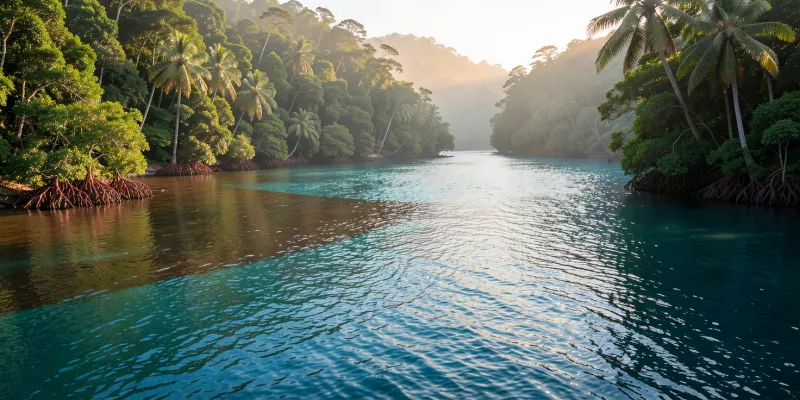
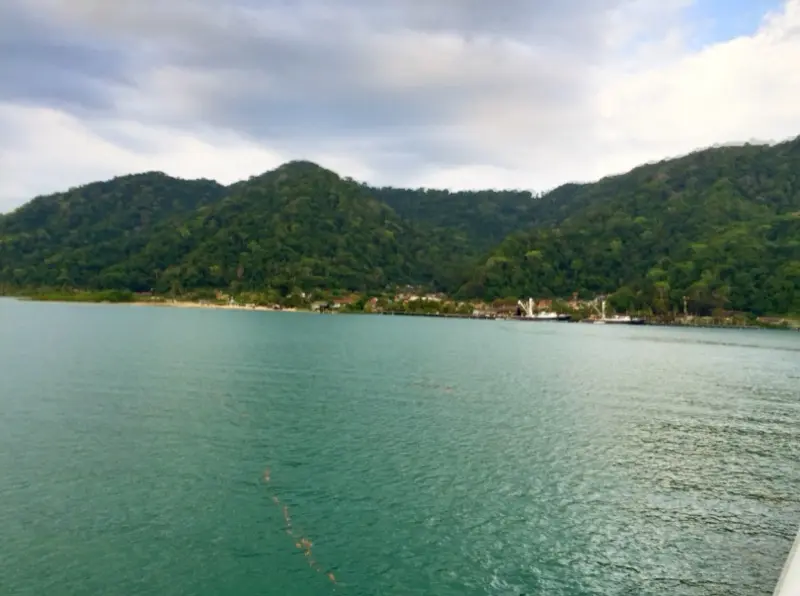
Scientists describe the Golfo Dulce as a tropical fjord, one of very few in the world. A 2021 review by University of Costa Rica researchers puts it at about 50 km long, 10 to 20 km wide and around 750 square km. Its inner basin drops to about 210 m, while a sill only about 60 m deep sits near the entrance, and the tide rises and falls around 3 m. Three main rivers feed it: the Rincón on the Osa side, the Esquinas at the head and the Coto on the Golfito side.
For an angler, that shape means 3 things:
Calm water
The Osa shelters the gulf from the Pacific swell, so inshore trips run on days when the open coast is too rough. It's the best place in Costa Rica for people who get seasick.
Deep water close to shore
The forest runs straight down into the sea, and rocky points drop off fast, so big snapper and jacks live within a cast of the trees.
Food
Mangroves, river mouths and freshwater runoff feed sardines, mullet and other baitfish, which feed everything else. The gulf is also a nursery: young scalloped hammerheads are born at its head, and humpback whales and dolphins are often seen on the way out.
The fish of the Golfo Dulce
Roosterfish
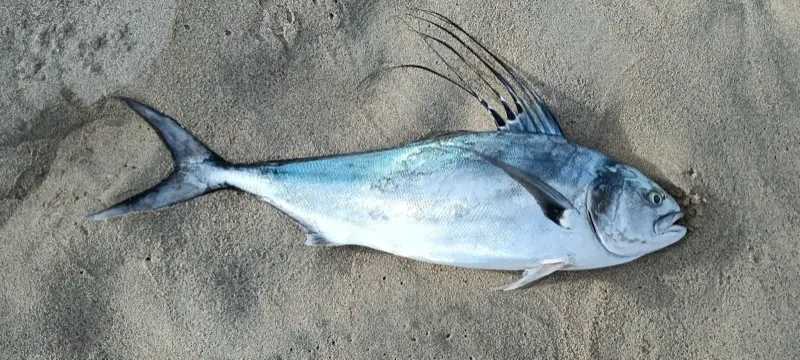
The roosterfish is the gulf's signature fish, and the one most visitors come for. Crocodile Bay, which has fished the gulf from Puerto Jiménez since 1999, puts typical fish at 15 to 50 pounds, caught all year, with record-size fish in April and fish over 70 pounds in June. Osa Tourism puts the average closer to 10 to 15 pounds, with 50-pound fish not unusual. Either way, a roosterfish on light tackle near the rocks is one of the hardest fights in inshore fishing.
They're found along beaches, rocky points and river mouths, often in very shallow water. Every one goes back: INCOPESCA's sport-fishing rules treat roosterfish as a catch-and-release species.
Cubera snapper and the other snappers
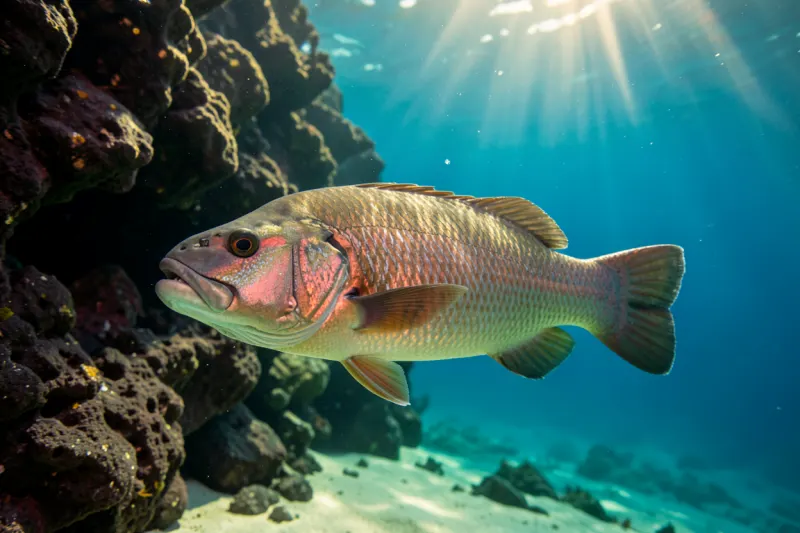
The Pacific cubera snapper (pargo dientón) is the gulf's heavyweight. Crocodile Bay reports fish over 50 pounds caught in every season, counts about a dozen kinds of snapper in the gulf, and names March to May as prime time, with April for record sizes and more good fishing in July and August. Cubera live on the reefs and rocky structure, and the big ones will rise from surprisingly deep water to smash a popper.
The smaller snappers are the gulf's dinner fish. Osa Tourism lists yellow, rock and colorado snapper among the inshore catch, and our snapper guide covers each species. Most crews release big breeding cubera and keep a smaller snapper or two for the table.
Jacks, grouper and the rest
Jack crevalle, bluefin trevally, African pompano and almaco jack all hunt the gulf's rocks and drop-offs. A 2015 Sport Fishing report from a Zancudo Lodge trip described an almaco jack of nearly 60 pounds and several African pompano taken on jigs in the outer gulf. Grouper and spotted cabrilla live on the bottom, and Osa Tourism notes that February and March are good months for bottom fishing, including grouper and tilefish.
Snook live in the river mouths and along the mangrove edges, especially after rain, and Sierra mackerel, bonito and rainbow runners turn up in the open water near the mouth. Schools of yellowfin tuna sometimes come close too, chased by dolphins, which is when an inshore day can turn into something bigger. Our article on big yellowfin in the Southern Pacific covers those fish.
The fishing grounds
The gulf's grounds fall into a few kinds of water, and a good captain moves between them with the tide, the light and the bait.
| Ground | Where | Main fish | Best for |
|---|---|---|---|
| Cabo Matapalo reefs and rocks | Tip of the Osa, the gulf's west mouth | Roosterfish, cubera, grouper, jacks | Popping and live bait, the classic day |
| The outer gulf | Open water and drop-offs near the mouth | Jacks, pompano, snapper, tuna schools | Jigging and run-and-gun casting |
| Rocky points inside the gulf | Both shores, Osa and Golfito sides | Roosterfish, snapper, jacks | Calm half days, families |
| River mouths and mangroves | Rincón, Esquinas and Coto rivers, smaller creeks | Snook, snapper, jacks | Rainy-season and tide-timed trips |
| Pavones and Punta Banco | Open coast south of the mouth | Roosterfish, snapper, jacks | Small-boat trips from the beach |
Cabo Matapalo
Matapalo, where the Osa Peninsula ends, is the gulf's best-known ground. Colio Sportfishing, which runs from Golfito, describes fishing the shallow reef structure off Matapalo for roosterfish, cubera and grouper on light tackle. Matapalo Rock is a well-known casting spot, and Sport Fishing's 2015 report describes the sounder lighting up with fish there and a roosterfish taking a live bait.
It's a short run from Puerto Jiménez, and Golfito and Zancudo boats fish it too. Because it faces the open ocean, Matapalo can be choppy when the swell is up, while the water a few minutes inside the gulf stays flat.
Inside the gulf
The inner gulf is quieter water: rocky points on both shores, coves backed by forest and mangrove creeks. It's where crews go on rough days and where half-day and family trips spend most of their time. The rivers matter here. After heavy rain they push brown water and food into the gulf, and snook and snapper gather at the edges where the colours meet.
Pavones and Punta Banco
South of the gulf's mouth, the coast turns rocky and open toward Pavones and Punta Banco. Fishing here is local and small-boat, with captains launching from the beach for roosterfish, snapper and jacks along the rocks. Zancudo and Golfito boats work this coast as well.
When to fish the Golfo Dulce
You can fish the gulf in any month, and that's its great strength. This table follows our national season chart for roosterfish, with snapper months from Crocodile Bay's calendar.
| Months | Roosterfish | Cubera snapper | What else |
|---|---|---|---|
| January and February | Best | Good | Calm, dry weather; bottom fishing good from February |
| March and April | Best | Best | Calmest seas; record-size roosterfish and cubera in April |
| May and June | Good, big fish | Best in May | Yellowfin schools with spinner dolphins near the mouth |
| July and August | Good | Good | Rains build; big roosterfish still around |
| September and October | Good | Fair | Wettest months; river mouths fish well after rain |
| November and December | Good | Fair | Osa Tourism's November report rates roosterfish and cubera as top targets |
The dry season, from about December to April, brings the clearest water and the calmest days. The green season brings rain, usually in the afternoon, and big fish don't seem to mind: Crocodile Bay's calendar has some of its largest roosterfish in June. Morning trips beat the afternoon storms.
How crews fish the gulf
Live bait
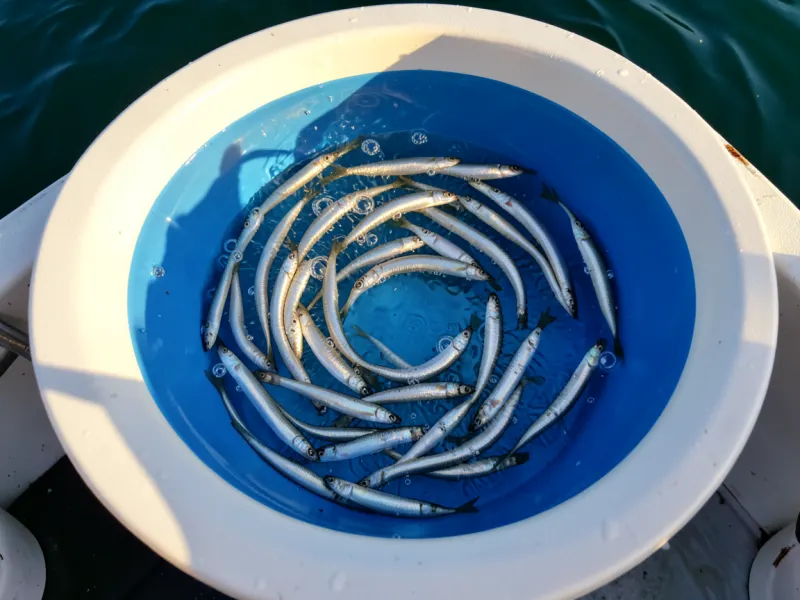
Live bait is the backbone of gulf fishing. Most crews start the day catching sardines or other small baitfish with small jigs near the dock or on the way out, then keep them in a live well. A sardine slow-trolled past a rocky point, with the engine bumped in and out of gear, is the classic way to raise a roosterfish. For cubera, crews drop bigger live baits near the reef. Costa Rican law requires circle hooks whenever you fish with natural bait, live or dead.
Poppers and stickbaits
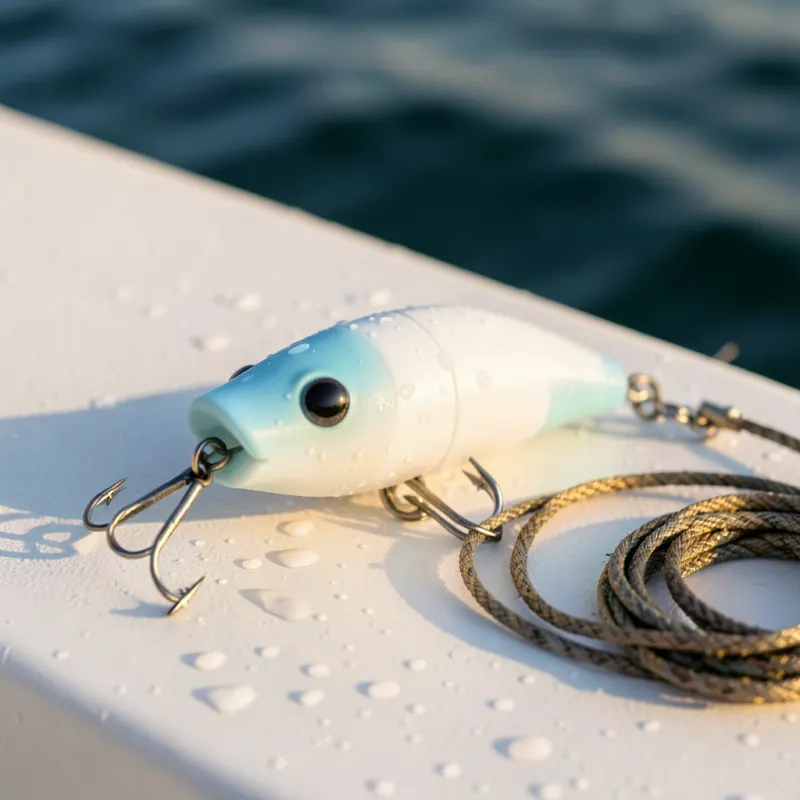
Casting surface lures at the rocks is the most exciting way to fish the gulf. A popper ripped hard across the surface near a point can bring up a roosterfish, a cubera or a jack crevalle, sometimes all in one morning. It's hard work, with a lot of casting for every strike, but the strikes are explosive. Anglers who travel here to fish this way bring stout spinning rods, braided line and a heavy leader, since a big cubera's first run heads straight back to the rocks.
Jigging
In the deeper water near the mouth, vertical jigging works for snapper, grouper, almaco jack and African pompano. Sport Fishing's 2015 trip hooked a yellow snapper in about 100 feet of water. Ask your captain before you go whether the boat carries jigging gear, or bring your own.
The rules inside the gulf
The Golfo Dulce has its own layer of protection on top of the national rules in our fishing rules guide.
- Marine Area of Responsible Fishing. INCOPESCA's board approved the Golfo Dulce as a Marine Area of Responsible Fishing in 2010 (agreement AJDIP/191-2010), with a management plan agreed with local fishers. It keeps big commercial longliners and trawlers out and lets sport fishing carry on. The plan was revised in 2014 and divides the gulf into zones with their own gear rules.
- Hammerheads. In 2018 the government declared the gulf a hammerhead shark sanctuary to protect the nursery at its head, and since 2023 a national decree bans keeping scalloped and great hammerheads anywhere in Costa Rica. Researchers find the smallest newborn hammerheads in June, July and August. Any hammerhead caught by accident goes straight back.
- Roosterfish, sailfish and marlin are catch-and-release, and billfish must stay in the water.
- Circle hooks are required with natural bait, and FECOP gives a limit of 5 fish per boat for species you're allowed to keep.
The gulf's protection is still argued over. In July 2024 a legislator accused INCOPESCA of trying to let about 40 Golfito longline boats take live bait from the gulf, which she said clashed with the area's management plan. We haven't found a final decision. Local sportfishing crews have been among the loudest voices for keeping the gulf protected, and if you see what looks like illegal netting or longlining, tell your captain.
Where to book a gulf trip
Boats fish the gulf from 3 main bases: Puerto Jiménez on the Osa side, closest to Matapalo; Golfito on the mainland side, with the marinas; and Playa Zancudo, near the southern mouth. We opened each of these businesses' own websites in November 2026 before naming them, and nobody pays to be listed.
Crocodile BayPuerto Jiménez
The biggest fishing operation on the gulf, running Boston Whalers for inshore days from its own pier. It publishes a detailed calendar for roosterfish, cubera and the offshore species, and guests stay at the Botánika resort on the same grounds.
The Zancudo LodgePlaya Zancudo
An all-inclusive lodge with a fleet of 32-foot Contenders, fishing the gulf, the river banks and offshore. It releases all billfish. The lodge has been listed for sale since August 2025 but is still taking bookings, so confirm your dates with it directly.
Colio Sportfishing ChartersGolfito
A 28-foot catamaran based at Fish Hook Marina, with a 4-hour inshore trip built around the Matapalo reefs for roosterfish, cubera and grouper. coliosportfishing.com
CazadorGolfito
Captain Bobby McGuinness's 37-foot Merritt fishes offshore and inside the gulf, with roosterfish, cubera, jacks and grouper on its inshore list. Booking page
Osa TourismPuerto Jiménez
A local booking office that matches anglers to Puerto Jiménez captains, from pangas to sportfishers, and posts a weekly fishing report. Its report for November 9 to 15, 2026 rated roosterfish, cubera and jacks as the top inshore targets. osatourism.com
Banana Bay Marina in Golfito is home to several more independent charters, and the full list of local captains, with their booking pages, is in our Southern Pacific guide.
Frequently asked questions
Is the Golfo Dulce good for beginners and families?
Yes. It's sheltered from the Pacific swell, so the water is usually calm, and half-day trips to the rocky points inside the gulf suit children and first-timers. Dolphins and, in season, humpback whales are a bonus.
When is the best time for roosterfish in the Golfo Dulce?
Roosterfish are caught all year, best from about January to April. Crocodile Bay reports record-size fish in April and some of the biggest in June.
Can I keep a cubera snapper?
Cubera aren't a protected species, so a fish can be kept within the boat limit. Most crews release the big ones, which are the breeding fish, and keep smaller snapper, which are better eating anyway.
Where is Matapalo, and how do I fish it?
Cabo Matapalo is the southern tip of the Osa Peninsula, at the western side of the gulf's mouth. It's a short boat ride from Puerto Jiménez, and Golfito and Zancudo boats fish it too. There's no harbor there, so you fish it on a charter from one of those towns.
Do I need a licence to fish the Golfo Dulce?
Yes. Every angler needs an INCOPESCA sport fishing licence. Many charters arrange it; if yours doesn't, buy it online before you go.
Charters and places in this guide

Southern PacificPuerto Jiménez: sportfishing on the Golfo Dulce and the Osa coastPuerto Jiménez is the main town on the Osa Peninsula, on the shore of the Golfo Dulce, and a base for both calm-water inshore…
Southern PacificGolfito: Sportfishing and Boating on the Golfo DulceGolfito is an old banana port on a deep, sheltered bay inside the Golfo Dulce, near the Panama border, and it's one of the main…
Puerto Jiménez · fishing lodgeCrocodile Bay ResortCrocodile Bay is a sportfishing operation and marina in Puerto Jiménez, on the Osa Peninsula side of the Golfo Dulce, running…
Playa Zancudo · fishing lodgeThe Zancudo LodgeThe Zancudo Lodge is a fishing lodge on Playa Zancudo, near the mouth of the Golfo Dulce in Costa Rica's far south. Its fleet of…
Golfito · marinaFish Hook Marina & LodgeFish Hook Marina & Lodge is a compact marina, small hotel and open-air restaurant on the Golfito waterfront, in the sheltered…
Golfito · marinaBanana Bay MarinaBanana Bay Marina is a small marina and sportfishing center on Golfito Bay, inside the sheltered Golfo Dulce in Costa Rica's far…Sources
- A fjord-like tropical ecosystem: overview of research in Golfo Dulce (Vargas-Zamora, Gómez-Ramírez and Morales-Ramírez, Revista de Biología Tropical, 2021)
- Fishing seasons and sportfishing calendar (Crocodile Bay)
- Osa Peninsula fishing and weekly report, November 9 to 15, 2026 (Osa Tourism)
- Colio Sportfishing Charters (official site)
- The Zancudo Lodge (official site)
- Cazador, Golfito (Fish Costa Rica)
- Jigging and popping southern Costa Rica (Doug Olander, Sport Fishing, 2015)
- Northeast Angler Abroad: Golfo Dulce, Costa Rica (Chris Megan, On The Water, 2013)
- AJDIP/191-2010, approval of the Golfo Dulce Marine Area of Responsible Fishing (INCOPESCA)
- Golfo Dulce declared a hammerhead shark sanctuary (CRHoy, May 2018)
- Golfo Dulce a key site for hammerhead sharks (Teletica, September 2026)
- Legislator says INCOPESCA is trying to revive live-bait fishing in Golfo Dulce (CRHoy, July 2024)
- AJDIP/045-2014, changes to the Golfo Dulce fisheries management plan (INCOPESCA)
- Acuerdo AJDIP/086-2014, sport-fishing rules including roosterfish (INCOPESCA)


