
Blue marlin in Costa Rica
Where, when and how they're caught
Blue marlin are caught off the whole Pacific coast of Costa Rica, best from about May to September and again in November and December, and every one is released by law. Most are raised 20 to 40 miles out on trolled lures or live bonito, while overnight trips to seamounts and FADs 60 miles and more offshore can produce several a day.
At a glance
- Names
- marlín azul (Spanish), Makaira nigricans; IGFA keeps separate Atlantic and Pacific records
- Best months
- about May to September, plus November and December (good the rest of the year)
- Where
- Pacific only, offshore; seamounts and FADs for the biggest numbers
- Size here
- most fish are a few hundred pounds; big ones are females, since males rarely pass about 300 lb
- Rules
- catch and release by law, circle hooks with natural bait, no lifting the fish aboard
- Pacific all-tackle record
- 1,376 lb, Kona, Hawaii, 1982 (IGFA)
- Status
- Vulnerable worldwide (IUCN); the Pacific stock wasn't overfished in its 2021 assessment
Part of our complete guide: Costa Rica Fish Species: The Complete Guide
The short answer
The blue marlin is the biggest fish most anglers will ever hook in Costa Rica, and it lives off the whole Pacific coast. The best months are about May to September, with a second run in November and December, but blues are caught in every month. Most are raised 20 to 40 miles offshore, and the boats that run 60 miles and more to seamounts and floating fish attractors (FADs) can see several in a day. Every one goes back: Costa Rican law makes marlin a catch-and-release fish for sport anglers.
This page goes deeper on the blue marlin alone: what it's called, how to be sure it's a blue and not a black or a striped, where and when each coast fishes best, how local crews hook and release them, and the records. For every other species, see our complete guide to Costa Rica's fish, and for all 3 marlins side by side, our marlin family page.
Names, and what makes a blue marlin
On the dock you'll hear marlín azul, or just "un azul". The scientific name is Makaira nigricans. FishBase notes that some scientists split the Pacific fish off as Makaira mazara, based on the pattern of its lateral line, while many others treat the blue marlin as one species across every warm ocean. The International Game Fish Association (IGFA) keeps separate records for Atlantic and Pacific blues, so a Costa Rican fish counts as a Pacific blue marlin.
MarViva's guide to Costa Rica's sport fish describes it like this: a long, torpedo-shaped body, a very high "nape" behind the head, a tall first dorsal fin that isn't shaped like a sail, a tiny second dorsal, short pelvic fins and 2 keels on each side of the tail. The back is cobalt to near black, the belly silver, and many fish show pale blue vertical bars, which light up when the fish is hunting or fighting.
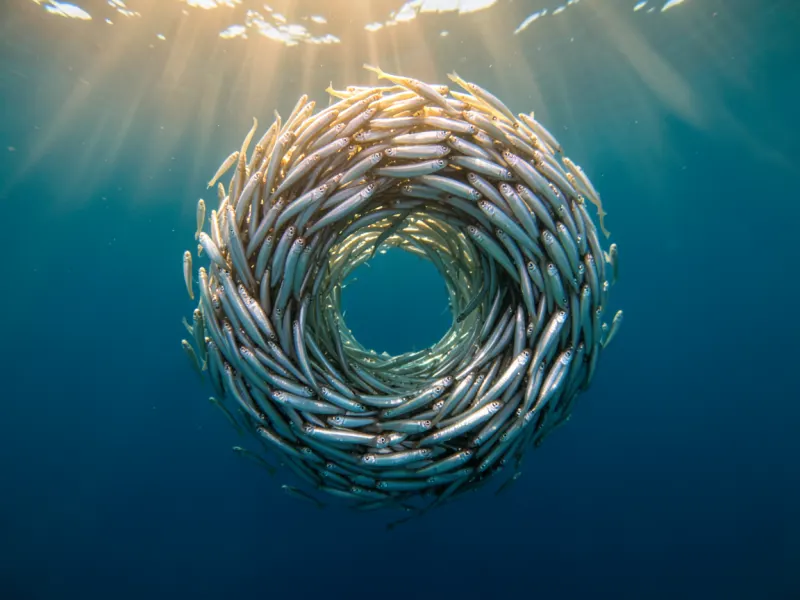
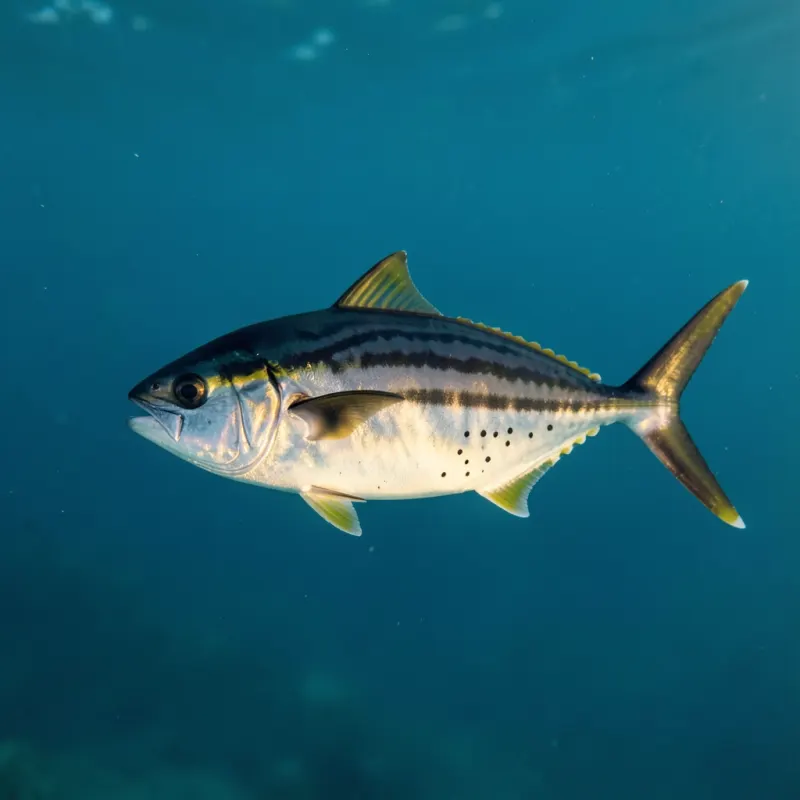
Blue marlin rarely school (FishBase describes them as scattered loners), feed by day, and live mostly in the top 200 m, though FishBase records dives far deeper. Their food is fish (small tunas especially), squid and octopus, which is why crews find them around schools of tuna and bait.
How to tell a blue marlin from the others
Costa Rica's Pacific has 4 billfish that get confused: blue, black and striped marlin, plus the sailfish. Getting it right matters in a tournament, and for science: an IGFA article in Marlin magazine reports a study in which 77% of Pacific fish logged as black marlin by fisheries observers turned out, on DNA tests, to be blues.
| Check | Blue marlin | Black marlin | Striped marlin | Sailfish |
|---|---|---|---|---|
| Pectoral fins | Fold flat against the body | Stiff, stick straight out, can't fold | Fold, long and pointed | Fold |
| First dorsal fin | Lower than the body is deep | Lower than the body is deep | Taller than the body is deep, pointed | A tall sail running most of the back |
| Body shape | Round and heavy | Very deep and heavy | Flatter, oval in section | Slim |
| Second dorsal fin | Starts behind the second anal fin | Starts in front of the second anal fin | Behind | Behind |
| Stripes | Pale blue bars, sometimes faint | Usually faint or none | Clear bars that glow lavender-blue | Bars on the body, spots on the sail |
The quickest tests at the boat are the 2 fins your crew can see. Pectoral fins stuck out stiffly? Black marlin. Dorsal fin taller than the fish is deep? Striped marlin. FECOP's identification notes add that a blue's lower jaw is short and broad, while a striped marlin's is narrow and pointed. Stripes alone aren't a safe test, since blues show them too.
How big they get here
Blue marlin are one of the few fish where the females are several times bigger than the males. Crocodile Bay, in the far south, puts it simply: big blues are females, because males rarely grow past about 300 lb. FishBase lists a maximum of 5 m and 636 kg, and MarViva gives a common length of about 3.5 m and a length at first breeding of about 2.2 m.
Most blues caught off Costa Rica are a few hundred pounds. A "grander" (1,000 lb or more) is rare anywhere in the eastern Pacific, though The Tico Times reported a released fish estimated at 900 lb off the Pacific coast in December 2011. Since fish aren't weighed here, every size you hear is an estimate made at the boat from length and girth.
Where and when, coast by coast
Blue marlin are a Pacific fish in Costa Rica. MarViva records them on both coasts, but there's no sport fishery for them on the Caribbean. Our seasons chart rates May to September and November to December as the best months, and the rest of the year as good.
| Zone | Best months reported | Typical distance | Main ports |
|---|---|---|---|
| Guanacaste (north) | June to August; Nosara also July, August, November | 3 to 30 miles (Nosara), about 20 miles (Flamingo) | Flamingo, Papagayo, Tamarindo, Nosara |
| Central Pacific | July to September, November and December | 15 to 40 miles; seamounts and FADs up to about 150 | Los Sueños (Herradura), Quepos |
| Southern Pacific | July to September, November and December; Crocodile Bay adds March and April | 25 to 45 miles; FADs about 60 | Puerto Jiménez, Golfito, Zancudo |
The months in the table come from the operators interviewed for Todd Staley's billfish guide for Sport Fishing magazine, plus Crocodile Bay's own calendar. MarViva's fisheries data puts the peak in abundance from May to September.
Guanacaste
The northern fleet fishes blues mainly in the green season, when the Papagayo winds have dropped. Flamingo operators told Staley their marlin peak is June and July, or June to August, and that the grounds are about 20 miles out. At Nosara the deep water comes close, so marlin can be 3 to 30 miles from the beach. Boats leave from Playa Flamingo, Marina Papagayo and Tamarindo; more in our Guanacaste guide.
Central Pacific
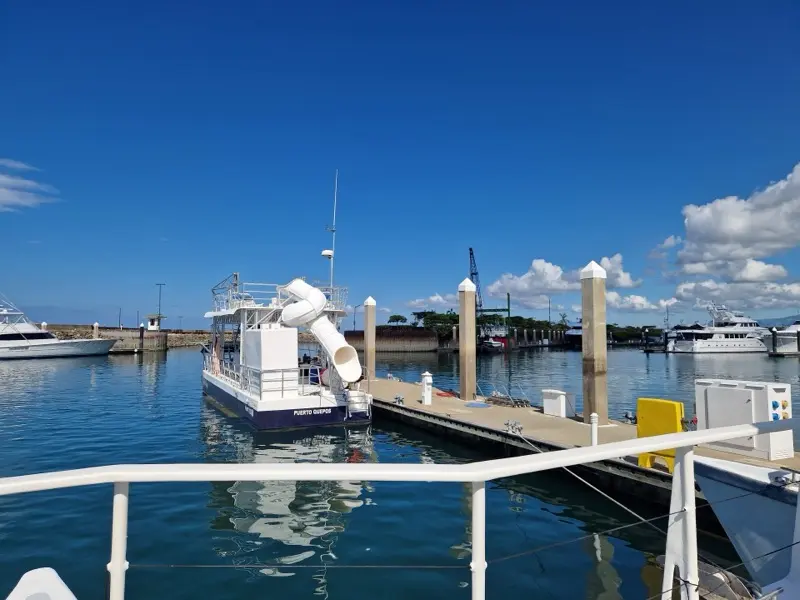
This is Costa Rica's marlin capital, mostly because of how far the big boats will run. Los Sueños and Marina Pez Vela in Quepos hold the country's main tournaments, and the numbers there tell the story: a 32-boat fleet released 75 blue marlin in 2 days at Quepos in December 2025, and a Kenyan team won the 2022 Offshore World Championship with a record final day of 8 blues. Day trips work 15 to 40 miles out; the seamount and FAD trips go much farther (see below). The Central Pacific guide has the ports and boats.
Southern Pacific
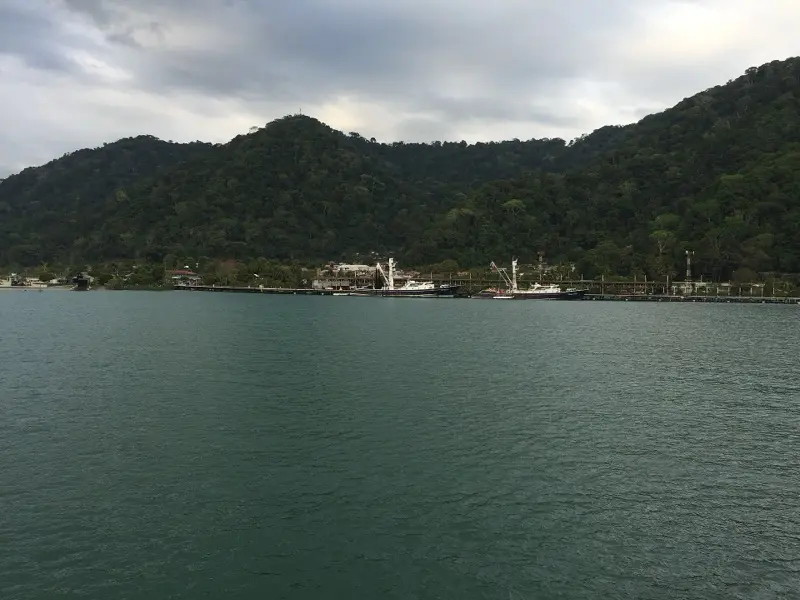
The south fishes blues closer to home. Crocodile Bay in Puerto Jiménez reports big numbers in November and December and a second peak in March and April, with offshore fishing starting 45 minutes to an hour from its pier. The Zancudo Lodge fishes 12 to 45 miles out and runs FAD trips to about 60 miles. See the Southern Pacific guide for both and the rest of the fleet.
How Costa Rican crews fish for blues
Trolling lures
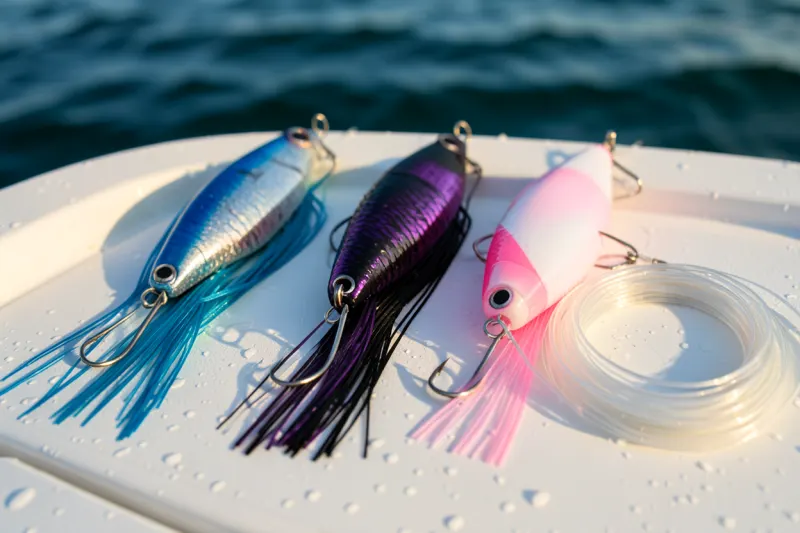
The standard marlin day is a spread of large skirted lures trolled at a steady speed, covering water until a fish shows up behind one. It's the best way to search a big area, and it's how most blues in Costa Rica are raised. Many boats mix in hookless teasers and natural baits, then pitch a bait to a fish that comes up on a teaser (the bait-and-switch method used for sailfish, with bigger gear).
Live bait
When a crew finds marlin around a school of tuna or a seamount, they'll often switch to a live bonito or small tuna caught that morning, slow-trolled on a circle hook. Costa Rica's rules require circle hooks with any natural bait. More on rigs and spreads in our fishing techniques guide.
Seamount and FAD trips
The big change of the last 15 years is the overnight trip. Staley's guide credits multi-day runs to distant seamounts and FADs with turning Costa Rica into a marlin destination, with fleets "raising close to 30 marlin in a day". From Herradura these trips can go out about 150 miles and last 2 to 3 days. You sleep aboard, fish at first light, and spend the trip in water most visitors never see. FECOP notes that some scientists worry FADs concentrate fish and make them easier to overharvest; it says more study is needed.
Tackle
Blue marlin are usually fished on 50 to 80 lb class gear, heavier than a sailfish rod. A blue that eats a sailfish bait on light tackle is one of the classic Costa Rican surprises, and that fight can take hours. If marlin are the goal, book a boat that targets them on purpose and plan for a full day or longer.
The release, done right
Ley 8436 names blue marlin a species of tourist and sport-fishing interest, and sport anglers release every one. INCOPESCA's agreement AJDIP/280-2014 bans lifting a billfish onto the gunwale for photos and using a gaff to bring one alongside, with exceptions only for a world-record claim or an approved tournament. In practice:
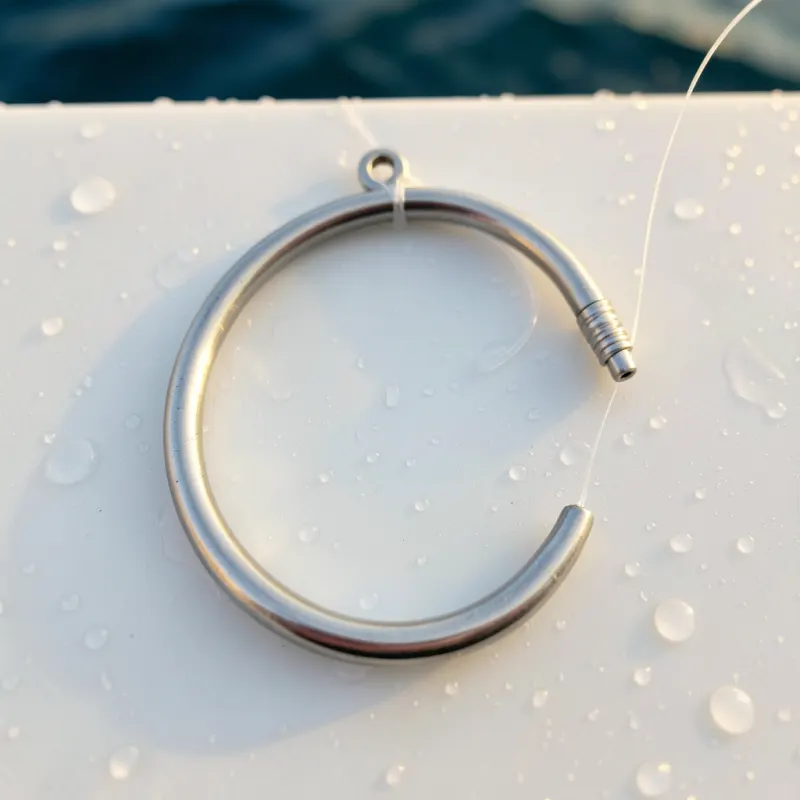
- Circle hook, in the corner of the jaw. That's what the rule is for: circle hooks rarely gut-hook a fish.
- Keep it in the water. The mate takes the leader, and photos are taken with the marlin beside the boat.
- Short fight, then revive. The boat idles forward so water runs over the gills until the fish kicks away on its own.
- Tag it if you can. Many crews carry conventional tags.
Our step-by-step guide to releasing a billfish properly covers the leader, the hook and the revival in detail.
Science is using those releases. In 2019 a Stanford team (Project DynaMAR) fishing from Zancudo put satellite tags on 28 blue marlin, aiming for up to 100 tags across blues and sailfish, to learn how the fish move with water temperature and climate. The same summer, another group tagged 3 blues on a seamount about 80 miles out to test whether the offshore rainy-season fish are the same ones seen closer in during December and January.
Records and big numbers
- Pacific all-tackle record: 1,376 lb, caught by Jay de Beaubien off Kona, Hawaii, on May 31, 1982 (IGFA).
- Atlantic all-tackle record: 1,402 lb 2 oz, off Vitória, Brazil, in 1992.
- Costa Rica: no blue marlin world record, since released fish can't be weighed. The country's claim is numbers: 49 to 52 blues released (reports vary) in the 2017 Offshore World Championship at Quepos, 8 in one day by the 2022 winners, and 75 in 2 days in December 2025.
For the events where these numbers are set, see our tournaments guide and how Los Sueños and Pez Vela tournaments work.
Is the blue marlin in trouble?
Worldwide, the IUCN lists the blue marlin as Vulnerable, mainly because of longline fishing aimed at tuna and swordfish. The Pacific stock looks healthier: the 2021 assessment by the scientific committee that studies North Pacific billfish (ISC) found it likely not overfished, with overfishing very likely not happening, and a new assessment was due in 2026.
Closer to home, a FECOP study of central and southern Pacific sport fishing from 2011 to 2023 found sailfish catch rates falling but marlin catch rates stable or slightly up, especially in the south. Costa Rica's 2014 tuna decree moved purse-seine boats out to 45 miles from shore, which FECOP estimates spared about 25 tons of marlin bycatch in 2017 alone. In 2021 a bill on threatened species worried the fleet because its wording swept in blue marlin and tarpon, but SINAC said the notice that caused the alarm was declaratory, not a ban. Our conservation guide covers the bigger picture.
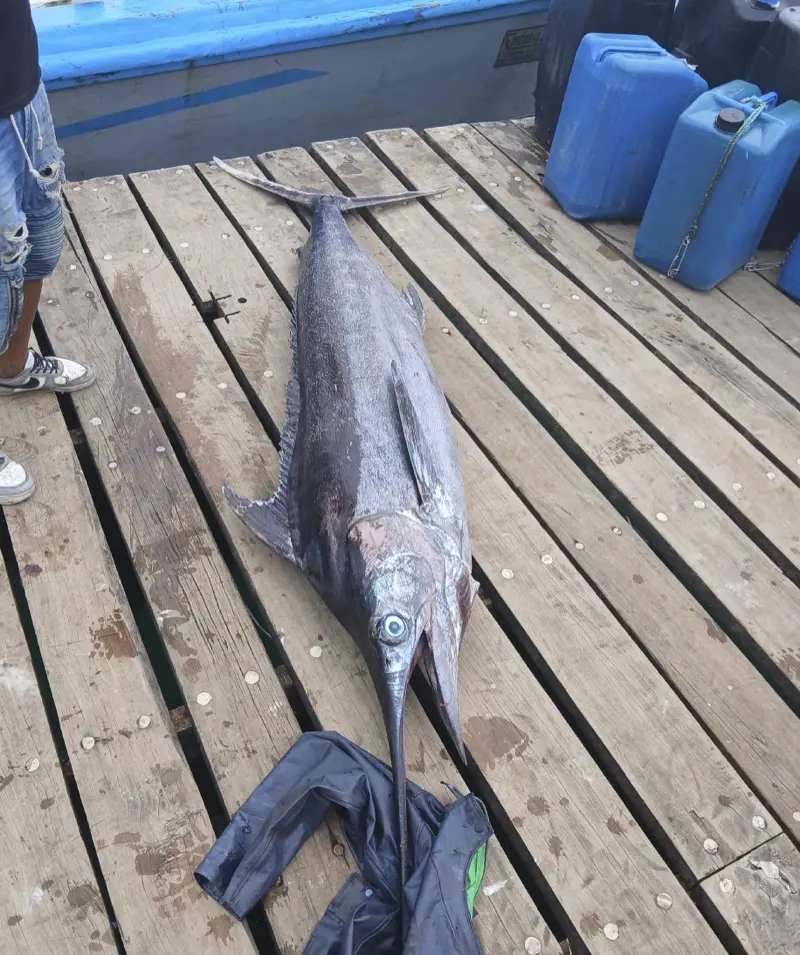
You'll sometimes see marlin on a menu. That comes from commercial catches (MarViva notes it's often sold as "white marlin"), never from sport boats, and it carries a mercury warning for pregnant women and children.
Frequently asked questions
What's the best month for blue marlin in Costa Rica?
There isn't one best month. Data and operator reports point to May to September and to November and December, and blues are caught in every month. In the south, Crocodile Bay also reports a run in March and April.
Can I keep a blue marlin in Costa Rica?
No. Marlin are catch-and-release fish by law for sport anglers. They stay in the water for photos, and only a world-record claim or an approved tournament fish can be brought aboard.
How far offshore are the blue marlin?
Usually 20 to 40 miles, closer at Nosara and in the south. Overnight trips to seamounts and FADs run 60 to about 150 miles out.
How do I know if my marlin is a blue or a black?
Look at the pectoral fins, the long fins just behind the gills. If they stick out stiffly and can't fold against the body, it's a black. If they fold flat, and the dorsal fin is lower than the body is deep, it's a blue.
Do I need a licence to fish for marlin?
Yes. Everyone fishing from a boat needs an INCOPESCA sport fishing licence, and many charters arrange it. See our fishing rules guide.
Charters and places in this guide

GuanacastePlaya Flamingo: sportfishing and much more on Guanacaste's coastPlaya Flamingo is a beach town on Guanacaste's north Pacific coast with a long history as a sportfishing base, and since 2023 it…
Peninsula Papagayo · marinaMarina PapagayoMarina Papagayo is a full-service marina on Culebra Bay, on the Peninsula Papagayo in northern Guanacaste. It has 180 berths for…
Playa Herradura · marinaLos Sueños Resort and MarinaLos Sueños is a resort community and marina on Herradura Bay, just north of Jacó on Costa Rica's Central Pacific coast. Its…
Quepos · marinaMarina Pez VelaMarina Pez Vela is the big marina on the Quepos waterfront, on Costa Rica's Central Pacific coast, and the dock most Quepos and…
Puerto Jiménez · fishing lodgeCrocodile Bay ResortCrocodile Bay is a sportfishing operation and marina in Puerto Jiménez, on the Osa Peninsula side of the Golfo Dulce, running…
Playa Zancudo · fishing lodgeThe Zancudo LodgeThe Zancudo Lodge is a fishing lodge on Playa Zancudo, near the mouth of the Golfo Dulce in Costa Rica's far south. Its fleet of…Sources
- Best practices guide for tourist and sport fishing in Costa Rica, blue marlin profile (MarViva, 2023)
- Makaira nigricans species summary (FishBase)
- Billfish species identification (The Billfish Foundation, after Collette and Graves 2019)
- Marlin science: striped or blue? (FECOP, from Marlin magazine, 2020)
- How to identify billfish species (Jason Schratwieser, Marlin, 2019)
- Billfish angler's guide to Costa Rica (Todd Staley, Sport Fishing, via FECOP)
- Fishing seasons by species (Crocodile Bay)
- Billfish-tagging project successful with blue marlin off Costa Rica (Danielle Haulsee, Sport Fishing, 2019)
- Costa Rica blue marlin satellite tag study (FECOP, 2019)
- Flor de Caña 135th anniversary tournament results, Quepos (Marlin, December 2025)
- Kenyan team wins 2022 Offshore World Championship in Costa Rica (Marlin, 2022)
- Brazilians take world cup of sportfishing in Quepos (The Tico Times, April 2017)
- 900-pound marlin caught on Pacific (The Tico Times, December 2011)
- FECOP study reveals shifting trends in Costa Rica's sport fishing resources (The Tico Times, December 2025)
- Is Costa Rica banning fishing for blue marlin and tarpon? (The Tico Times, June 2021)
- Solís signs tuna fishing decree (The Tico Times, October 2014)
- Pacific blue marlin stock status and management advice, 2021 assessment (ISC, via WCPFC)
- Pacific blue marlin all-tackle record (Marlin)
- World record marlin, IGFA (Outdoor Life)
- Ley de Pesca y Acuicultura N.º 8436 (INCOPESCA)
- Acuerdo AJDIP/280-2014, billfish handling (INCOPESCA)


