
Fishing from Flamingo, Potrero and Brasilito
Flamingo is Guanacaste's dock-boarding fishing town: Marina Flamingo opened in February 2023, and the region's second-biggest fleet works from it and from the beaches at Flamingo and Potrero. Sailfish and marlin are best from about May to December, roosterfish and snapper bite around the nearby Catalina Islands all year, and the Presidential Flamingo Fishing Rodeo fills the marina each July or August.
At a glance
- Leaves from
- Marina Flamingo, plus beach boarding at Playa Flamingo and Playa Potrero
- Offshore
- Sailfish, blue and black marlin, dorado, yellowfin tuna, wahoo
- Inshore
- Roosterfish, snapper, amberjack, jacks, sierra mackerel
- Best billfish months
- About May to December (July and August the safest bet)
- Best roosterfish months
- About January to April, caught all year
- Closest fishing ground
- The Catalina Islands, a short run offshore
- Tournament
- Presidential Flamingo Fishing Rodeo, late July or early August
- Getting there
- About 1 hour from Liberia airport (LIR); 30 to 40 minutes from Tamarindo
Part of our complete guide: Fishing in Guanacaste: the complete guide
The short version
Flamingo is the part of Guanacaste where you can step onto a fishing boat from a dock. Everywhere else on this coast, from Coco to Tamarindo, you wade out or take a tender. Since February 2023, Flamingo has had a proper marina again, and with over 20 charters it has the region's second-biggest fleet after Coco.
It's a small, quiet place: hotels, rental homes and a few restaurants on the hill above a curve of pale sand on Potrero Bay. Potrero, just north across the bay, has a handful of boats of its own that launch from the beach. Brasilito and Playa Conchal, a few minutes south, have no fleet but are served from Flamingo, so this page covers all 3.
The fishing follows the rest of the north. Sailfish and marlin are best from about May to December, the reverse of the Central Pacific, and roosterfish, snapper and jacks bite around the rocks all year. Flamingo's special advantage is the Catalina Islands, the region's best-known inshore ground, just offshore. For the whole coast from the Nicaraguan border down, see our complete Guanacaste fishing guide.
The marina, the beaches and where you board
Marina Flamingo
Flamingo's old marina closed in 2004, and for nearly 2 decades the fleet worked off moorings. The new Marina Flamingo was officially inaugurated in February 2023. Marlin magazine counted more than 90 slips in its first phase, and the Tico Times reported 92 wet slips in 2025, with plans to grow.
The marina's own site lists wet slips for boats up to 180 feet, a fuel dock with marine fuel and diesel, haul-out, and a dry stack for up to 40 boats of up to 36 feet. Around it there's a convenience store selling boating supplies and ice, restaurants and shops in a small marina village, and studio to 3-bedroom villas looking over the water.
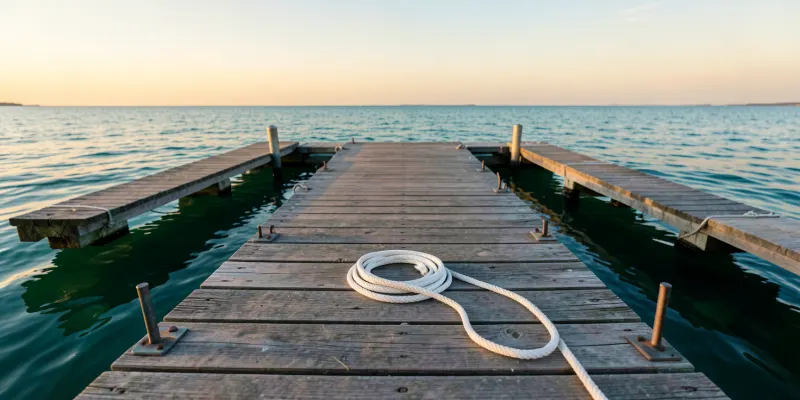
What it means for you: no wading, no splashy tender ride, and a boat that ties up at the dock when you're back. That's a real plus for older anglers, young children or anyone carrying a lot of tackle, and it's why plenty of anglers staying in Tamarindo drive up to fish from here.
Beach boarding at Flamingo and Potrero
Not every boat lives in the marina. Several Flamingo crews still board guests from the sand, and Potrero's boats launch from Playa Potrero. Some captains pick up at hotel beaches around the bay, and reviews of one Flamingo boat describe meeting in a restaurant parking lot and riding a small boat out. The rule is simple: ask your crew exactly where to meet, the night before, because it differs from boat to boat.
If you do board from the beach, wear sandals or water shoes and pack your phone in a dry bag. Our list of what to bring on a Costa Rica charter covers the rest.
What's biting, month by month
This table follows our national season chart and matches the Guanacaste guide.
| Month | Sailfish | Marlin | Roosterfish | Dorado | Tuna and wahoo | Conditions |
|---|---|---|---|---|---|---|
| January | Good | Good | Best | Good | Good | Windy, dry, clear water |
| February | Good | Good | Best | Good | Good | Windiest month |
| March | Good | Good | Best | Good | Good | Windy, dry |
| April | Good | Good | Best | Good | Good | Winds easing |
| May | Best | Best | Good | Good | Best | Rains begin, calmer seas |
| June | Best | Best | Good | Good | Best | Rainy afternoons |
| July | Best | Best | Good | Best | Best | Rodeo month |
| August | Best | Best | Good | Best | Best | Rainy afternoons |
| September | Good | Best | Good | Best | Good | Wettest stretch |
| October | Good | Good | Good | Best | Good | Wettest stretch |
| November | Good | Best | Good | Best | Good | Rains ending |
| December | Good | Best | Good | Best | Good | Dry, winds starting |
Flamingo operators interviewed by FECOP named May to August as their sailfish months, while captains in a 2026 study (interviewed in Flamingo, Tamarindo and the far north) leaned toward July to October. July and August, where they overlap, are the safest bet. Dorado are best from about July to December, and yellowfin tuna and wahoo in the calmer months from May to August.
From about December to March the Papagayo winds blow. Flamingo sits near the southern edge of the strongest wind, so it's often fishable when Coco is blown out, but afternoons get rough and trips start early. Our guide to the Papagayo winds and fishing explains how crews work around it.
Inshore: the Catalina Islands and the points
The Catalinas
The Catalinas are a chain of rocky islets a short run off Flamingo and Potrero, and they're the reason many anglers pick this town. Clear water, rock walls and moving current hold roosterfish, snapper, jacks and amberjack, and in INCOPESCA's 2021 fishing plan for the Gulf of Papagayo, local fishers named the Catalinas as the source of over 80% of recorded catches in the area (mostly snapper).
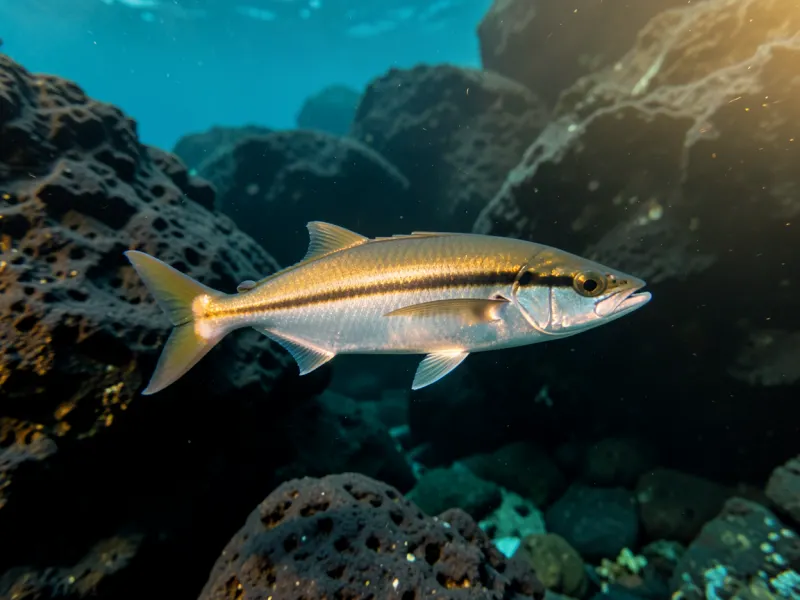
The Catalinas are also Costa Rica's best-known site for diving with giant manta rays, mostly from about January to April (see our guide to diving the Catalina Islands). The same INCOPESCA plan asks fishing boats to keep 200 m from any working dive boat there, with no more than 4 boats on one site.
The rocky coast north and south
North of Potrero, toward Las Catalinas, and south past Brasilito and Conchal to Cabo Velas, the coast is a run of rocky points and small beaches. Crews slow-troll live bait along the white water for roosterfish, or let you cast poppers and stickbaits at the rocks; our guide to popping and jigging for roosterfish and snapper explains the lure side. Half-day inshore trips of about 4 or 5 hours are the norm, and they're the right choice in the windy months and for families. For spots and methods across the region, see roosterfish in Guanacaste.
Farther south, the sea off Playa Grande and Langosta belongs to Las Baulas National Marine Park, where fishing isn't allowed, so boats heading toward Tamarindo stay outside it. The coast from Santa Rosa to Las Baulas, Flamingo included, is inside the Papagayo responsible fishing area, where sport fishing is allowed under INCOPESCA's plan. Our list of protected areas and no-take zones has the detail.
Offshore: a short run to blue water
Flamingo is one of the best places in the country for a quick offshore day. FECOP's operator survey put the run from Flamingo to the billfish grounds at 30 minutes to an hour, about 20 miles. Crews troll teasers and lures to raise sailfish and marlin, then switch to a bait on a circle hook when a fish rises (our guide to fishing techniques in Costa Rica explains the method), and pick up dorado, tuna and wahoo along current lines and floating logs.
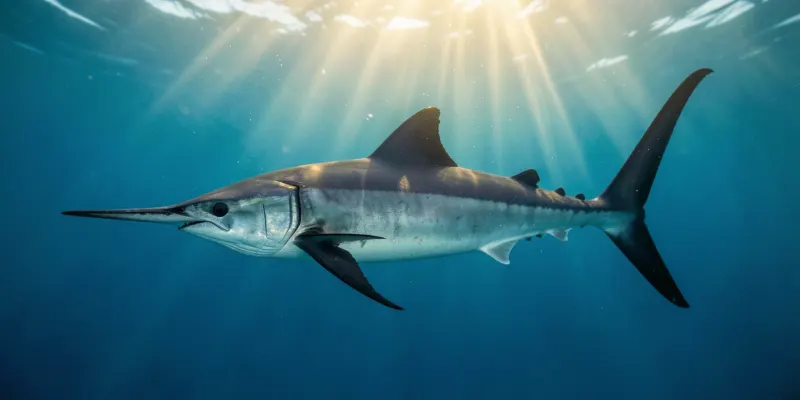
The bigger boats out of Flamingo also make longer runs to offshore banks and seamounts when the weather is settled, which means more time travelling but better odds at blue marlin and big tuna; book a full day for that. Our blue marlin guide covers the fish. In the windy months, Flamingo's big boats tend to run south toward calmer water, so a full day again makes more sense than a half.
Rules worth knowing
Licence
everyone fishing from a boat needs an INCOPESCA sport fishing licence. There's no office in Flamingo, so get it online before you go, or ask whether your charter includes it. Some do, many don't.
Released
Costa Rican law makes sailfish, marlin and roosterfish catch and release. Billfish stay in the water for the photo, and circle hooks are required with natural bait. See how a billfish is released properly.
Kept
dorado, tuna and snapper can usually be kept within reason, but sport catches can't be sold.
The full rules are in our guide to Costa Rica fishing rules.
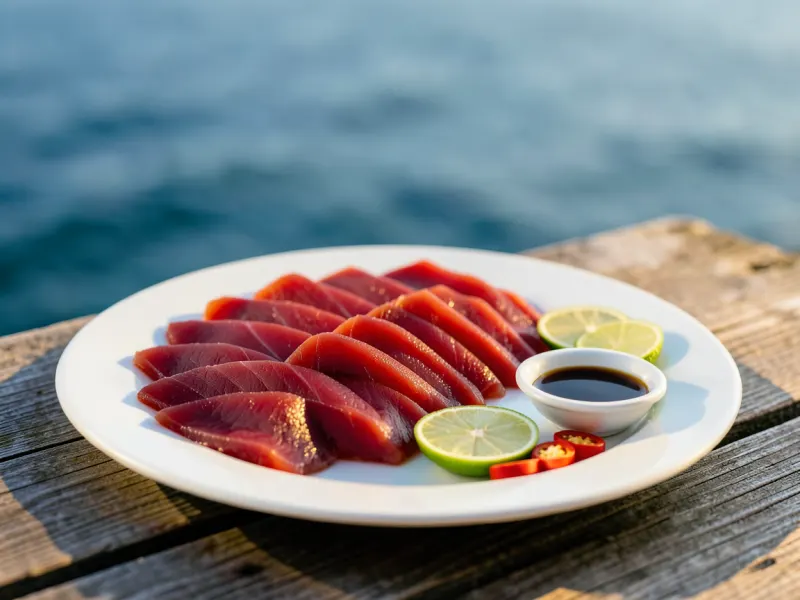
Most crews will fillet and bag a kept fish on the way in, and a fresh tuna or dorado fillet in a villa kitchen is hard to beat. We couldn't confirm a Flamingo restaurant that advertises cooking guests' catch, so we're not naming one; ask ahead and agree how they'll cook it.
The Presidential Flamingo Fishing Rodeo
Flamingo hosts the region's main billfish tournament, held at the marina in late July or early August. It has an offshore billfish division scored on releases, an inshore roosterfish division and junior anglers. The 2024 edition (August 2 to 4) drew a record 32 boats and 181 anglers, who released 270 sailfish and 9 blue marlin, with Southern Pride the winner. In 2025, 28 boats released 524 sailfish and 5 blue marlin, Xta-Sea was grand champion and Vela Vivaz was top inshore boat on 9 roosterfish. The marina's site lists a 2026 edition, but we couldn't find results.
If you're visiting in late July, check the dates first. The Rodeo fills the marina for a few days, which is great to watch but makes charters harder to book, so reserve early or fish the days either side. Want to enter? Our guide to fishing a Costa Rica tournament as a visitor explains how.
Choosing a crew
We chose these on evidence: years operating, recent dated reviews, boat and crew details, and release practice. We opened each one's website or booking page in November 2026 to confirm it's live. Nobody pays to be listed, and the full list of every Flamingo business is in the Guanacaste guide.
Bushwacker SportfishingFlamingo
One 42-foot Bertram with a tuna tower and an air-conditioned cabin, now run by Capt. Emilio Villarreal, who bought it from Capt. Skeet Warren after his 18 years with the boat. A big, comfortable boat for marlin and tuna days. It has boarded on the beach at Playa Flamingo, so confirm the meeting point.
Yellowfin SportfishingFlamingo
Founded in 2002, with one of the larger fleets in Guanacaste, from a 27-foot center console up to 48-foot yachts. It includes transfers around Flamingo and Tamarindo and can also book snorkeling, sailing, canopy and horseback trips, which keeps a family holiday to one contact.
Flamingo Sport FishingFlamingo
A family operation that says it has fished these waters since 1982, with 4 boats leaving from the old Flamingo marina site on Route 180. Its 32-foot Blackfin Guerrero del Mar has over 160 reviews on its booking page, the latest from October 2026.
Sport Fishing El Gato IIIFlamingo
Capt. Luis Sandi, licensed since 2004, runs a 26-foot custom center console with a live bait tank, a good small boat for the Catalinas. Its booking page has about 290 reviews, with trips on November 10 and 13, 2026.
Salt Hunt Fishing ChartersPotrero
Runs its own Boston Whaler from the Potrero and Flamingo area and books partner boats for longer offshore days. Its website is current for 2025.
When you book, ask whether the boat is in the marina or on a mooring, how far it expects to run that week, whether the licence is included, and what happens to fish you'd like to keep.
Where to stay, and getting there
Flamingo has hotels and condos on the hill above the beach and the marina's own villas, the best pick if you'll fish several days. Potrero is quieter still, and Brasilito and Conchal add small guesthouses and large resorts within a few minutes. Tamarindo, 30 to 40 minutes south, has the widest choice of all (see our Tamarindo fishing guide).
Flamingo is about an hour by road from Guanacaste International Airport (LIR) in Liberia (the marina says 45 minutes to an hour), and roughly 4.5 to 5 hours from San José. Most visitors rent a car or book a shuttle, and flying into Liberia rather than San José saves most of a day.
Charters supply tackle and bait, but if you need something, Pura Pesca CR in Flamingo sells tackle, the marina store carries marine supplies and ice, and Tienda La Bahía in Brasilito sells rods, lures and shore-fishing setups.
The much more: days off the boat
Even keen anglers take a day or two off, and Flamingo makes that easy.
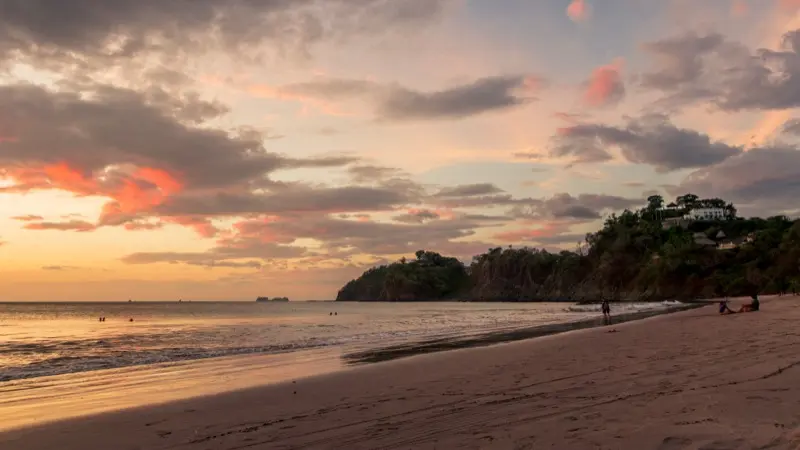
- Beaches: Playa Flamingo is usually calm enough for swimming. Potrero is quieter, and Playa Conchal, just south, has crushed-shell sand and clear water for snorkeling.
- Diving: dive boats from Flamingo and Potrero run to the Catalinas for mantas (in season), eagle rays and reef fish.
- Sunset sails: catamarans and sailboats leave from Flamingo and Potrero most evenings, a relaxed outing for anyone who doesn't fish. Our sailing guide has more.
- Tamarindo: a short drive for surf, restaurants and nightlife.
Bringing children? Our guide to fishing with kids in Costa Rica suggests short inshore trips, and Flamingo's dock boarding makes it one of the easiest places to start.
Frequently asked questions
Is there a marina in Flamingo?
Yes. Marina Flamingo was officially opened in February 2023, replacing the old marina that closed in 2004. Many charters board at its docks.
Do charters leave from the marina or the beach?
Both. Some boats board at Marina Flamingo, others pick up on the beach at Flamingo or Potrero, so confirm the meeting point with your crew.
When is the best time to fish from Flamingo?
For sailfish and marlin, about May to December, with July and August the most reliable. Roosterfish and snapper are caught all year, best from January to April.
How far are the Catalina Islands?
A short run offshore from Flamingo and Potrero, which makes Flamingo the closest base. They're good for roosterfish, snapper and amberjack, and boats keep 200 m from working dive boats.
When is the Flamingo fishing tournament?
The Presidential Flamingo Fishing Rodeo is held at Marina Flamingo in late July or early August. Check the marina's site for the year's dates.
How far is Flamingo from Tamarindo and Liberia?
About 30 to 40 minutes from Tamarindo and about an hour from Liberia airport by road.
Charters and places in this guide

Playa Flamingo · charterBushwacker Fishing ChartersBushwacker is a one-boat charter in Playa Flamingo, on Guanacaste's north Pacific coast, built around a 42-foot Bertram with a…
Playa Flamingo · charterYellowfin Sportfishing ChartersYellowfin Sportfishing Charters is a Playa Flamingo company, founded in 2002, with a big mixed fleet that runs from a 27-foot…Where this comes from
- Costa Rica fishing by region (FECOP)
- Billfish angler's guide to Costa Rica (Todd Staley, FECOP)
- Fishers' knowledge reveals spatio-temporal dynamics of billfish sport and tourist fisheries on the Pacific coast of Costa Rica (Berkowitz-Sklar et al., Revista de Biología Tropical, 2026)
- Marina Flamingo (official site)
- Inauguration of Flamingo marina (Tico Times, February 2023)
- Tour de Costa Rica: The Five Best Marinas for Sport Fishing (Marlin magazine)
- Marina Flamingo (Dockwalk superports listing)
- Presidential Flamingo Fishing Rodeo coverage (Tico Times)
- Southern Pride wins 9th Presidential Flamingo Fishing Rodeo (The Tico Times, August 2024)
- Champions crowned at the 10th Presidential Flamingo Fishing Rodeo (AM Costa Rica, July 2025)
- Plan de Ordenamiento Pesquero, Área Marina de Pesca Responsable Papagayo (INCOPESCA, 2021)
- Flamingo, Costa Rica (Wikipedia)
- Bushwacker Sportfishing (official site)
- Yellowfin Sportfishing Charters (official site)
- Flamingo Sport Fishing (official site)
- Flamingo Sport Fishing, Guerrero del Mar (FishingBooker)
- Sport Fishing El Gato III (FishingBooker)
- Salt Hunt Fishing Charters (official site)


