
Popping and jigging in Costa Rica
Roosterfish, cubera snapper and the rocks
Popping means casting big surface lures at rocky points for roosterfish, cubera snapper and jacks; jigging means dropping metal jigs to reefs and drop-offs for snapper, grouper, amberjack and tuna. Both work all year on Costa Rica's Pacific coast, with roosters best from January to April, and every roosterfish goes back.
At a glance
- Popping
- big poppers and stickbaits cast at rocks, reefs and river mouths
- Jigging
- speed jigs and slow-pitch jigs over reefs and drop-offs, often 60 to 200 ft
- Main fish
- roosterfish, cubera snapper, jacks, amberjack, grouper, tuna
- Best months
- roosterfish January to April, snapper all year
- Tackle
- heavy spinning rods, 50 lb braid or more, heavy fluorocarbon or mono leader
- Rules
- roosterfish released; up to 5 fish kept per trip; no fishing in national parks
- Licence
- INCOPESCA sport fishing licence for everyone fishing from the boat
The short answer
Popping and jigging are the two ways to catch Costa Rica's inshore fish on artificial lures instead of live bait. Popping means casting a big surface lure at rocky points, reefs and river mouths and ripping it back so it splashes: roosterfish, cubera snapper, jacks and tuna smash it on top. Jigging means dropping a metal jig to a reef or a school marked on the sonar and working it back up: snapper, grouper, amberjack and tuna eat it down deep. Both are hard work, and both catch some of the biggest inshore fish on the Pacific coast.
Live bait still catches more fish here, but if you want to work for every bite, nothing beats a morning casting at the rocks. Our guide to fishing techniques in Costa Rica covers every method crews use; this page goes deeper on these two: the lures, the tackle, where and when, and the rules.
Popping and jigging at a glance
| Popping | Jigging | |
|---|---|---|
| Where | Rocky points, islets, reef edges, river mouths, surface schools | Reefs, ledges, pinnacles and drop-offs, usually 60 to 200 ft down |
| Lures | Poppers and stickbaits | Speed jigs (long, slim) and slow-pitch jigs (short, flat) |
| Main fish | Roosterfish, cubera snapper, jack crevalle, bluefin trevally, tuna | Snapper, grouper, amberjack and almaco jack, African pompano, tuna |
| Tackle | Long, powerful spinning rod, high-speed reel, braid | Shorter jigging rod, spinning or small conventional reel, thin braid |
| Effort | Constant casting, explosive strikes | Constant lifting, heavy fights straight up from the bottom |
| Good for | Anglers who like to see the strike | Anglers who like a tug of war |
Popping for roosterfish
Roosterfish (Nematistius pectoralis, pez gallo) live only in the Eastern Pacific, mostly in water shallower than about 20 m, which puts them right where a popper lands. They hunt along rocky shores, sandy beaches next to points, and the edges of river mouths. Our roosterfish species page covers the fish itself.
The method is simple to describe and hard to do well. The boat drifts or idles just off a rocky point, and you cast a popper or stickbait tight to the rocks, then work it back with sharp jerks of the rod so it spits water and darts. Lance Clinton, who released 125 roosters on artificial lures from a kayak in 2016, sums up the retrieve as "fast and faster" and says the bigger the splash, the better. Adventure Tours Costa Rica, which fishes the points around Jacó and Herradura, says a high-speed reel is essential for poppers for the same reason.
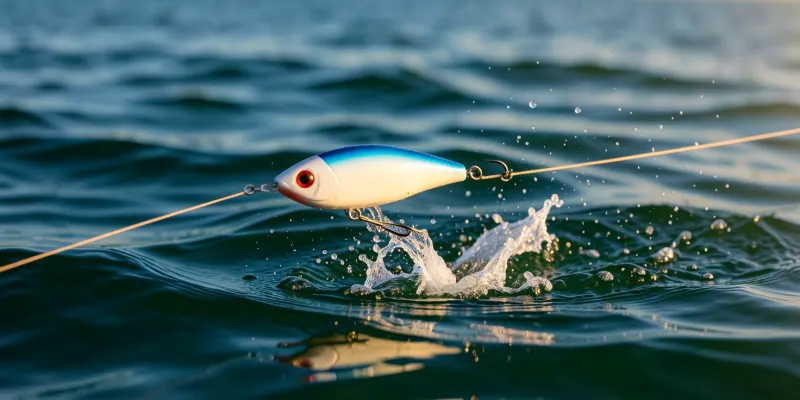
Reading the follow
Roosters often follow a lure a long way before they decide. You'll see a wake, then the comb (the long spines of the dorsal fin) cutting the surface behind your popper. The worst thing you can do is stop. Clinton's advice is not to pause on a follow but to speed up and add more action, because a fleeing bait is what makes a rooster commit. Many strikes come right at the boat, so keep working the lure until it's out of the water.
Popping also takes persistence: you may cast a hundred times between strikes, so most crews keep live bait in the tank and mix the 2 methods. Our roosterfish in Guanacaste guide has more on how northern crews mix the methods.
Popping the rocks for cubera snapper
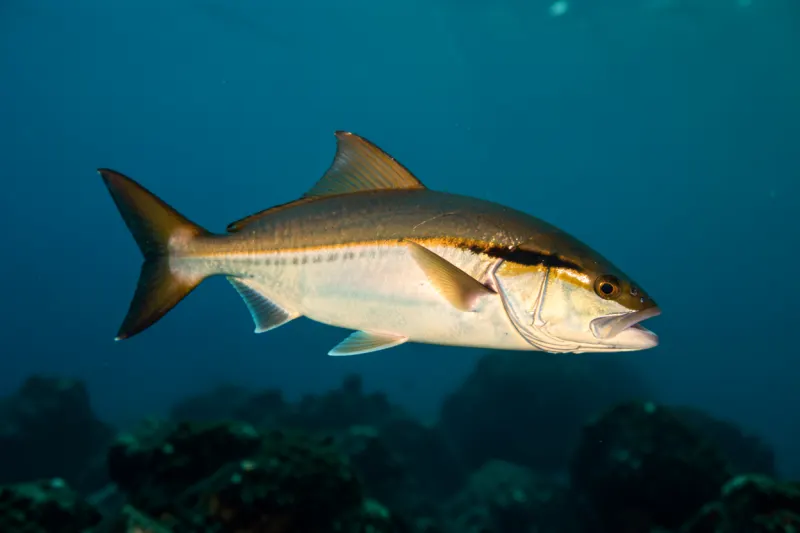
The Pacific cubera snapper, or Pacific dog snapper (Lutjanus novemfasciatus, pargo dientón), is the other big prize on a popper. FishBase lists it at up to 170 cm and about 36 kg, living on rocky reefs from the shoreline down to about 60 m, usually in 5 to 12 m of water. Its juveniles grow up in mangroves and river mouths. Crocodile Bay, in Puerto Jiménez, reports cubera over 50 lb caught year-round in the Golfo Dulce.
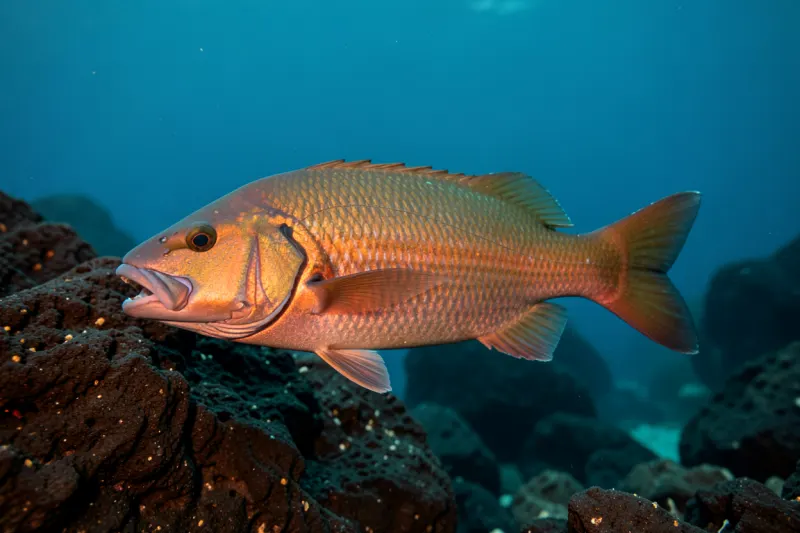
Cubera hit a popper in the same places roosters do, but where a rooster runs into open water, a cubera turns straight back into the rocks and cuts the line. That's why cubera tackle is heavier and drags are tight: you have to stop it in the first few seconds. Dawn and dusk, rising tides and the white water around exposed rocks are the classic times and places. Our snapper guide covers the other snappers you'll meet on the way.
Jigging: speed and slow-pitch
Jigging works the water a popper can't reach. You drop a metal jig to the bottom or to fish marked on the sonar, then bring it back with a rhythm of lifts and turns of the reel.
Speed jigging uses long, slim jigs worked fast, with big sweeps of the rod and quick turns of the handle. It's aimed at fish that chase: amberjack, almaco jack, tuna and jacks. In Sport Fishing magazine's 2015 report from the Zancudo Lodge, anglers took an almaco jack of nearly 60 lb and several African pompano on speed jigs in the outer Golfo Dulce, and a big yellow snapper in about 100 ft of water.
Slow-pitch jigging uses short, flat jigs that flutter and glide as they fall. The angler makes small lifts of the rod and short turns of the reel, so the jig looks like a wounded fish struggling near the bottom. FishingBooker's slow-pitch guide says most anglers target grouper and snapper in 60 to 200 ft, with jigs of 50 to 500 g and paired assist hooks at the head and tail. The bites often come as the jig falls, so watch the line for any pause or slack.
How heavy a jig? It depends on depth and current more than the fish: you want it close to straight under the boat and in touch with the bottom, so a strong current means a heavier jig or thinner line. Ask your captain before you pack.
The deeper you go, the more the catch changes. In a 2018 piece for FECOP, Todd Staley described the Golfo Dulce as about 150 ft deep at its mouth: the first hundred feet or so held snappers, African pompano, broomtail grouper, amberjack and tuna, while Pacific red snapper started below about 200 ft. Deep water is close to shore along much of this coast, so jigging grounds are often a short run from the dock.
The tackle
Most crews that offer popping and jigging supply the gear, but serious casters often bring their own rods and lures. Here's what to expect.
| Popping outfit | Jigging outfit | |
|---|---|---|
| Rod | Long, powerful spinning rod built for casting big lures | Shorter jigging rod; slow-pitch rods are rated by jig weight in grams |
| Reel | Large high-speed spinning reel with a strong drag | Spinning reel for speed jigging; a small, narrow conventional reel for slow-pitch |
| Main line | Braid, around 50 lb or heavier | Thin braid, often lighter in strong current |
| Leader | Heavy mono or fluorocarbon (Adventure Tours uses 60 lb fluorocarbon on 50 lb braid for roosters) | Heavy mono or fluorocarbon |
| Knot | FG knot from braid to leader | FG knot |
| Hooks | Single hooks on lures make release easier | Assist hooks on short cord |
Don't use wire for roosterfish: Adventure Tours warns that they'll see it. Step up the leader for cubera around sharp rock, swap trebles for single hooks to make releases quicker, and pack spare leader.
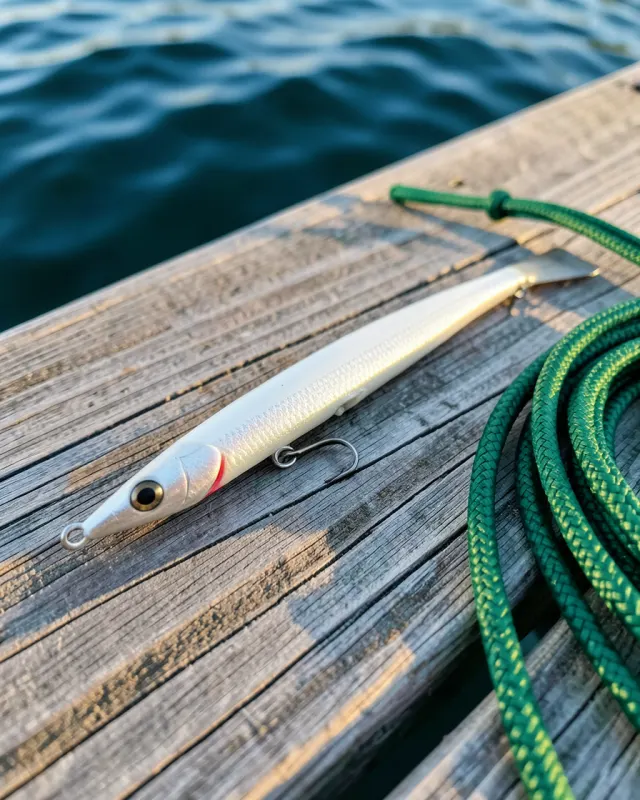
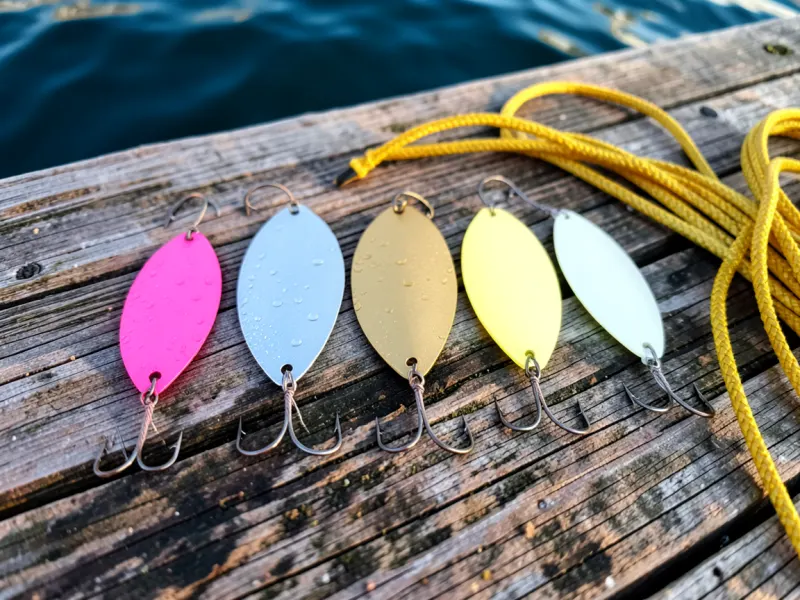
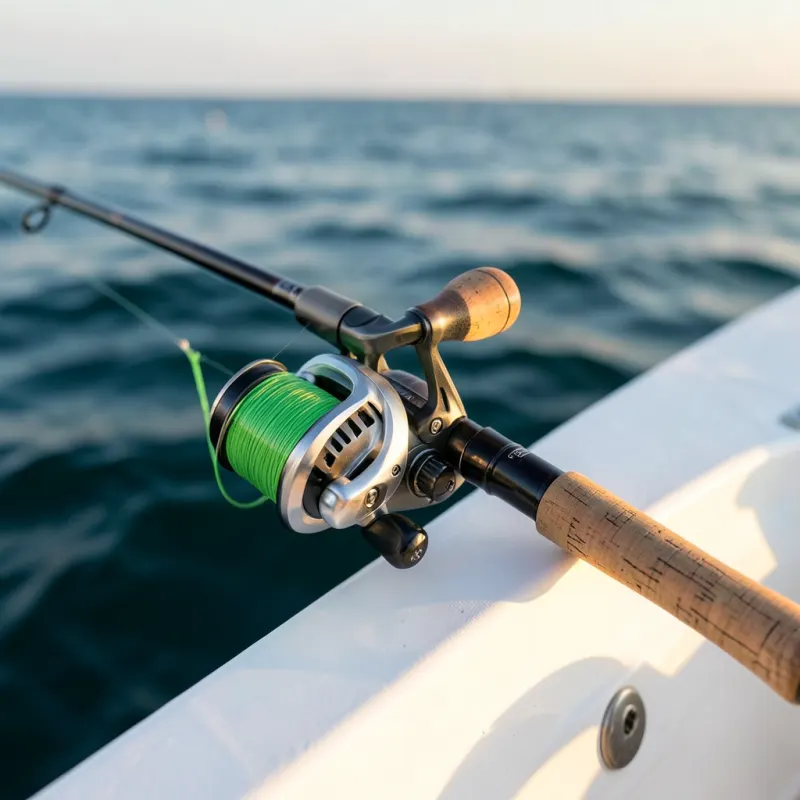
Bringing your own rods on the plane? Our bait and tackle guide covers what's sold locally and what's worth packing, and the trip planning guide has tips for travelling with tackle.
Where to cast and drop
Popping and jigging work along the whole Pacific coast. These are the best-known areas, and each has its own zone guide.
| Area | Leave from | Popping | Jigging | Good to know |
|---|---|---|---|---|
| Gulf of Papagayo and the Catalina Islands | Coco, Hermosa, Ocotal, Flamingo | Rocky points and islets for roosters and jacks | Snapper and amberjack around the islands | Keep 200 m from dive boats at the Catalinas; the Bat Islands are a no-fishing park |
| Southern Nicoya and Tambor | Tambor, Montezuma | Rocks and river mouths | Reefs near shore | Cabo Blanco is a no-take reserve |
| Herradura, Jacó and Quepos | Los Sueños, Quepos | Rocky points within about 2 miles of shore | Reefs and ledges | Manuel Antonio's marine area is closed to fishing |
| Golfo Dulce and Cabo Matapalo | Puerto Jiménez, Golfito, Zancudo | Matapalo's reefs and rocks, the classic rooster and cubera ground | Outer gulf drop-offs | Isla del Caño is a no-take reserve |
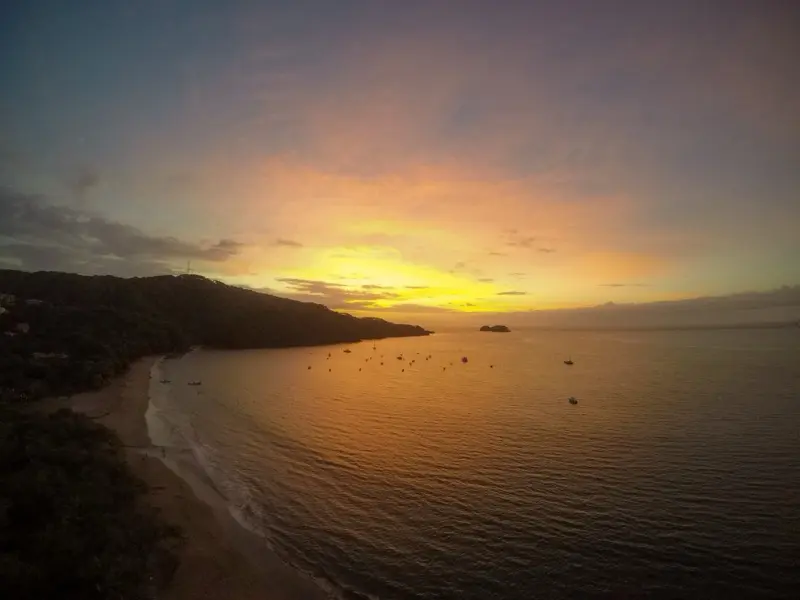
In Guanacaste, the Catalinas are the best-known ground; our Guanacaste fishing guide and roosterfish in Guanacaste page cover the gulf in detail. In the south, the reefs off Cabo Matapalo at the mouth of the Golfo Dulce are the classic popping spot, and the gulf's calm water makes jigging easy on most days; see our Golfo Dulce fishing guide and the Southern Pacific guide. The Central Pacific guide and the Nicoya Peninsula guide cover the middle of the coast.
Wherever you go, remember that fishing is banned inside national parks and biological reserves, and that includes the sea around them. A good captain fishes the open coast outside them. Our Costa Rica fishing rules guide lists the closed areas.
When to go
Both methods work all year, but conditions change the odds.
- Roosterfish are caught in every month; our season chart rates January to April best. In Guanacaste, the strong winds from about December to March can dirty the water close to shore, so crews look for the calm side of a point (see our Papagayo winds guide).
- Cubera snapper are caught year-round too. In the Golfo Dulce, Crocodile Bay names March to May as the inshore season for roosterfish, cubera and grouper, with more good fishing in July, August and December.
- Time of day: early morning is best for popping, when the light is low and the bait is up. Late afternoon can be good too.
- Tide and water: moving water around the rocks is what you want. After heavy rain, river mouths run brown, and popping near them slows down until the water clears.
- Jigging depends more on the current than the season; a gentle drift is ideal.
Keep or release
Roosterfish go back, always. Costa Rica made them a species of sport interest in 2014, alongside sailfish, marlin and tarpon, so they're released and can't be sold. Handle them quickly: keep the fish in the water while the hook comes out if you can, support it under the belly for a photo, and hold it facing forward in the water until it swims off.
Snapper, jacks, grouper and tuna can be kept for the table within the limit of 5 fish landed per trip, and sport-caught fish can never be sold. Many anglers and crews release big cubera, which take years to grow and are the breeding stock of a reef, and keep a smaller snapper for dinner.
Fish jigged from deep water need care if you're releasing them. The change in pressure can swell their swim bladder. MarViva's best-practice guide asks anglers to bring fish up steadily, keep them out of the water as briefly as possible and release them quickly. Ask your crew how they handle fish from deep water. Our conservation and catch and release guide has more.
Crews that cast and jig
These operators advertise popping, jigging or light-tackle inshore fishing and showed recent activity when we checked their websites or booking pages in November 2026. Nobody pays to be listed, and this isn't a ranking.
Colio Sportfishing ChartersGolfito
Capt. Mike Hennessy, a Matapalo resident of more than 20 years, and Capt. Luis Enrique run a 28-foot catamaran with light tackle over the shallow Matapalo reefs for roosterfish and cubera. See coliosportfishing.com.
The Zancudo LodgePlaya Zancudo
The lodge's center consoles leave from its own dock minutes from the gulf, and roosterfish and cubera are on its target list. Sport Fishing magazine's jigging and popping trip in the outer gulf was fished from its boats.
Crocodile BayPuerto Jiménez
Inshore trips on Boston Whalers reach the mouth of the gulf in about 45 minutes, and the lodge reports cubera over 50 lb year-round.
Papagayo FishingPlayas del Coco
Runs roosterfish and light-tackle trips around the Gulf of Papagayo and offers jigging for snapper and cubera. See papagayofishing.net.
Mr Trigger BigGameFlamingo
Capt. Jason Coffrin's 34-foot sportfisher at Marina Flamingo lists both popping and jigging, with roosterfish among the main targets. See its booking page.
Montezuma CrewTambor
Its coastal mornings from the Bahía Ballena dock work rocks, reefs and river mouths by jigging or trolling for roosterfish, snapper and jacks.
When you book, ask whether the captain likes fishing lures, whether poppers and jigs are supplied, and whether you can bring your own rods.
If the inshore lure bug bites, the same casting skills carry over to fly fishing; our guide to fly fishing for sailfish explains the teased approach used offshore. And for every other method Costa Rican crews use, head back to our complete guide to fishing techniques in Costa Rica.
Frequently asked questions
What is popping in fishing?
Casting a big surface lure, a popper or stickbait, and working it back with sharp jerks so it splashes and spits water. Roosterfish, cubera snapper, jacks and tuna strike it on top.
What's the difference between speed jigging and slow-pitch jigging?
Speed jigging uses long, slim jigs worked fast for fish that chase, like amberjack and tuna. Slow-pitch uses short, flat jigs that flutter down, worked with small lifts for snapper and grouper near the bottom.
Can I keep a roosterfish caught on a popper?
No. Roosterfish are a catch-and-release species in Costa Rica, whatever method you use. You can keep a snapper or tuna within the limit of 5 fish per trip.
When is the best time to pop for roosterfish in Costa Rica?
Roosters are caught all year, with January to April usually best. Go early in the morning, on a moving tide.
Do charters supply popping and jigging gear?
Most crews that offer it supply rods, reels and lures. Keen casters often bring their own rod and favourite poppers; ask before you book.
Is popping good for beginners?
It's tiring and you may cast a long time between strikes, so beginners usually catch more on live bait. Many crews mix the two on the same trip.
Charters and places in this guide

Playa Zancudo · fishing lodgeThe Zancudo LodgeThe Zancudo Lodge is a fishing lodge on Playa Zancudo, near the mouth of the Golfo Dulce in Costa Rica's far south. Its fleet of…
Puerto Jiménez · fishing lodgeCrocodile Bay ResortCrocodile Bay is a sportfishing operation and marina in Puerto Jiménez, on the Osa Peninsula side of the Golfo Dulce, running…
Montezuma · charterMontezuma CrewMontezuma Crew is a small boat outfit on the southern Nicoya Peninsula that runs sportfishing, scuba trips, dive courses and…Sources
- Jigging and popping southern Costa Rica (Doug Olander, Sport Fishing, 2015)
- Deep jigging in Costa Rica (Todd Staley, FECOP, 2018)
- Inshore fishing Jacó and Los Sueños, 2025 update (Adventure Tours Costa Rica)
- Roosterfish, Costa Rica's inshore bruisers (Lance Clinton, Pelagic)
- How to go slow pitch jigging (FishingBooker)
- Lutjanus novemfasciatus, Pacific dog snapper (FishBase)
- Nematistius pectoralis species summary (FishBase)
- Crocodile Bay fishing seasons
- Reglamento a la Ley de Pesca y Acuicultura, Decreto 36782 (INCOPESCA)
- Best practices guide for tourist and sport fishing in Costa Rica (MarViva, 2023)
- Colio Sportfishing Charters (official site)
- Papagayo Fishing (official site)
- Mr Trigger BigGame, Marina Flamingo (FishingBooker)


