
Fly fishing for sailfish in Costa Rica
The bait and switch, step by step
Sailfish on fly in Costa Rica is done by bait and switch: the crew raises a sailfish on a hookless teaser, pulls it away as the boat goes out of gear, and you cast a big popper fly to the excited fish. Plan on a 12 to 15 weight outfit, December to April on the Central and Southern Pacific or May to August in Guanacaste, and a crew that does it often.
At a glance
- Method
- hookless teasers raise the fish, then the teaser is pulled and a fly is cast
- Boat
- completely out of gear for the cast and retrieve (IGFA rule)
- Rod
- 12 to 15 weight, a big-game reel with several hundred yards of backing
- Fly
- pink and white popper-head fly on 2 hooks is the Pacific standard
- Best months
- December to April (Central and Southern Pacific), May to August (Guanacaste)
- Rules
- sailfish are released, kept in the water; circle hooks aren't required on a fly with no bait
- Licence
- every angler needs an INCOPESCA sport fishing licence
The short answer
You don't troll a fly for a sailfish. You tease one up. The crew drags a spread of hookless teasers behind the boat, a sailfish rises and starts slashing at one, the mate pulls the teaser away as the captain takes the boat out of gear, and you cast a big fly into the hole the teaser left. If the fish is fired up, it turns and eats. That's the bait and switch on fly, and Costa Rica's Pacific coast is one of the best places in the world to try it.
Our guide to fishing techniques in Costa Rica explains the whole range of methods crews use here; this page goes deep on just this one: how a fly day really runs, the tackle, the cast and the hook set, the rules, and how to pick a boat that won't waste your day.
Why Costa Rica is a good place to try it
Most anglers miss their first few shots, so you want plenty of fish and crews who've done the switch hundreds of times. Costa Rica has both.
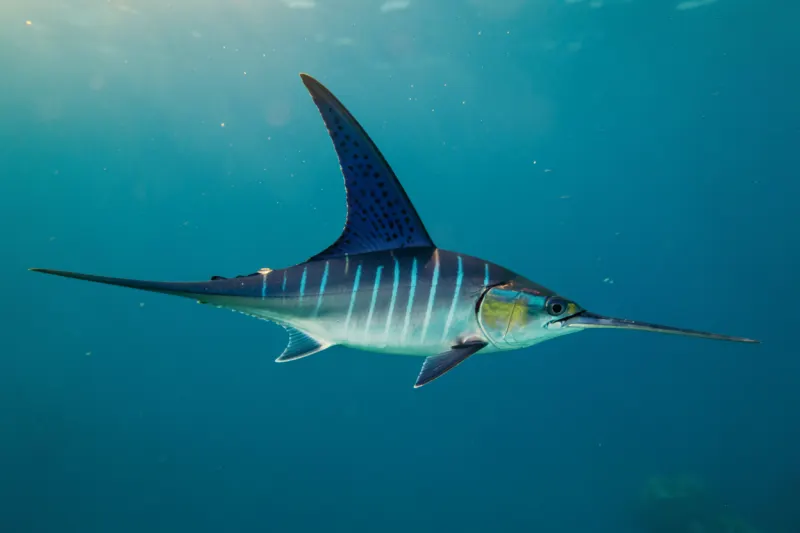
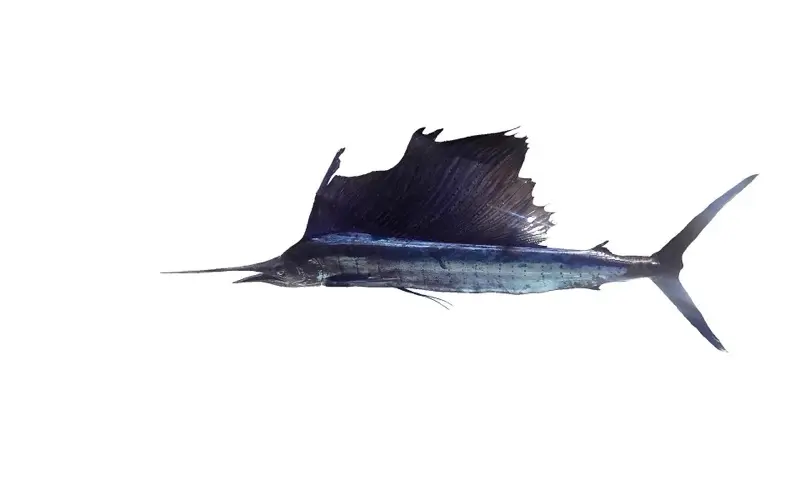
The Pacific sailfish (Istiophorus platypterus) feeds near the surface, which is what makes a fly possible at all. Off the Central and Southern Pacific it's thickest from about December to April, and in Guanacaste from about May to August, so there's a sailfish season somewhere on the coast for most of the year. Our sailfish page covers the fish itself, and the season chart shows the months.
The method has deep roots in this part of the world. The first billfish recognised as caught on fly, a 74.5 lb Pacific sailfish, was landed at Piñas Bay, Panama, in 1962 using teased fish. And fly instructor Jake Jordan writes that in 91 days of fishing in Costa Rica in the early 1980s he hooked 119 billfish on fly and landed 11. That ratio is worth remembering.
How the bait and switch works on fly
The method is the same teaser trick Costa Rican crews use with conventional tackle and a ballyhoo, with one big difference: there are no hooked baits in the water at all. Everything behind the boat is there to raise and excite a fish, and the only hook on board that matters is on your fly.
The spread
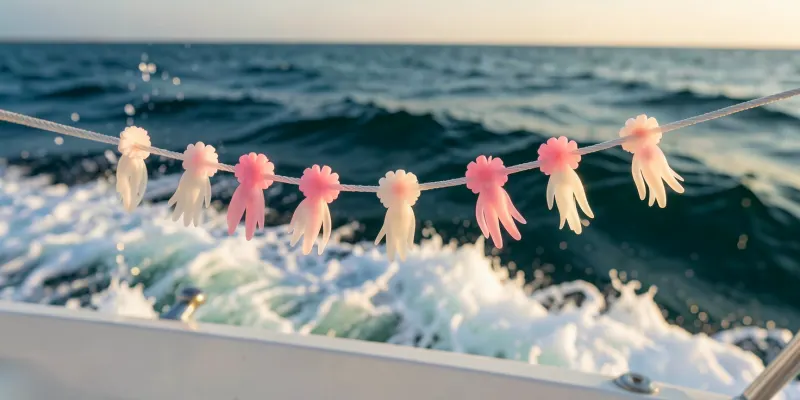
A typical fly spread is small and tidy. Salt Water Sportsman's sailfish-on-fly guide describes 1 daisy chain of plastic squid (often with a "smoker" lure that trails bubbles) and 2 lures carrying hookless baits on flat lines from the transom corners. The hookless baits can be ballyhoo, small bonito, or strips of tuna or dorado belly, rigged so a sail can taste them but can't get hooked.
Todd Staley's account for FECOP of a first sailfish on fly out of Quepos describes 4 hookless teasers trolled at 6 to 7 knots, with "naked" ballyhoo (no hook) added for scent and taste. Crews keep teasers on the side away from your casting arm so the fly line doesn't tangle with them.
Step by step
- Watch the spread. Everyone looks for a bill, a dorsal fin or a dark shape behind a teaser. The captain or mate calls which one.
- Tease it in. The mate works the teaser toward the boat, letting the fish knock at it and pulling it away just before it can grab it. A fish that gets a mouthful of bait often loses interest, so the teaser has to keep moving.
- Get ready. You stand in the casting corner with about 25 ft of line already out, as Jordan describes, and the rest stripped into a bucket or onto a clear deck.
- Out of gear. When the fish is close, usually 30 to 40 ft behind the transom, the captain takes the boat out of gear. Some captains turn the boat as they do it to give you a clear lane.
- Pull the teaser, cast the fly. The mate yanks the teaser out of the water at the last moment, and your fly lands where it was.
- Let it eat. The sail, now hunting for what it just lost, finds the fly.
The angler gets the credit, but the mate makes most of the catch: Salt Water Sportsman calls the mate the key role, because the timing with the teaser decides whether the fish arrives hot or bored.
The tackle
Sailfish on fly is big-game tackle, not trout gear. Our techniques pillar notes that FECOP's billfish guide lists 10 and 14 weight Temple Fork rods at Crocodile Bay and 14 to 18 weight rods on one specialist boat. For most sailfish, a 12 to 15 weight outfit is the sweet spot.
| Part | What most crews and guides use |
|---|---|
| Rod | 12 to 15 weight; a 12 weight tarpon rod works, heavier rods help on big fish |
| Reel | A large-arbour saltwater reel with a strong, smooth drag and 350 yards or more of backing |
| Line | A floating line, a billfish taper, or a short sinking or intermediate head; Jordan uses a 550-grain head |
| Class tippet | 20 lb is the usual choice and the heaviest IGFA class; at least 15 inches long |
| Bite tippet | 80 to 100 lb mono or fluorocarbon, no more than 12 inches for IGFA |
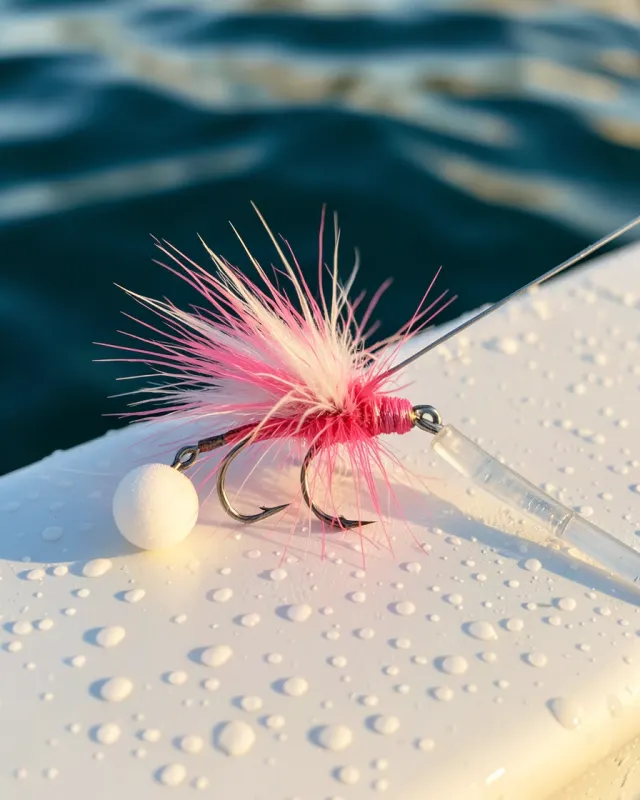
| Fly | A pink and white (or blue and white) tube fly about 8 inches long with a foam popper head and 2 hooks |
| Drag | Light: Jordan sets about 6 lb for sailfish |
Pink and white is the Pacific standard, and the popper head matters: its splash pulls the fish's eyes to the spot where the teaser vanished.
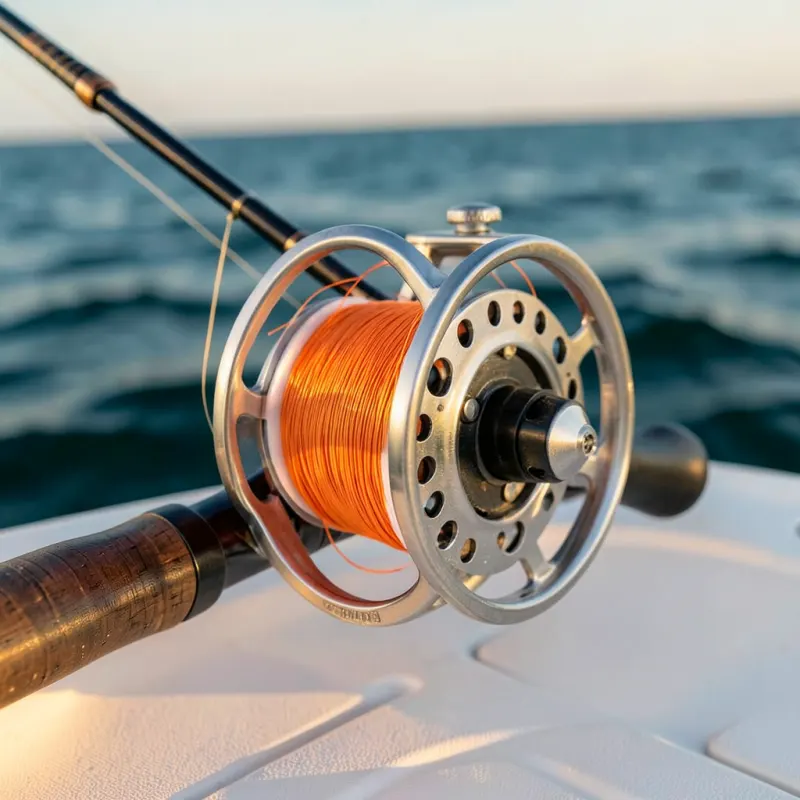
Bring your own outfit if you can: some crews, such as Papagayo Fishing in Coco, ask fly anglers to bring their own, and our bait and tackle guide notes that we found no dedicated fly shop in the country. Pack a dozen flies already rigged on leaders, spare class tippet, and a spare fly line. A heavy fly rod travels well in a tube; our trip planning guide has more on flying with tackle.
The cast, the eat and the hook set
This is where most first-timers lose their fish, and almost always by being too quick.
The cast
It's a short one, 30 to 40 ft at most, with one false cast and a wet fly. Salt Water Sportsman advises landing the fly a couple of feet in front of the fish and a little to one side, so it has to turn to take it. Jordan casts across the wake at about 45 degrees toward the teaser.
The eat
Let the fish have it. A sailfish often swats or circles a fly before it eats. You strip slowly, or not at all, and watch. In Staley's Quepos account, the fish took the fly as it swam away, and that's the moment you want.
The hook set
Don't lift the rod. Keep the rod tip low and pointed at the fish, wait until you feel its weight, and set the hook with hard pulls on the line (a strip set), the way Jordan describes it, in short jerks of about 6 inches. Salt Water Sportsman lists striking too early and holding the rod tip too high as the 2 classic mistakes. If the fish misses, a low rod keeps the fly in the water for another chance.
Clearing the line
The first run is fast: let the loose line run through a ring of thumb and finger, and keep your knuckles clear of the spinning reel handle.
Fighting and releasing a sailfish on fly
A hooked sailfish usually jumps and runs right away. Jordan's advice is to keep the rod tip low or in the water and pointed at the fish, drop the tip and wind fast whenever slack appears, and let the captain back the boat down toward the fish. After 5 to 10 minutes you can start to put real pressure on it. Staley's angler had a sail strip about 150 yards of line and brought it boatside in about 20 minutes.
Shorter is better for the fish. MarViva's best-practice guide asks for short fights, because an exhausted billfish is less likely to survive, so a good crew uses the boat to help.
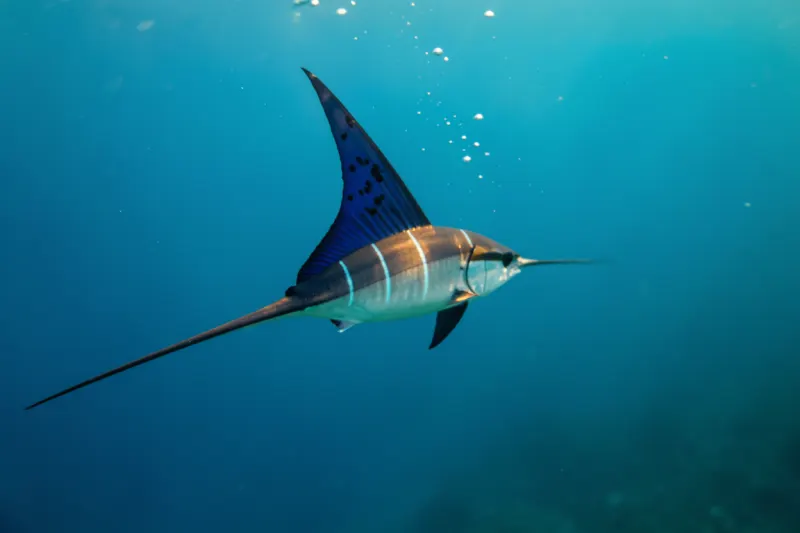
When the leader reaches the rod tip, the mate takes the leader and the bill. In Costa Rica the fish stays in the water: INCOPESCA's agreement AJDIP/280-2014 bans putting billfish on deck for photos and using gaffs or hooks to bring them alongside. The crew removes the fly or cuts the leader close to the mouth, holds the fish facing into the water flow with the boat moving slowly ahead, and lets it go when it kicks. You can lean over for a photo. Our page on conservation and catch and release explains why this matters.
If you want it to count: IGFA fly rules
You don't have to fish by the rule book, but record claims depend on it. The main points of the IGFA's fly rules (May 2026):
- No trolling the fly. Trolling a fly behind a moving boat isn't allowed, and the boat must be completely out of gear when the fly is presented and during the retrieve.
- Class tippet at least 15 inches long and no stronger than 10 kg (20 lb).
- Bite (shock) tippet no longer than 12 inches, of any strength.
- A real fly. No bait or scent on it. A single fly, on a single hook or 2 hooks in tandem, with the hook eyes no more than 6 inches apart and the second hook inside the wing. No trebles.
- Rod at least 6 ft long, with a butt no longer than 6 inches.
- The angler fights the fish alone; the mate may take the leader.
Hookless teasers are fine. And on the law side, Costa Rica's circle-hook rule (Decreto 36782) applies to natural bait, so it doesn't apply to a fly with no bait on it. Teasers carrying real bait have no hook, so they're within the rules too. Every angler aboard still needs an INCOPESCA licence; our Costa Rica fishing rules guide explains how to buy one.
Where and when to go
Fly fishing needs calm water and plenty of fish, so the season and the sea both matter.
| Zone | Main ports | Best months for sailfish | Notes |
|---|---|---|---|
| Central Pacific | Los Sueños (Herradura), Quepos | December to April | The biggest fleets; usually calm in the dry season |
| Southern Pacific | Golfito, Puerto Jiménez, Drake Bay | December to April | Calm water near the Golfo Dulce; Crocodile Bay says numbers build from November |
| Guanacaste | Flamingo, Coco, Tamarindo | May to August | The Papagayo winds can blow from December to March |
Those months follow our season chart; sailfish are caught in every month in smaller numbers. Our Central Pacific sailfish season guide has the month-by-month detail for Los Sueños and Quepos, and the Papagayo winds guide explains why Guanacaste runs on the opposite clock.
Avoid big tournament weeks, when the best crews are booked, and book a full day: the grounds are often an hour or more out, and Staley's angler trolled for nearly 3 hours before his first shot.
Choosing a boat that does it often
The crew matters more than the boat. A mate who has teased hundreds of sails to a fly will give you far more good shots than one who usually drops back ballyhoo. Ask before you book:
- How many fly days do you run a season, and who teases the fish?
- Do you take the boat fully out of gear for the cast?
- Do you supply fly rods and flies, or should I bring mine?
- Do you keep every billfish in the water for the release?
These operators advertise fly fishing and showed recent activity when we checked their websites or booking pages in November 2026. Nobody pays to be listed, and it isn't a ranking.
Crocodile BayPuerto Jiménez
The Osa lodge, now part of Botánika, lists fly fishing among its trips and keeps Temple Fork fly gear on site, though it welcomes anglers who bring their own. Its season notes put sailfish in growing numbers from November to May. See botanikaresort.com.
Marina Pez VelaQuepos
The marina's own charter desk books fly fishing trips as well as inshore and offshore days, which is an easy way to be matched to a boat that does it.
Fly Legend FishingQuepos
Capt. Fabián Ramírez runs a 28-foot center console from Marina Pez Vela with fly gear included. Its booking page offers a fly trip aimed at roosterfish, lists sailfish among the targets, and has reviews from trips in July and August 2026.
Mr Trigger BigGameFlamingo
Capt. Jason Coffrin's 34-foot sportfisher at Marina Flamingo lists a 12 weight fly outfit, with sailfish, roosterfish and dorado among the targets, for its April to November season from 2026. See its booking page.
Papagayo FishingPlayas del Coco
Offers fly trips inshore for roosterfish and jacks and offshore for sailfish, but asks fly anglers to bring their own equipment. See its fly fishing page.
For the full list of crews on each coast, see our zone guides for the Central Pacific, the Southern Pacific and Guanacaste. And if the fly bug bites inshore, the same teasing trick works on roosterfish; our guide to popping and jigging for roosterfish and snapper covers the rocks.
For every other way Costa Rican crews catch fish, from trolled ballyhoo to surf rods, head back to our complete guide to fishing techniques in Costa Rica.
Frequently asked questions
Can a beginner catch a sailfish on fly?
Yes, if you can cast 30 to 40 ft of heavy line accurately and stay calm. Practise with a 12 weight before the trip, and expect to miss a few fish first.
What weight fly rod do I need for sailfish?
A 12 to 15 weight. A 12 weight tarpon outfit handles most Costa Rican sailfish; go heavier if marlin could turn up.
Do I need circle hooks on a fly in Costa Rica?
No. The circle-hook rule covers natural bait, and a fly carries none. Some anglers still choose circle-hook flies.
When is the best time to fly fish for sailfish in Costa Rica?
December to April on the Central and Southern Pacific, and May to August in Guanacaste, when the seas are usually calmest and the fish most numerous.
Can I bring a sailfish aboard for a photo?
No. Billfish stay in the water by law. The crew holds it alongside, and you lean over for the photo.
Is a half day enough?
Rarely. The grounds are often an hour or more out and teasing fish takes time, so book a full day.
Charters and places in this guide

Puerto Jiménez · fishing lodgeCrocodile Bay ResortCrocodile Bay is a sportfishing operation and marina in Puerto Jiménez, on the Osa Peninsula side of the Golfo Dulce, running…
Quepos · marinaMarina Pez VelaMarina Pez Vela is the big marina on the Quepos waterfront, on Costa Rica's Central Pacific coast, and the dock most Quepos and…Sources
- IGFA International Angling Rules, fly fishing rules (May 2026)
- The evolution of billfish on fly (Dave Lewis, Marlin, May 2026)
- First sailfish on the fly (Todd Staley, FECOP)
- Billfish angler's guide to Costa Rica (Todd Staley, Sport Fishing Magazine, via FECOP)
- Sailfish on fly (Alex Suescun, Salt Water Sportsman)
- Targeting sailfish on the fly with Jake Jordan (Temple Fork Outfitters)
- Reglamento a la Ley de Pesca y Acuicultura, Decreto 36782 (INCOPESCA)
- Acuerdo AJDIP/280-2014, live bait and billfish handling (INCOPESCA)
- Sport fishing at Botánika Osa Peninsula and Crocodile Bay
- Crocodile Bay fishing seasons
- Papagayo Fishing, fly fishing page
- Fly Legend Fishing, Quepos (FishingBooker)
- Mr Trigger BigGame, Marina Flamingo (FishingBooker)
- Vela Vivaz fly fishing, Marina Flamingo (FishingBooker)
- Best practices guide for tourist and sport fishing in Costa Rica (MarViva, 2023)
- Istiophorus platypterus species summary (FishBase)


